Confirmation Letter Format, Samples, Template | How to Write a Letter of Confirmation?

A Confirmation Letter is an official letter given to the employee when he/she is moved from a probation period to a confirmed position in an organization. It should be in a congratulating tone so that it boosts and motivates the employee. We have attached a Confirmation Letter Format for your convenience so that you can know the details on what to include, etc. You can use the Letter of Confirmation Samples available to draft one on your own.

The majority of the Confirmation Letters are formal. However, there can be some informal letters depending on the familiarity between sender and receiver. This is possible when it;’s between peers, friends, professional acquaintances, etc.

Refer Letter Writing Topics for all kinds be it formal or informal and know how to write different letters on your own.

Roles of Confirmation Letter

A Letter of Confirmation plays the following roles and they are outlined for your knowledge.

  • Enables Review of an Agreement.
  • Adds Value to an Oral Agreement.
  • It indicates the individual regarding their responsibilities towards a certain arrangement.
  • Rectifies Misunderstanding on Part of both Recipient and Sender thereby enabling trust between them.
  • Reminds Both the Parties Involved regarding the legal bindings that they share with each other.
  • Letter of Confirmation enables the full benefits from a correspondence, event, or product owing to the correctness of the information.
  • Enables smooth functioning of any enterprise through clarity of information.
  • Informs the individual about his/her achievements and status in an establishment.

How to write a Letter of Confirmation?

Keep the following points in mind before drafting a Confirmation Letter. They are along the lines

  • Offer a polite, appreciative response that helps clarify their doubts and to avoid any misunderstandings in the future.
  • Repeat the details of the agreement so as to clear any doubts that are arisen.
  • Clarify or Change the Terms of Agreement if any needed.
  • Be accurate and cross-check your facts before sending the letter.
  • Choose your tone carefully as they are formal letters and maintain them briefly.
  • Send the letter as early as possible after receiving the original letter.
  • Notify all of them after receiving the confirmation letter so they can be up to date.

Sample Confirmation Letters

Employment Confirmation Letter Sample 

Employment Confirmation Letter Sample 

Letter of Confirmation on Marital Status

Letter of Confirmation on Marital Status

Letter of Confirmation for Residence

Letter of Confirmation for Residence

FAQs on Confirmation Letter

1. What is a Confirmation Letter?

A confirmation letter is an official letter handed to the employee confirming his/her employment at the organization once the probation period is completed.

2. What are Tips for Letter of Confirmation Writing?

  • Be Brief and remember you are just writing to confirm the information and not for sharing information.
  • If you are verifying something be formal and try to add a signature in the letter to reflect the same.
  • Be Clear on what is being confirmed and make a note of dates, time, places and official titles, etc.
  • Remember a Confirmation Letter is not an agreement or contract. In fact, it is a confirmation of the previous agreement or contract made.

3. Why is a Confirmation Letter Important?

A Confirmation Letter is important to tell the employee that their position is confirmed and needs no probation period extension. It even highlights the change n designation, role, salary increment, etc.

Download Letter to Bank Manager Format & Samples | Know Writing Tips & Reasons for Letter to Bank Manager

letter to bank manager format and samples

Letter to Bank Manager: Banks are playing a leading role in our society. Almost, everyone in this world holding a bank account to get facilities such as ATM Services, net banking, loans, and many more. In order to get these kinds of services, you should visit the bank near you and open one bank account. To avail some facilities, you should write a hand-written letter or email to the manager of a bank.

A Letter to Bank Manager is a formal document where people request some bank-related services to be enjoyed from the bank like ATM, Bank Statements, Cheque Books, etc. Explore more about this letter to the bank manager and learn how to write an application letter to your bank manager and request the concerned facility.

Attain Other Formal and Informal Types of Letter Writing Formats and Samples from our website @ NcertBooks.guru and make your own letter even more effective & attractive.

Tips & Guidelines on How to Write Letter to Bank Manager?

The following are the tips & guidelines that you should remember while drafting a Letter to Bank Manager. They are as such,

  • Mention the name of the bank and the branch where your account is held.
  • Make sure that the subject line in your letter is included or not.
  • Also, ensure that the subject line is succinct and on point.
  • You may also need to provide your name as per the bank records.
  • Your bank account number must also be specified in the request letter.
  • Though this is a request letter, all other formal letter writing details to be included such as headings, salutations, complimentary close, and signature line.
  • Also, you should include enclosures or attachments if necessary (or as supporting evidence).

Also Check: 

Reasons to Write a Letter to the Bank Manager

People will have several reasons to write a letter to a bank manager because everything in the country is running on digital transactions. The bank plays a vital role in digital transactions. There are some scenarios mentioned below that will make you draft the Letter to Bank Manager. They are as follows:

  • Request to issue a new ATM card
  • Request to issue a bank statement
  • Asking to issue a bank passbook
  • Request to issue a Cheque book
  • Request to transfer bank account
  • Other formal communication (such as submission of documents/ supporting evidence)

Format/Template of Letter to Bank Manager

The below-given information will be included in the Letter to Bank Manager. So, refer to this Application to Bank Manager Letter Format and request any required documentation related to the bank from the Bank Manager:

Letter to bank manager format

Free Download of Letter to Bank Manager Samples

Here are a few samples of Application to Bank Manager which follows all guidelines and formal structure. As per your requirement, you can edit or choose a particular letter to bank manager sample and draft a perfect letter while issuing any document in the bank.

Also Check: 

Application to Bank Manager for New ATM Card – Sample 1

Sample letter to bank manager for ATM card

Sample 2 – Issuing Bank Passbook Letter to Bank Manager

letter to bank manager for issuing bank account passbook sample

FAQs on Writing Letter to the Bank Manager

1. What should include in Requesting Letter to Bank Manager?

  • The bank’s address.
  • The addressee, who is commonly the Branch Manager.
  • A subject stating the nature of the request.
  • Explanation of your request.
  • Account information: Account name and number.
  • Other Necessary Information.
  • Your address.
  • Your contact information.

2. How do you start & end a formal letter to a bank manager?

If you know your bank manager, you can write to him/her by name. (Dear Mr / Ms. XX and end Yours sincerely). If you don’t know the name, write “Dear Sir / Madam” and end “Yours faithfully”.

3. Which type is the Letter to Bank Manager?

Letter to Bank Manager is a formal letter type where people request or issue bank account related topics to a bank manager. Well, she/he accepts the letter if it is a valid one and matched all bank norms.

NCERT Solutions for Class 7 Sanskrit Chapter 6 सदाचारः

We have given detailed NCERT Solutions for Class 7 Sanskrit Ruchira Chapter 6 सदाचारः Questions and Answers will cover all exercises given at the end of the chapter.

NCERT Solutions for Class 7 Sanskrit Ruchira Chapter 6 सदाचारः

अभ्यास के प्ररनौं के उत्तर

प्रश्न 1.
सर्वान् श्लोकान् सस्वरं गायत।
उत्तर
छात्राः श्लोकान् स्वयमेव सस्वरं गायन्तु।

प्रश्न 2.
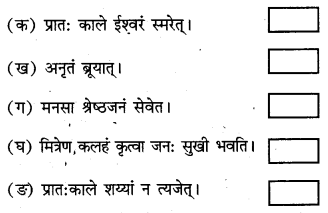
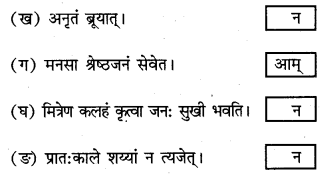
उपयुक्तकथनानां समक्षम् ‘आम्’ अनुपयुक्तकथनानां समक्षं ‘न’ इति लिखत
NCERT Solutions for Class 7 Sanskrit Chapter 6 सदाचारः 1
उत्तर
NCERT Solutions for Class 7 Sanskrit Chapter 6 सदाचारः 2
NCERT Solutions for Class 7 Sanskrit Chapter 6 सदाचारः 3

प्रश्न 3.
एकपदेन उत्तरत
(क) कदा शय्यां त्यजेत् ?
उत्तर
प्रातःकाले।

(ख) कानि कृत्वा अध्ययनं कुर्यात् ?
उत्तर
नित्यकर्माणि।

(ग) किं ब्रूयात् ?
उत्तर
सत्यम्।

(घ) केन सह कलहं कृत्वा नरः सुखी न भवेत् ?
उत्तर
मित्रेण।

प्रश्न 4.
रेखाङ्कितपदानि आधृत्य प्रश्ननिर्माणं कुरुत
(क) प्रथमम् ईश्वरं स्मरेत्।
(ख) कलहं कृत्वा नरः दुःखी भवति।
(ग) पितरं कर्मणा सेवेत।
(घ) व्यवहारे मृदुता श्रेयसी।
(ङ) सर्वदा व्यवहारे ऋजुता विधेया।
उत्तर
(प्रश्ननिर्माणम्)
(क) प्रथमं कं स्मरेत् ?
(ख) किं कृत्वा नरः दुःखी भवति ?
(ग) कं कर्मणा सेवेत ?
(घ) व्यवहारे का श्रेयसी ?
(ङ) कदा व्यवहारे ऋजुता विधेया ?

प्रश्न 5.
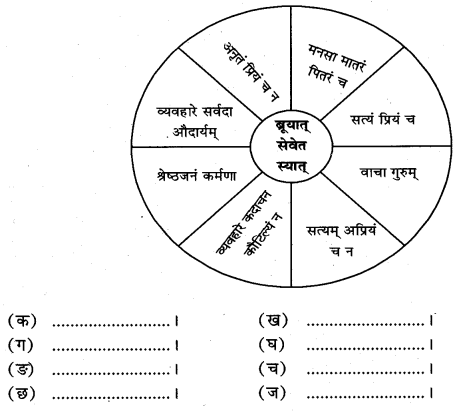
प्रश्नमध्ये त्रीणि क्रियापदानि सन्ति। तानि प्रयुज्य सार्थक-वाक्यानि रचयत
NCERT Solutions for Class 7 Sanskrit Chapter 6 सदाचारः 4
उत्तर
(क) सत्यं प्रियं च ब्रूयात्।
(ख) वाचा गुरुं सेवेत।
(ग) सत्यम् अप्रियं च न ब्रूयात् ।
(घ) व्यवहारे कदाचन कौटिल्यं न स्यात्।
(ङ) श्रेष्ठजनं कर्मणा सेवेत।
(च) व्यवहारे सदा औदार्य स्यात्।
(छ) अनृतं प्रियं च न ब्रूयात्।
(ज) मनसा मातरं पितरं च सेवेत।

प्रश्न 6.
मञ्जूषातः अव्ययपदानि चित्वारिक्तस्थानानि पूरयत
NCERT Solutions for Class 7 Sanskrit Chapter 6 सदाचारः 5

(क) भक्तः …………… ईश्वरं स्मरति।
(ख) असत्यं ………….. वक्तव्यम्।
(ग) प्रियं ……………. सत्यं वदेत्।
(घ) लता मेधा ……………. विद्यालयं गच्छतः।
(ङ) ……………. कुशली भवान् ?
(च) महात्मागाँधी ……………. अहिंसा न अत्यजत्।
उत्तर
(क) भक्तः सदा ईश्वरं स्मरति।
(ख) असत्यं न वक्तव्यम्।
(ग) प्रियं तथा सत्यं वदेत् ।
(घ) लता मेधा च विद्यालयं गच्छतः।
(ङ) अपि कुशली भवान् ?
(च) महात्मागाँधी कदाचन अहिंसा न अत्यजत्।

प्रश्न 7.
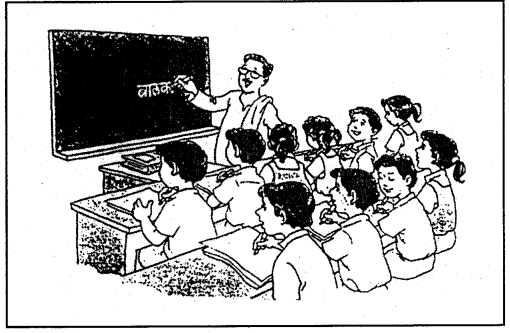
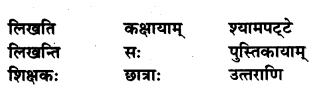
चित्रं दृष्ट्वा मञ्जूषातः पदानि च प्रयुज्य वाक्यानि रचयत
NCERT Solutions for Class 7 Sanskrit Chapter 6 सदाचारः 6
NCERT Solutions for Class 7 Sanskrit Chapter 6 सदाचारः 7
NCERT Solutions for Class 7 Sanskrit Chapter 6 सदाचारः 8

उत्तर
1. सः शिक्षक: श्यामपट्टे प्रश्नं लिखति।
2. ते छात्राः कक्षायां पुस्तिकायाम् उत्तराणि लिखन्ति।

बहुविकल्पी प्रश्न

(i) कदा शय्यां त्यजेत् ?
(A) प्रातःकाले
(B) सायंकाले
(C) अर्धरात्रौ
(D) मध्याह्ने।
उत्तर
(A) प्रातःकाले

(ii) कानि कृत्वा अध्ययनं कुर्यात् ?
(A) दुष्कर्माणि
(B) नित्यानि
(C) कर्माणि
(D) नित्यकर्माणि।
उत्तर
(D) नित्यकर्माणि।

(iii) किं ब्रूयात् ?
(A) असत्यम्
(B) सत्यम्
(C) कटु
(D) कठोरम्।
उत्तर
(B) सत्यम्

(iv) केनं सह कलहं कृत्वा नरः सुखी न भवेत् ?
(A) कुमित्रेण
(B) मित्रेण
(C) चित्रेण
(D) शत्रुणा।
उत्तर
(B) मित्रेण

(v) प्रथमं कं स्मरेत् ?
(A) धनम्
(B) मित्रम्
(C) अध्यापकम्
(D) ईश्वरम्।
उत्तर
(D) ईश्वरम्।

(vi) किं कृत्वा नरः दुःखी भवति ?
(A) कर्म
(B) कलहम्
(C) परिश्रमम्
(D) अध्ययनम्।
उत्तर
(B) कलहम्

(vii) कं कर्मणा सेवेत ?
(A) पितरम्
(B) पितुः
(C) मातुः
(D) भ्रातरम्।
उत्तर
(A) पितरम्

(viii) व्यवहारे का श्रेयसी ?
(A) कटुता
(B) छलता
(C) मृदुता
(D) बलता।
उत्तर
(C) मृदुता

(ix) कदा व्यवहारे ऋजुता विधेया ?
(A) सर्वदा
(B) प्रातः
(C) सायम्
(D) रात्रौ।
उत्तर
(A) सर्वदा

Class 7 Sanskrit Chapter 6 सदाचारः Summary Translation in Hindi

1. यस्मिन् देशे य आचार: पारम्पर्यक्रमागतः।
वर्णानां सान्तरालानां स सदाचार उच्यते॥1॥

शब्दार्था:-
आचारः = व्यवहार।
पारम्पर्यक्रमागतः = परम्परा से प्राप्त ।
वर्णानाम् = समस्त वर्गों का।
सान्तरालानाम् = वर्गों के मध्य आए हुए समस्त उपवर्गों का।
सदाचारः (सत् + आचारः) = श्रेष्ठ व्यवहार, सदाचार।

सरलार्थ:-जिस देश में जो व्यवहार परम्परा से आया हुआ होता है उसी व्यवहार को समस्त वर्गों का तथा वर्गों के मध्य आए हुए समस्त उपवर्गों का श्रेष्ठ व्यवहार अर्थात् सदाचार कहा जाता है।

भावार्थः-सदाचार का अर्थ है श्रेष्ठ आचरण। यह आचरण समाज में हमें परम्परा से प्राप्त होता है।

2. प्रातःकाले त्यजेच्छय्यामीश्वरं प्रथमं स्मरेत्।
नित्यकर्माणि कृत्वा च कुर्यादध्ययनं ततः ॥ 2 ॥

शब्दार्थाः- त्यजेत् = छोड़ देना चाहिए।
त्यजेत् + शय्याम् = त्यजेच्छय्याम्।
शय्याम् = बिस्तर को, शय्या को।
प्रथमम् = सबसे पहले।
स्मरेत् = स्मरण करना चाहिए।
नित्यकर्माणि = नित्यकर्मों को, प्रतिदिन किए जाने वाले कर्मों को।
कुर्यात् = करना चाहिए।
अध्ययनम् = पढ़ाई-लिखाई, अध्ययन।
ततः = उसके बाद।

सरलार्थः-प्रात:काल में ही बिस्तर छोड़ देना चाहिए, फिर सबसे पहले ईश्वर का स्मरण करना चाहिए। फिर नित्यकर्मों को करके उसके बाद पढ़ाई-लिखाई करनी चाहिए।

भावार्थ:–प्रात:काल जल्दी उठना चाहिए और फिर सबसे पहले परमात्मा को याद करते हुए उसका धन्यवाद करना चाहिए क्योंकि उसी प्रभु ने हमें यह सुन्दर अनमोल शरीर, सूर्य का प्रकाश, खाने के लिए अन्न, पीने के लिए जल तथा जीवन धारण करने के लिए प्राणवायु प्रदान की है। नित्यकर्म में, दाँत साफ़ करना, स्नान करना आदि आते हैं। इन्हें करने के पश्चात् अपने अध्ययन में जुट जाना चाहिए।

3. सत्यं ब्रूयात् प्रियं ब्रूयात् न ब्रूयात् सत्यमप्रियम्।
प्रियं च नानृतं ब्रूयात् एष धर्मः सनातनः ॥ 3 ॥

शब्दार्था:-
ब्रूयात् = बोलना चाहिए।
प्रियम् = मीठा, प्रिय।
अप्रियम् = दूसरों को अच्छा न लगने वाला।
नानृतम् (न + अनृतम्)। अनृतम् = झूठ।
सनातनः = जो सदा से चला आ रहा हो।

सरलार्थः- सत्य बोलना चाहिए, प्रिय बोलना चाहिए परन्तु अप्रिय सत्य कभी नहीं बोलना चाहिए। दूसरों को प्रिय लगने वाला झूठ भी नहीं बोलना चाहिए। यही सदा से चला आ रहा धर्म है।

भावार्थ:-सत्य बोलना अच्छी बात है परन्तु वह सत्य प्रिय होना चाहिए। जिस सत्य को बोलने से दूसरों के मन में दुःख पैदा हो ऐसा सत्य नहीं बोलना चाहिए। केवल दूसरों को खुश करने के लिए झूठ भी नहीं बोलना चाहिए। सत्य तथा प्रिय बोलना सदाचार का प्रमुख अंग है।

4. सर्वदा व्यवहारे स्यात् औदार्यं सत्यता तथा।
ऋजुता मृदुता चापि कौटिल्यं न कदाचन ॥ 4 ॥

शब्दार्थाः-सर्वदा = सदा, हमेशा।
औदार्यम् = उदारता।
सत्यता = सच्चाई।
ऋजुता = सरलता।
मृदुता = कोमलता।
कौटिल्यम् = कुटिलता, टेढ़ापन।
कदाचन = कभी।

सरलार्थ:-व्यवहार में सदा उदारता, सच्चाई सरलता तथा कोमलता होनी चाहिए। कभी भी व्यवहार में कुटिलता नहीं होनी चाहिए।

भावार्थ:-हमारा व्यवहार सदा ही उदारता, सत्यता से युक्त, सरल तथा कोमल होना चाहिए ऐसे व्यवहार से ही समाज में आदर मिलता है। कभी भी दूसरों के मन को दुखाने वाला या अपने मन में छल-कपट रखकर व्यवहार नहीं करना चाहिए।

5. श्रेष्ठं जनं गुरुं चापि मातरं पितरं तथा
मनसा कर्मणा वाचा सेवेत सततं सदा ॥5॥

शब्दार्था:-
श्रेष्ठं जनम् = अच्छे मनुष्य को, सज्जन को।
मनसा = मन से।
कर्मणा = कर्म से।
वाचा = वाणी से।
सेवेत = सेवा करनी चाहिए।
सततं = निरन्तर, लगातार।

सरलार्थः- सदा ही सज्जन, गुरु, माता तथा पिता की मन, कर्म और वाणी से सेवा करनी चाहिए।

भावार्थ:- सेवा करना सदाचार का महत्त्वपूर्ण हिस्सा है। माता-पिता, गुरुजन तथा सज्जनों की सेवा सच्चे मन से, सच्चे व्यवहार से तथा आदरपूर्ण वचनों से अवश्य करनी चाहिए।

6. मित्रेण कलहं कृत्वा न कदापि सुखी जनः।
इति ज्ञात्वा प्रयासेन तदेव परिवर्जयेत्॥ 6 ॥

शब्दार्था:- मित्रेण = मित्र के साथ।
कलहम् = झगड़ा, कलह।
कृत्वा = करके।
कदापि = कभी।
प्रयासेन = प्रयत्नपूर्वक।
परिवर्जयेत् = छोड़ देना चाहिए।

सरलार्थ:- मनुष्य अपने मित्र के साथ झगड़ा करके कभी भी सुखी नहीं रह सकता। इस बात को जानकर मित्रों के साथ झगड़ने को प्रयत्नपूर्वक छोड़ देना चाहिए।

भावार्थ:- अच्छे लोग सदा प्रेम से रहते हैं कभी आपस में झगड़ते नहीं। मित्र के साथ तो कभी भी झगड़ा नहीं करना चाहिए। क्योंकि मित्र के साथ झगड़ने वाला सदा दुःखी ही रहता है।

Free Formal Letter Template, Samples | Tips for Formal Letter Writing | How to write a Formal Letter?

A Formal Letter is a letter written in formal language and follows a predefined format. These are written in general for official purposes to colleagues, seniors, and not to friends or family.  You need to keep several points in mind while drafting a formal letter and you can even find Formal Letter Examples and Format here. Try to write it as simple and as clear as possible. The language of the Letter should be quite professional and you need to present the letter in a formal way.

Refer to the Tips for Formal Letter Writing and Guidelines on How to write a Formal Letter in the later modules. You can get ideas by referring to the Samples over here and write one on your own as per the requirement.

Find Letter Writing Topics for formal and informal topics and learn different letter writing styles all in one place.

Types of Formal Letters

There are many types of letters depending on the scenario and we have jotted some of them. They are along the lines

  • Letter of Enquiry
  • Order Letter
  • Letter of Complaint
  • Reply to a Letter of Complaint
  • Promotion Letter
  • Sales Letter
  • Recovery Letters

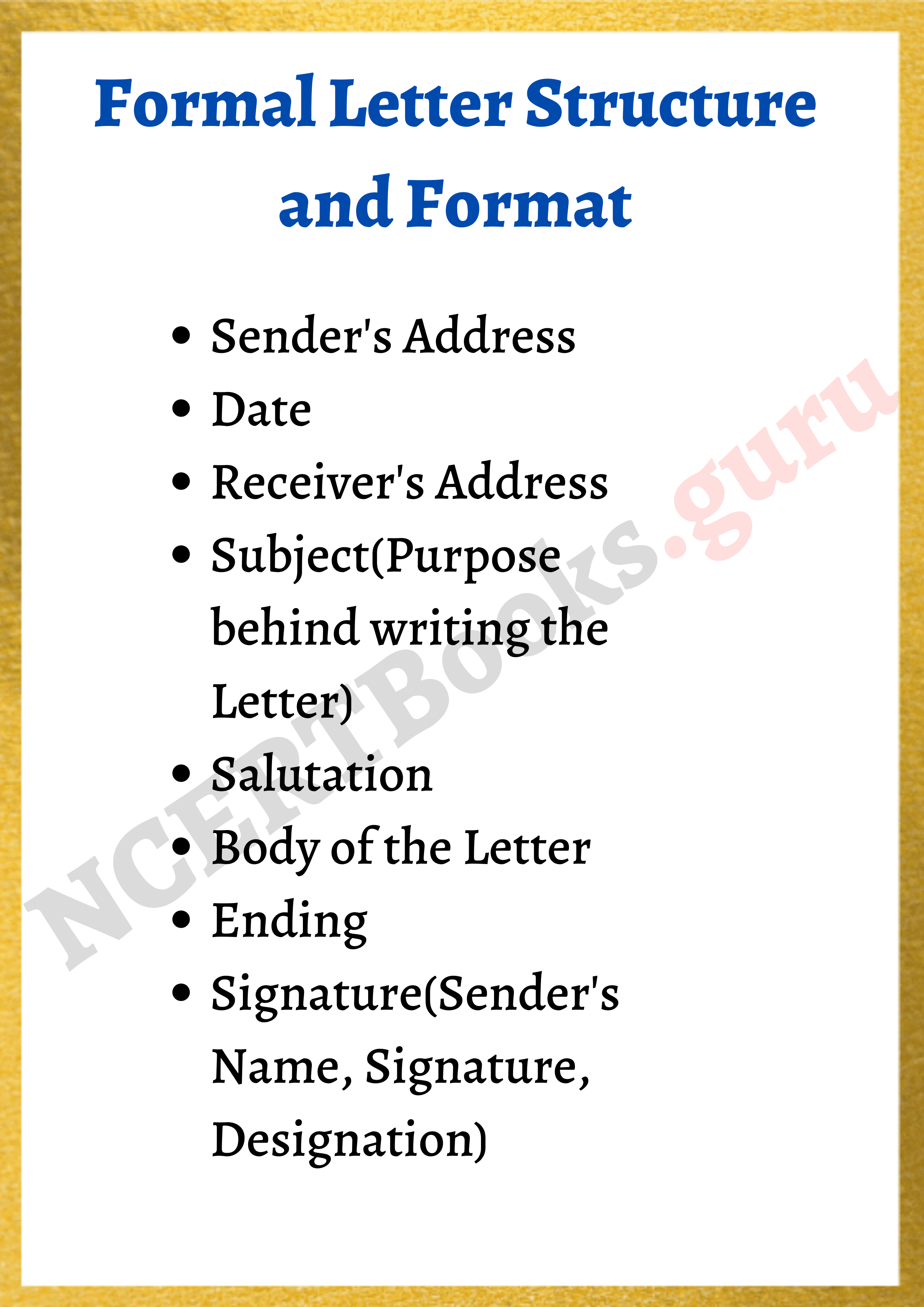
Formal Letter Structure and Format

While drafting a Formal Letter you need to follow certain guidelines and points in mind. The standard format to keep in mind is as under. You need to include all the details provided below while drafting a formal letter.

Formal Letter Format

How to Write a Formal Letter? | What must be included in a Formal Letter?

A Formal Letter should follow certain rules and guidelines while drafting it. Following them will help you keep it in a Professional way. There are many formats that can be followed while writing a formal letter. For the sake of your convenience, we even jotted a common format to communicate these days. They are as follows

Sender’s Address: The Sender’s Address should be noted on the top left corner of the page. The address should be accurate and complete so that the recipient can get in touch with you further.

Date: Just below the address do note the date on which the letter is drafted. It is important as the formal letters are kept in records.

Salutation: Skip one line after the date and chose your salutation whether you know the recipient or not. If you know the name of the person use the salutation Dear followed by name of the person. If you aren’t aware of the name of the recipient you can use Dear Sir/ Madam.

Body: Next to the salutation leave one line and begin the body of the letter. Use Short, Clear, logical paragraphs to state your business.

Signature: This is the end of the letter. Skip one line after writing the last paragraph in the body of the letter. Type the closing followed by a comma. Mention a handwritten signature if it is an offline letter and type your name simply if it is an online letter.

Formal Letter Writing Samples

You can avail the samples for formal letter writing over here and download them free of cost. Use these ideas and create one as per your requirement. Referring to the Formal Letter Examples helps you have an idea of what and what not to include.

Sample Formal Letter 

Formal Letter Sample

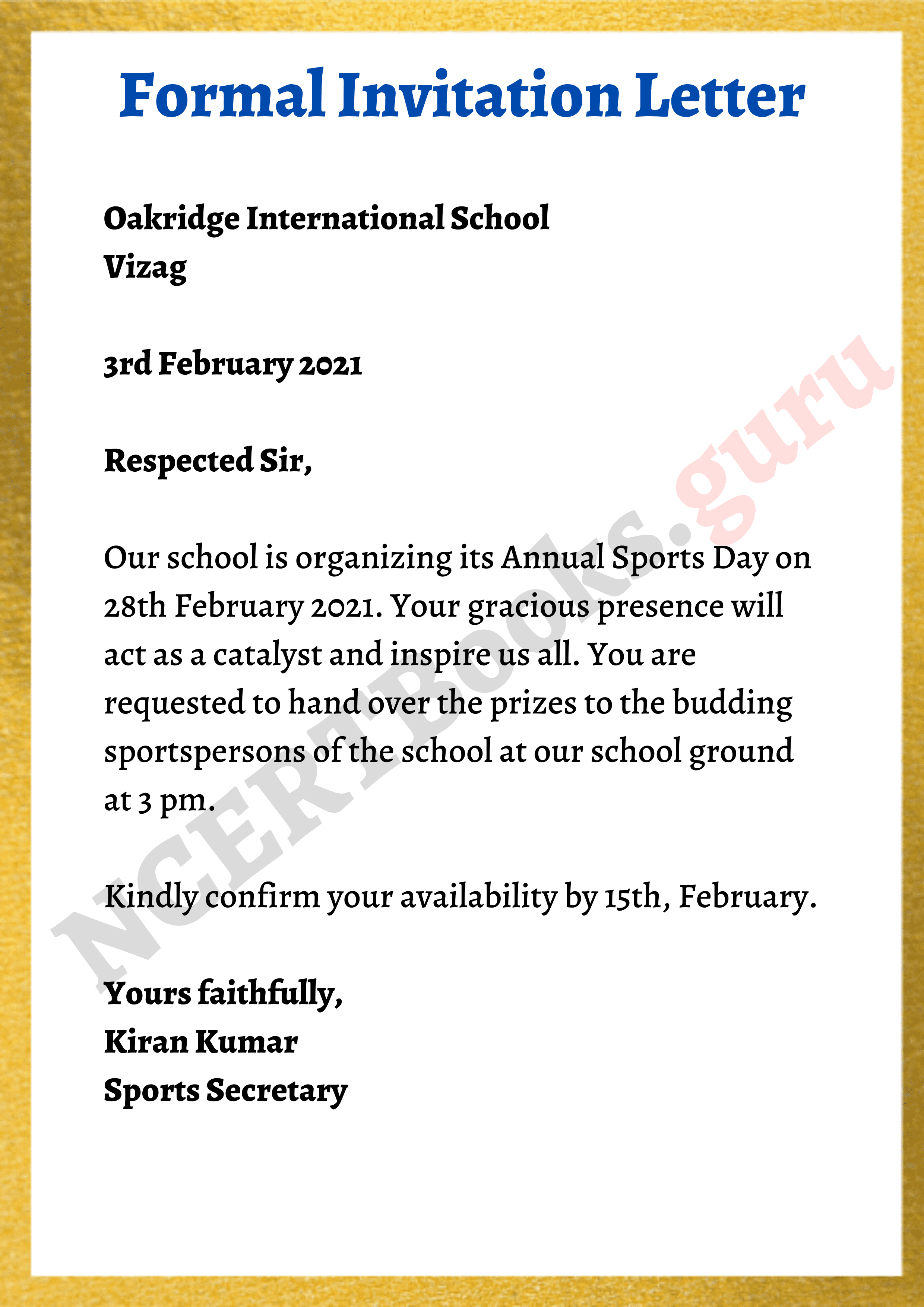
Formal Invitation Letter Example

Formal Invitation Letter

Resignation Letter Sample

Formal Resignation Letter

Tips for Writing a Formal Letter

You might need to write a formal letter at some point or the other rarely. It is still necessary to write a format letter and express your opinion in a coherent and effective manner. To help you create an effective formal letter we have jotted some of the tips for Formal Letter Writing. They are along the lines

Be Concise: State the Purpose of you writing the letter and don’t deviate from the subject. Keep the Letter Short and straight to the point. Avoid using flowery language or long words.

Use an Appropriate Tone: Since it is a formal or business letter try to use slightly formal than regular language that you use. Be Polite and Respectful even if you are complaining.

Proofread: Proofreading is important and cross-check for any grammatical or spelling mistakes. Check whether the sentences are grammatically correct or not and do complete them. Since it is a formal letter, take time while writing and don’t rush to finish it.

Use Proper Format and Presentation: Remember the first impression lasts and do use a proper format and presentation. Do address the receiver properly and don’t forget to sign at the end of the letter.

FAQs on Formal Letter

1. What is a Formal Letter?

A formal letter is a letter written in a formal language, in the stipulated format, for official purposes. It is used for official or professional communication.

2. What are the Tips for Formal Letter Writing?

Tips for Formal Letter Writing are as follows.

  • Be Concise
  • Use an Appropriate Tone
  • Proofread
  • Use Proper Format and Presentation

3. What is the Format of a Formal Letter?

The Format to keep in mind while drafting a formal letter is as such. They are along the lines

  • Sender’s Address
  • Date
  • Receiver’s Address
  • Subject(Purpose behind writing the Letter)
  • Salutation
  • Body of the Letter
  • Ending
  • Signature(Sender’s Name, Signature, Designation)

List of Maths, Science, Social Science, Sports, General Awareness GK Questions & Answers for Class 6 Kids

Gk questions for Class 6 kids

GK Questions for Class 6: Have you wonder how to answer the GK Quiz Questions so quickly? If yes, then here is the perfect solution for your question. Taking the test of Class 6 GK Quiz Questions on various websites and practicing the questions and answers given in the list of General knowledge questions for grade 6 helps students acquire general and academic knowledge throughout life and improve their skills. Also, it is clear that our provided GK Questions with answers list helps Class 6 students to grow up as wise and competent human beings.

This General Knowledge Quiz Questions & Answers for 6th Class Guide widely includes Maths GK Questions, Science & Technology GK Questions, Sports GK Questions, Social Science GK Questions, Current Affairs Questions on World & India, etc. These numerous GK Questions and Answers on various subjects will help class 6 students excel in all levels of education and improves their intelligence. This General Knowledge Questions for Class 6 List is prepared by highly experienced experts in various competitive or academic exams.

This Blog Includes:

Maths GK Questions for Grade 6

Here our team gathered the number of General Knowledge Question & Answers for Class 6 kids on Maths topics which tests your kid’s deep knowledge of basic concepts and improves their subject knowledge along with general knowledge. You can also find other General Knowledge topics on our site along with the list of GK Questions for Class 6 Maths Subject.

1. What is the square root of 169?

Answer: 13

2. What is the result for 65×65?

Answer: 4225

3. Which is the only even prime number?

Answer: 2

4. what is the shape of a dice?

Answer: Cube

5. How many seconds are there in an hour?

Answer: 3600 Seconds

6. How many decimal points can there be in a number?

Answer: 1

7. What is the name of these sequences?

1/1, 1/2, 1/3, 1/4, 1/5, ……

Answer: Harmonic Sequence

8. What is the other name of the perimeter of a Circle?

Answer: The Circumference

9. Find the missing terms in multiple of 4: 4, —, 12, 24, 36,…?

Answer: 8

10. What is the next prime number after 5?

Answer: 7

Also Check: GK Questions for Class 1 

Science 6th Class GK Quiz Questions & Answers in English

Different classes of GK information make kids more intellectual beings, notable who is updated with worldly affairs. So, Class 6 Science GK Quiz Questions with Answers in English are provided here by our team which helps students and their parents to make them learn and memorize for their upcoming exams, or quizzes or competitive exams.

1. Colt is the name of which animal’s baby?

Answer: Horse

2. What is the name of Acid which is found in Lemon?

Answer: Citric Acid

3. Which travels the fastest among two Light & Sound?

Answer: Light

4. Which fish has no skeleton at all??

Answer: Jellyfish

5. Due to the presence of Chlorophyll the leaves changes into which Color?

Answer: Green

6. What energy emerges from motion?

Answer: Kinetic energy

7. What is the standard unit of measurement for energy?

Answer: Joule

8. What is the full form of ROM?

Answer: Read-Only Memory

9. Who is known as the Father of Pathology?

Answer: Rudolph Virchow

10. Where did plants originate?

Answer: Ocean

Do Refer: GK Questions for Class 2

Social Science GK Questions with Answers for Class 6

General Knowledge is an important subject in various competitive exams along with academic subjects like maths, science, English, etc. Without the proper knowledge, it is impossible to analyze the situations and understand the conditions happening around them. So, refer to the list of SS GK Quiz Questions for Class 6 and learn some of the interesting things about the world, the Indian constitution, famous personalities, important events, history, etc.

1. How many fundamental rights are given in Indian Constitution?

Answer: 6

2. Name the Grand Old Man of the Indian National Congress?

Answer: Dadabhai Naoroji

3. What is the largest forest in the world?

Answer: Amazon Forest of Brazil

4. Who wrote the ‘Life Divine’?

Answer: Sri Aurobindo

5. Who is known as the Machiavelli of India?

Answer: Chanakya

6. Which color symbolizes peace?

Answer: White

7. In which year was the Battle of Plassey fought?

Answer: 1757

8. Which nutrient plays an essential role in muscle-building?

Answer: Protein

9. What forms together with similar body cells group?

Answer: Tissues

10. Which Mughal emperor is called Zinda Pir?

Answer: Aurangzeb

Must Check: GK Questions for Class 3

Current Affairs GK Questions for Class 6 Students

Get access to the best GK Questions for Class 6 in English on Current Affairs and get updated information about the World, India, and general things. Also, the below list of Current Affairs General Knowledge Questions for 6th Class helps kids to score high in various upcoming competitive exams or quizzes.

1. What is the name of the Punjab folk dance?

Answer: Giddha

2. Who was the first president of the USA?

Answer: George Washington

3. Who is known as “Father of Computer”?

Answer: Charles Babbage

4. Who is the fastest man in the world?

Answer: Ussain Boult

5. Who wrote the National Anthem of India?

Answer: Rabindra Nath Tagore

6. Who wrote Romeo and Juliet?

Answer: William Shakespeare

7. What is the most widely spoken language in the world?

Answer: Mandarin (Chinese)

8. WWW stands for what?

Answer: World Wide Web

9. In which year Indian Railways was founded?

Answer: 8 May 1845

10. When is the International Literacy Day?

Answer: September 8

Also Refer: GK Questions for Class 4

Sports General Knowledge Questions & Answers for Grade 6

Here is the list of Sports GK questions for Grade 6 Students. This list of Class 6 GK Quiz Questions on Sports covers the major international events such as Olympics & etc. and also other games like Tennis, Football, Cricket, etc.

1. Who won the most number of FIFA Football World Cup titles?

Answer: Brazil

2. How many players are there in an ice hockey team?

Answer: 6 Players

3. Ryder cup is associated with which sports?

Answer: Golf

4. What is the weight of a cricket ball?

Answer: 5.75 ounces

5. Which country is called the ‘father of the game of cricket’?

Answer: England

6. Donald Bradman was a great player of which game?

Answer: Cricket

7. How many medals did India win at the 2018 Asian Games?

Answer: 70

8. Olympics games are held after every?

Answer: 4 years

9. Who won India’s first medal in Wrestling at the Olympics?

Answer: KD Jadhav

10. Who won India’s first Olympic Bronze medal in Boxing?

Answer: Vijender Singh

Also, Check Related Articles:

Final Words

We hope the presented list of GK Questions for Class 6 kids will benefit most efficiently to excel in academic and general awareness. If you want to check 100 Top GK Questions for Kids of all classes then make a visit to our web portal Ncertbooks.Guru and practice well for any quizzes or annual exams or competitive exams.


NCERT Solutions for Class 9 Sanskrit Shemushi Chapter 11 पर्यावरणम्

We have given detailed NCERT Solutions for Class 9 Sanskrit Shemushi Chapter 11 पर्यावरणम् Questions and Answers will cover all exercises given at the end of the chapter.

Shemushi Sanskrit Class 9 Solutions Chapter 11 पर्यावरणम्

अभ्यासः

प्रश्न 1.
अधोलिखितानां प्रश्नानामुत्तराणि संस्कृतभाषय लिखत –

(क) प्रकृतेः प्रमुखतत्त्वानि कानि सन्ति?
उत्तर:
पृथिवी, जलं, तेजो, वायुः आकाशश्च।

(ख) स्वार्थान्धः मानवः किं करोति?
उत्तर:
स्वार्थान्धः मानव: पर्यावरणं नाशयति।
(ग) पर्यावरणे विकृते जाते किं भवति?
उत्तर:
पयावरणे विकृते जाते विविधाः रोगाः जायन्ते।

(घ) अस्माभिः पर्यावरणस्य रक्षा कथं करणीया?
उत्तर:
अस्माभिः वृक्षारोपणैः स्थल-जलचराणां जीवाना रक्षणैः च पर्यावरणस्य रक्ष करणीया।

(ङ) लोकरक्षा कथं संभवति?
उत्तर:
लोकरक्ष प्रकृतिरक्षया संभवति।

(च) परिष्कृतं पर्यावरण अस्मभ्यं किं किं ददाति?
उत्तर:
परिष्कृत पर्यावरण अस्मभ्यं जीवनसुखानि, सद्विचाराणि माङ्गलिकद्रव्याणि च ददाति।

प्रश्न 2.
स्थूलपदान्यधिकृत्य प्रश्ननिर्माण कुरुत –

(क) वनवृक्षाः निर्विवेक छिद्यन्ते।
उत्तर:
के निर्विवेक छिद्यन्ते।

(ख) वृक्षकर्तनात शुद्धवायुः न प्राप्यते।
उत्तर:
कस्मात् शुद्धवायुः न प्राप्यते।

(ग) प्रकृति जीवनसुखं प्रददाति।
उत्तर:
प्रकृति कि प्रददाति।

(घ) अजातशिशुः मातृगर्भे सुरक्षितः तिष्ठति।
उत्तर:
अजातशिशुः कुत्र सुरक्षितः तिष्ठति?

(ङ) पर्यावरणरक्षणं धर्मस्य अङ्गम् अस्ति।
उत्तर:
पर्यावरणरक्षणं कस्य अङ्गम् अस्ति?

प्रश्न 3.
उदाहरणमनुसृत्य पदरचनां कुरुत –
(क) यथा-जले चरन्ति इति चलचरा:

  1. स्थले चरन्ति इति ……………..
  2. निशायां चरन्ति इति ……………….
  3. व्योम्नि चरन्ति इति ………………..
  4. गिरौ चर्रान्त इति ………………….
  5. भूमौ चरन्ति इति ……………..

उत्तर:

  1. स्थले चरन्ति इति – स्थलचराः
  2. निशायां चरन्ति इति – निशाचराः
  3. व्योम्नि चरन्ति इति – व्योमचराः
  4. गिरौ चरन्ति इति – गिरिचराः
  5. भूमौ चरन्ति इति – भूमिचराः

प्रश्न 3.
(ख) यथ-न पेयम् इति – अपेयम्

  1. न वृष्टि इति …………
  2. न सुखम् इति …………..
  3. न भावः इति …………..
  4. न पूर्णः इति ……………

उत्तर:

  1. न वृष्टि इति – अवृष्टिः
  2. न सुखम् इति – असुखम्
  3. न भावः इति – अभावः
  4. न पूर्णः इति – अपूर्णः

प्रश्न 4.
उदाहरणनुसत्य पदनिर्माण कुरुत –
यथा – वि + कृ + क्तिन् = विकृतिः

(क) प्र + गम् + क्तिन् = …………….
(ख) दृश् + क्तिन् = …………….
(ग) गम् + क्तिन् = …………….
(घ) मन् + क्तिन् = …………….
(ङ) शम् + क्तिन् = …………….
(च) भी + क्तिन् = …………….
(छ) जन् + क्ति = …………….
(ज) भज् + क्तिन् = …………….
(झ) नी + क्तिन् = …………….
उत्तर:
(क) प्र + गम् + क्तिन् = प्रगति:
(ख) दृश् + क्तिन् = दृष्टिः
(ग) गम् + क्तिन् = गतिः
(घ) मन् + क्तिन् = मतिः
(ङ) शम् + क्तिन् = शान्तिः
(च) भी + क्तिन् = भीति:
(छ) जन् + क्तिन् = जाति:
(ज) भज् + क्तिन् = भक्ति
(झ) नी + क्तिन् = नीतिः

प्रश्न 5.
निर्देशानुसार परिवर्तयत
यथा – स्वाथान्धो मानवः अद्य पर्यावरणं नाशयति (बहृवचने)।
स्वार्थान्धाः मानवाः अद्य पर्यावरण नाशयन्ति।

(क) सन्तप्तस्य मानवस्य मङ्गलं कुतः? (बहुवचने)।
उत्तर:
सन्तप्तानां मानवाना मङ्गलं कुतः?

(ख) मानवाः पर्यावरणकुक्षौ सुरक्षिताः भवन्ति। (एकवचने)
उत्तर:
मानवः पर्यावरणकुक्षौ सुरक्षितः भवति।

(ग) वनवृक्षाः निर्विवेक छिद्यन्ते। (एकवचने)
उत्तर:
वनवृक्षः निर्विवेक छिद्यन्ते।

(घ) गिरिनिर्भराः निर्मल जलं प्रयच्छन्ति। (द्विवचने)
उत्तर:
गिरिनिर्झरा: निर्मलं जलं प्रयच्छतः।

(ङ) सरित् निर्मल जलं प्रयच्छति (बहुवचने)
उत्तर:
सरित: निर्मल जलं प्रयच्छन्ति।

प्रश्न 6.
पर्यावरणरक्षणाय भवन्तः किं करष्यिन्ति इति विषये पञ्च वाक्यानि लिखत ।
यथा – अहं विषाक्तं अवकरं नदीषु न पातयिष्यामि।

(क) ………………………।
(ग) ………………………।
(ख) ………………………।
(घ) ………………………।
(ङ) ………………………।
उत्तर:
(क) अहं यत्र-तत्र वृक्षारेपणं करिष्यामि।
(ख) अहं कदापि वृक्षान् न छेत्स्यामि।
(ग) नद्याः जले कूपे वा अपशिष्टं न क्षेपयामि।
(घ) मलमूत्राय प्रसाधनकक्षे एवं गमिष्यामि।
(ङ) कदापि प्रदूषणोत्पादक वाहन न चालयिष्यामि।

प्रश्न 7.
(क) उदाहरणमनुसृत्य उपसर्गान् पृथक्कृत्वा लिखत –
यथा – सरंक्षणाय – सम्

  1. प्रभवति ………………….
  2. उपलभ्यते …………………
  3. निवसन्ति …………………
  4. समुपहरन्ति …………………
  5. वित्तरन्ति …………………
  6. प्रयच्छन्ति …………………
  7. उपगता …………………
  8. प्रतिभाति …………………

उत्तर:

  1. प्रभवति – प्र
  2. उपलभ्यते – उप
  3. निवसन्ति – नि
  4. समुपहरन्ति – सम् + उप
  5. वितरन्ति – वि
  6. प्रयच्छन्ति – प्र
  7. उपगता – उप
  8. प्रतिभाति – प्रति

प्रश्न 7.
प्रति (ख) उदाहरणनुसृत्य अधोलिखितानां समस्तपदाना विग्रहं लिखत –
यथा- तेजोवायुः तेजः वायुः च।
गिरिनिर्झराः गिरयः निर्झरा: च।

  1. प्रतिभाति – ……………….
  2. लतावृक्षौ – ……………….
  3. पशुपक्षी – ……………….
  4. कीटपतङ्गो – ……………….

उत्तर:

  1. प्रतिभाति – पत्रम् पुष्पञ्च (पुष्पम् च)
  2. लतावृक्षौ – लता वृक्षश्च (वृक्षः च)
  3. पशुपक्षी – पशु पक्षी च
  4. कीटपतङ्गौ – कीट: पतङ्गः च

परियोजनाकार्यम्

(क) विद्यालयप्राङ्गणे स्थितस्य उद्यानस्य वृक्षाः पादाापाश्च कथं सुरक्षिताः स्युः तदर्थं प्रयत्नः करणीयः इति सप्तवाक्येषु लिखत।
उत्तर:

  1. वृक्षेषु पादपेषु च प्रतिदिन जलसेकः करणीयः।
  2. कदापि पादपस्य पत्रं पुष्पं च न आहरणीयः।
  3. उद्यानं परितः ब्रजः रोपणीयः।
  4. उद्याने अपशिष्ट न क्षेपणीयः।
  5. समये समये, पादपाना स्वस्थजीवनाय, अतिरिक्त पत्राणां शाखानांचकर्तन कर्त्तव्यम्।
  6. मूलेषु यदा कदा उत्खननक्रिया करणीया।
  7. पादपाः सवैरेव पुत्रवत् पालनीयाः।

(ख) अभिभावकस्य शिक्षकस्य वा सहयोगेन एकस्य वृक्षस्य आरोपणं करणीयम्। कृतं सर्व दैनन्दियां लिखित्वा शिक्षक दर्शयत।
उत्तर:
ह्यः मया गृहस्य प्राङ्गणे एक: वृक्षः आरोपितः। ततः तस्य मूले मया जलं दत्तम्। मम पित्रा अपि अस्मिन् कार्ये सहयोगः दत्तः। तं परितः मया ईष्टिकामिः वजः निर्मितः। तत्र मूलें मया स्वल्पं उर्वरकमपि समुत्क्षिप्तम्। अहमति प्रसन्नतामनुभवे।

व्याकरणात्मकः बोधः

1. पदपरिचयः-(क)

  • समेषाम् – सम सर्व, शब्द, षष्ठी विभक्ति, बहुवचन। सभी की।
  • इयम् – इदम् (स्त्री.) शब्द, प्रथमा विभक्ति, एकवचन। यह (प्रकृति)
  • तानि – तत् (नपु.) प्रथमा विभक्ति, बहुवचन। थे।
  • कुक्षी – कुक्षि शब्द (स्त्री.) सप्तमी विभक्ति, एकवचन। गोद में)
  • अस्माभिः – अस्मद् शब्द, तृतीया विभक्ति. बहुवचन। हमारे
  • सरितः – सरित् शब्द, प्रथमा विभक्ति, बहुवचन। नदियाँ।
  • औषधकल्पम् – औषधे कल्पम्। दवा के समान। ‘कल्प’ शब्द सादृश्यार्थ में संज्ञा के साथ जुडता है।
  • विनाशकी – विनाश + कर्तृ + डीप। प्रथमा विभक्ति एकवचन। विनाशकारिका।
  • अपनोदिन: – अप + नुद् + इन्। प्रथमा विभक्ति, बहुवचन। दूर ले जाने वाले।
  • अपहारिण: – अप + हु + इन्। प्रथमा विभक्ति, बहुवचन। दूर ले जाने वाले।

(ख) यतते – यत् धातु (आ.प.), लट्लकार, प्र.पु.. एकवचन। कोशिश करती है।

  • पुष्णाति – पुष् धातु, लट्लकार, प्र.पु.. एकवचन। पुष्ट करती है।
  • आवियते – आ + वृ (कर्म.), लट्लकार, प्र.पु.. एकवचन। चारों ओर से ढकता है।
  • प्रभवति – प्र + भू धातु, लट्लकार, प्र.पु.. एकवचन। समर्थ होता है।
  • बदति – दाण् धातु, लट्लकार, प्र.पु., बहुवचन। देते हैं।
  • प्रयच्छन्ति – प्र. दाण् . लट्लकार प्र.पु. बहुवचन। दाण को यच्छ आदेश। प्रदान करते हैं।
  • वितरन्ति – वि + तु + लट्लकार, प्र.पु. बहुवचन। प्रत्येक को प्रदान करते हैं।
  • प्रतिभाति – प्रति + भा + लट्लकार, प्र.पु.. एकवचन। लगता है, दिखाई देता है। .
  • निपात्यते – नि + पत् + णिच् (कर्म), लट्लकार, प्र.पु. . एकवचन। गिरा दिया जाता है।
  • छिद्यन्ते – छिद् (आ.) (कर्म.), लट्लकार, प्र.पु. बहुवचन। काट दिए जाते हैं। (काट जा रहे हैं)

2. सन्धिकार्यम् (क)

  • सुरक्षितस्तिष्ठति – सुरक्षितः + तिष्ठति
  • उल्कापातादिभिश्च – उल्कापातादिभिः + च
  • गिरिनिर्भराश्च – गिरिनिर्भराः + च
  • मानवस्तदेव – मानवः + देव
  • वनपशवश्च – वनपशवः + च
  • जलचराश्च – जलचरा: + च
  • अपहारिणश्च – अपहारिणः + च

विसर्ग सन्धि का एक रूप –

  • जब विसर्ग के सामने त या थ आता है तो विसर्ग को ‘स’ कार हो जाता है।
  • जब विसर्ग के सामने च या छ आता है तो विसर्ग को ‘श’ कार हो जाता है।
  • जब विसर्ग के सामने ट या ठ आता है तो विसर्ग को ‘ष’ कार हो जाता है। जैसे-
    धनु + टङ्कारः = ध नुष्टङ्कारः

(ख) परसवर्णसन्धिः

  • सम् + कल्पम्-सङ्कल्पम्
  • आतम् + कितः-आतङ्कित:
  • सम् + कट:-सङ्कटः
  • अम् + केन-अङ्कन
  • पम् + क्तिः-पङ्क्तिः

पदान्त अनुस्वार को, जब सामने कोई भी व्यञ्जन हो (श्, ष्. स, ह को छोड़कर) तो उसको परवर्ती वर्ण (व्यंजन) का 5 वाँ वर्ण हो जाता है। अनुस्वार सहित। जैसे ऊपर के उदाहरणों में पूर्ववर्ती पदान्त ‘म्’ को उत्तरवर्ती वर्ण का पञ्चम वर्ण, अनुस्वार सहित हुआ है। इसी प्रकार से –
शम् + का = शङ्का,
त्वम् + करोषि = त्वङ्करोषि।

Class 9 Sanskrit Shemushi Chapter 11 पर्यावरणम् Summary Translation in Hindi

प्रकृति समेषां प्राणिनां ………………. क्व मङ्गलम्?

प्रसङ्ग – प्रस्तुत पंक्तियाँ हमारी संस्कृत की पाठ्य – पुस्तक ‘शेमुषी’ प्रथमोभागः से अवतरित हैं। इन पंक्तियों के धारक पाठ का नाम “पर्यावरणम्” है। प्रस्तुत पाठ हमें पर्यावरण प्रदूषण में हो रही वृद्धि के विरुद्ध सतर्क व सचेत करता है।

सरलार्थ – प्रकृति सभी प्राणियों के सरंक्षण हेतु प्रयत्नशील है। यह सभी का अनेक प्रकार से पोषण करती है और अनेकों सुख – साधनों से तृप्त (सन्तुष्ट) करती है। इसके प्रमुख अङ् है – पृथिवी, जल, तेज (अग्नि) वायु और आकाश, ये पांचा मिलकर या पृथक् रूप में हमारे लिए पर्यावरण का निर्माण करते हैं। जिसके द्वारा सब ओर से यह संसार आच्छादित है, वहीं पर्यावरण है। जिस प्रकार से अजन्मा शिशु माता के गर्भ में सुरक्षित रहता है, उसी तरह से मनुष्य प्रकृति के गर्भ में अर्थात पर्यावरण के अन्दर सुरक्षित रहता है। सब प्रकार से शुद्ध और प्रदूषण से रहित पर्यावरण हमारे लिए सांसारिक जीवन के सुख – सद्विचार, सत्यसङ्कल्प और मङ्गलदायक सामग्री प्रदान करता है। प्रकृति के कोप से आतङ्कित (पीडित) व्यक्ति क्या कर सकता है? जलभराव (बाढ़), अग्निकांडों, भूकम्पों, आंधियों और उल्कापात आदि (प्राकृतिक प्रकोपों) से पीडित मनुष्य को मङ्गल (सुखचैन) कहाँ

अतएव प्रकृतिरस्माभिः ……………….. ददति।

प्रसङ्ग – प्रस्तुत पंक्तियाँ हमारी संस्कृत की पाठ्य – पुस्तक ‘शेमुषी’ प्रथमोभागः से अवतरित हैं। इन पंक्तियों के धारक पाठ का नाम “पर्यावरणम्” है। प्रस्तुत पाठ हमें पर्यावरण प्रदूषण में हो रही वृद्धि के विरुद्ध सतर्क व सचेत करता है।

सरलार्थ – इसलिए हमें प्रकृति की रक्षा करनी चाहिए। और उसी से पर्यावरण की रक्षा होगी। प्राचीन काल में लोक – कल्याण के उपासक ऋषि वनों में रहा करते थे। क्योंकि वन में ही उन्हें सुरक्षित पर्यावरण उपलब्ध हुआ करता था। विविध पक्षी अपने मधुर कूजन से वहां कर्णामृत दिया करते थे।

सरितो गिरिनिर्झराश्च ………….. वितरन्ति।

प्रसङ्ग – प्रस्तुत पंक्तियाँ हमारी संस्कृत की पाठ्य – पुस्तक ‘शेमुषी’ प्रथमोभागः से अवतरित हैं। इन पंक्तियों के धारक पाठ का नाम “पर्यावरणम्” है। प्रस्तुत पाठ हमें पर्यावरण प्रदूषण में हो रही वृद्धि के विरुद्ध सतर्क व सचेत करता है।

सरलार्थ – नदियाँ और पहाडी झरने अमृत के समान स्वादिष्ट निर्मल जल प्रदान करते हैं। पेड़ पौधे और लताएं फल, फूल तथा बहुत सारी इन्धन की लकड़ियाँ हमें उपहार करती हैं। शीतल, मन्द और सुगन्धित पवने हमारे लिए औषधि के समान प्राणवायु देती हैं।

परन्तु स्वार्थान्धो ……………… चिन्तनीय प्रतिभाति।

प्रसङ्ग – प्रस्तुत पंक्तियाँ हमारी संस्कृत की पाठ्य – पुस्तक ‘शेमुषी’ प्रथमोभागः से अवतरित हैं। इन पंक्तियों के धारक पाठ का नाम “पर्यावरणम्” है। प्रस्तुत पाठ हमें पर्यावरण प्रदूषण में हो रही वृद्धि के विरुद्ध सतर्क व सचेत करता है।

सरलार्थ – परन्तु स्वार्थ में अन्धा हुआ मनुष्य आज उसी पर्यावरण को नष्ट कर रहा है। लोग थोडे से लाभ के लिए बहुमूल्य वस्तुओं को नष्ट कर रहे हैं। कल – कारखानों का विषैला जल नदी में गिरा दिया जाता है जिससे मछली आदि जलजीवों का क्षण भर में ही नाश हो जाता है। और वह, नदी का जल भी अपेय (न पीने योग्य) हो जाता है। अपना व्यापार चलाने के लिए, बिना सोचे समझे वन के वृक्षों को काटा जा रहा है जिससे अनावृष्टि (सूखा) बढ़ती जा रही है और बेसहारा जंगली जीव (पशु) गाँवों में आकर उत्पात करते हैं। वृक्षों की कटाई से (आज) शुद्ध वायु का भी सङ्कट (अकाल, अभाव) उत्पन हो गया है। इस प्रकार से स्वार्ध में अन्धे मनुष्यों द्वारा विकृति (प्रदूषित) को प्राप्त प्रकृति ही उनके विनाश का कारण बन चुकी है। पर्यावरण के विकृत (प्रदूषित) होने पर विभिन्न रोग तथा अन्य भयङ्कर समस्याएं पैदा हो रही हैं। अत यह सब कुछ अब विचार करने योग्य लगता है।

धर्मो रक्षति रक्षितः ………………….. न संशयः।

प्रसङ्ग – प्रस्तुत पंक्तियाँ हमारी संस्कृत की पाठ्य – पुस्तक ‘शेमुषी’ प्रथमोभागः से अवतरित हैं। इन पंक्तियों के धारक पाठ का नाम “पर्यावरणम्” है। प्रस्तुत पाठ हमें पर्यावरण प्रदूषण में हो रही वृद्धि के विरुद्ध सतर्क व सचेत करता है।

सरलार्थ – “रक्षित धर्म ही मनुष्य की रक्षा करता है।” यह आद्य ऋषियों के वचन है। पर्यावरण की रक्षा करना भी धर्म का ही एक अङ्ग है” ऐसा ऋषियों के द्वारा प्रतिपादित (वर्णित) किया गया है। तभी तो वापी (तालाब) कुओं तथा तालाब आदि के निर्माण को और मन्दिर, तथा धर्मशालाओं, आदि के निर्माण को धर्म की सिद्धि के स्रोत (आधार) के रूप में स्वीकार किया गया है। (हमारे द्वारा) कुत्ते – सूअर – सौंप – नेवले आदि थलचरों (भूमि के जीवों) तथा मछली – कछुए तथ घडियाल आदि जलचरों (जल में रहने वाले जीवों) की रक्षा होनी चाहिए, क्योंकि वे भूमि के मल (गन्दगी) तथा पानी के मल को हटा कर दूर करने वाले हैं। “प्रकृति की रक्षा करने ही संसार की रक्षा हो सकती है” इसमें कोई सन्देह नहीं है।