Nowadays, having a bank account from a young body to the old body becomes necessary to save money and also to receive money from the government under many student schemes like scholarships, etc. Also, knowing more about Banking products helps students to score more marks in the General Knowledge test & quizzes. So to increase your GK skills in banking, we have published the list of all public and private sector Banks in India 2020.
On 30th August 2019, 10 PSB were joined with four huge PSB. Thus, the count of Public sector Banks in India is diminished to 12. Besides, the number of Private sector banks is diminished to 22. Go ahead and check the list of all Indian PSB and Private sector banks 2020 and know the baking products in a detailed way.
Basic Details About Banking in India: List of all Public and Private Sector Banks in India
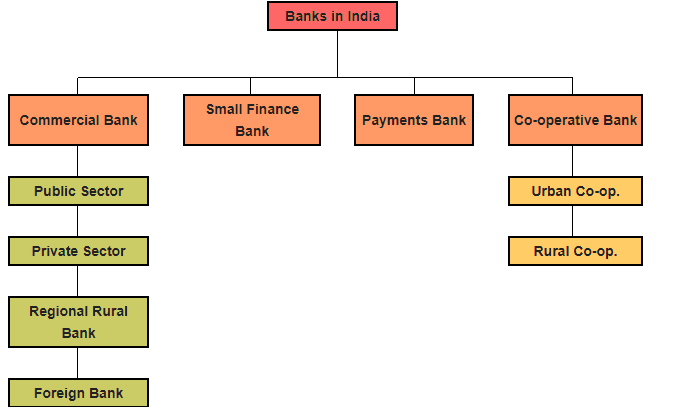
In India, the Reserve Bank of India(RBI) is having the highest baking regulator authority and it was formed under the act of RBI Act, 1934. Banks in India are mostly divided into two groups, ie., Scheduled Banks and Non-Scheduled Banks. Based on the ownership, commercial banks are classified into two groups i.e. Private Sector Banks and Public Sector Banks, also it has classified into two other groups ie., Regional Rural Bank and Foreign Bank. However, you will get to see the list of PSU and Private Banks in India 2020 from the further sections.
Banks in India are divided into four categories. They are as under
Commercial Banks
Small Finance Banks
Payments Banks
Co-operative Banks
Types of Commercial Banks in India
Scheduled Banks that have been involved in the Second Schedule of RBI Act,1934 are categorized into four types of banks. They are as follows;
1. Private Sector Banks: The majority of the stake is maintained by private individuals. Examples of Private banks are HDFC Bank, ICICI Bank, and AXIS Bank, etc.
2. Public Sector Banks: The bulk of the stake is maintained by the government. Examples of Public Sector Banks are Punjab National Bank, state bank of India and Central Bank of India, etc.
3. Regional Rural Banks (RRB): The Regional Rural Banks were owned by the Central Government, the State Government, and the Sponsor Bank. Examples of RRBs are Andhra Pradesh Grameena Vikas Bank, Mizoram Rural Bank, etc.
4. Foreign Banks: The list of foreign banks head offices are located outside the country. Examples of Foreign Sector Banks are Standard Chartered Bank, American Express, and Citi Bank, etc.
Here is the list of all private sector banks and public sector banks (PSU) in India in 2020, we have collected from various sources. Check them out before you apply for any bank accounts in the nearest banks India.
Check the List of Public Sector Banks (PSU) in India 2020
Bank Name
Establishment
Headquarter
1. Bank of Baroda
1908
Vadodara, Gujarat
2. Bank of India
1906
Mumbai, Maharashtra
3. Bank of Maharashtra
1935
Pune, Maharashtra
4. Canara Bank
1906
Bengaluru, Karnataka
5. Central Bank of India
1911
Mumbai, Maharashtra
6. Indian Bank
1907
Chennai, Tamil Nadu
7. Indian Overseas Bank
1937
Chennai, Tamil Nadu
8. Punjab and Sind Bank
1908
New Delhi, Delhi
9. Punjab National Bank
1894
New Delhi, Delhi
10. State Bank of India
1955
Mumbai, Maharashtra
11. UCO Bank
1943
Kolkata, West Bengal
12. Union Bank of India
1919
Mumbai, Maharashtra
Check the List of Private Sector Banks in India 2020
Bank name
Establishment
Headquarter
1. Axis Bank
1993
Mumbai, Maharashtra
2. Bandhan Bank
2015
Kolkata, West Bengal
3.CSB Bank
1920
Thrissur, Kerala
4. City Union Bank
1904
Thanjavur, Tamil Nadu
5.DCB Bank
1930
Mumbai, Maharashtra
6. Dhanlaxmi Bank
1927
Thrissur, Kerala
7. Federal Bank
1931
Aluva, Kerala
8. HDFC Bank
1994
Mumbai, Maharashtra
9. ICICI Bank
1994
Mumbai, Maharashtra
10. IndusInd Bank
1964
Mumbai, Maharashtra
11. IDFC FIRST Bank
2015
Mumbai, Maharashtra
12. Jammu & Kashmir Bank
1938
Srinagar, Jammu and Kashmir
13. Karnataka Bank
1924
Mangaluru, Karnataka
14. Karur Vysya Bank
1916
Karur, Tamil Nadu
15. Kotak Mahindra Bank
2003
Mumbai, Maharashtra
16. Lakshmi Vilas Bank
1926
Chennai, Tamil Nadu
17. Nainital bank
1922
Nainital, Uttarakhand
18. RBL Bank
1943
Mumbai, Maharashtra
19. South Indian Bank
1929
Thrissur, Kerala
20. Tamilnad Mercantile Bank
1921
Thoothukudi, Tamil Nadu
21. YES Bank
2004
Mumbai, Maharashtra
22. IDBI Bank
1964
Mumbai, Maharashtra
The above tables help students to know the details about the private sector banks and Public sector banks in India and also these may vary from time to time. So, candidates are advised to get updated information about the PSB and Private banks from the news or other online portals like Ncertbooks.guru
FAQs on Indian Private Sector and Public Sector Banks 2020
1. How many Old and New private sector banks are there in India?
At present, there are 12 old and 9 new private sector banks in India in 2020. Check the above table and get the names of all Indian private banks.
2. How many public sector banks are there in India?
Public Sector Banks (PSBs) is a major type of bank in India, where a majority stake (i.e. more than 50%) is held by the government. There are a total of 12 Public Sector Banks beside 1 state-owned Payments Bank in India.
3. Who is the No 1 bank in India?
HDFC Bank developed as India’s No. 1 bank.
4. Which is the 2nd largest bank in India?
ICICI Bank is India’s second-largest bank with a great network of about 450 branches and offices and nearly 1,750 ATMs.
Was The New Deal A Success Or Failure: The New Deal was a plan implemented by Franklin D. Roosevelt during his presidency in the United States. The idea was to help the country recover from the Great Depression by providing various means of relief for people across America, all while helping to create jobs and stimulate economic growth. The New Deal had mixed success in achieving its goals, but it is nevertheless considered one of the most significant achievements in American history.
You can also find more Essay Writing articles on events, persons, sports, technology and many more.
Is the New Deal?
The New Deal has been a major event in American History. It helped shape the United States as we know it today. The New Deal was a series of programs designed to address the problems of the Great Depression which included unemployment, poor economic growth, and high prices. President Franklin D. Roosevelt enacted these policies which were part of a broader set of programs called “The New Nationalism”. His main goal was to make America strong again after it had fallen during World War I and World War II. New Deal programs provided work relief for people out of work; established Social Security; created national parks; improved agricultural production; and created housing subsidies to provide affordable homes for the working class people in America’s cities.
How the New Deal Changed the Life of Americans
In many ways, the New Deal was a huge change for Americans. It helped people on a larger scale and made them feel better about their lives. It is still unclear what effects this legislation had on society as a whole as there are many differing opinions from historians and experts of that time period. However, the policies he introduced brought about significant growth to the country after the Great Depression. Among these changes included economic relief, tax reductions, and an increase in social security for all citizens. Roosevelt was able to get this legislation passed because of his charisma and the fact that he knew how to work with people across party lines.
Banking Reform
Franklin D. Roosevelt’s New Deal introduced banking reform, which put the powers of banking in the hands of the federal government. This led to more people being employed and there being less business failures. The banking reform also helped to take care of distressed farmers.
Farm and rural programs
During the New Deal, Franklin D. Roosevelt created the Farm Security Administration in 1933. The aim of the FSA was to stabilize farm incomes by giving farmers access to credit and crop insurance, among other benefits.
Monetary reform
In the United States, there was a dramatic economic downturn in the 1930s. The Great Depression was a time of widespread unemployment, low wages, and poor working conditions. The New Deal legislation instituted by the government attempted to address these issues by providing a variety of relief programs and banking reforms.
Repeal of Prohibition
On October 28, 1933, President Franklin D. Roosevelt signed the Twenty-first Amendment to the United States Constitution, which repealed the Eighteenth Amendment and ended Prohibition. The amendment was ratified by the requisite number of states on December 5. This move helped bring in much needed wealth and investments into the country.
Public Works
The Works Progress Administration was given the responsibility to create jobs for Americans during the Great Depression. It was created by Franklin D. Roosevelt in 1935 and its goal was to create work for those who were struggling to make ends meet. This program employed millions of American workers who were either unemployed or underemployed to carry out public work projects which included construction of roads and public buildings.
Federal One Project
The Federal One project was a series of public works projects that expanded the scope of the WPA. The Federal Arts Project provided funding for artists, musicians, painters and writers on relief to create art that would help stimulate public interest. It was also one of the largest public works projects in United States history. However, it was mostly abandoned after World War II, but it did not end until Congress ended all funding for the WPA in 1943.
Second New Deal (1935–1936)
In 1935, President Franklin D. Roosevelt undertook a series of economic reforms to end the Great Depression. Roosevelt needed a new plan to help the American economy recover from the Depression and put people back to work. So, he proposed a Second New Deal that would provide a number of programs that would address unemployment, job creation and downfalls of the previous New Deal. The Second New Deal called for measures such as Provisions for Emergency Employment during Crises, relief from mortgage foreclosures, pensions for all workers over 60 years old, an increase in public works spending and regulations on business practices.
What was Franklin D. Roosevelt’s Success & Failure in the New Deal
In conclusion, Franklin D. Roosevelt, the 32nd President of the United States, was a charismatic leader who helped the U.S. recover from the Great Depression and later transformed America into an international superpower during his presidential term. He is credited with achieving his goals through social programs such as Social Security and welfare state programs such as public housing and unemployment benefits because he understood how to use public opinion to convince people of his plans. Regardless, the New Deal was the most significant economic stimulus ever enacted in the US. It brought about staggering increases in employment, wages, and production of consumer goods, with a far-reaching impact on American society. The role of government was to provide for the welfare of Americans, an expectation that had not been met since before World War I. The New Deal changed this tradition significantly by creating a framework for public investment and social insurance that helped millions of Americans to better provide for themselves and their families.
FAQ’s on The New Deal
Question 1.
What is the New Deal?
Answer:
The New Deal was an economic program in the United States designed to help the country recover from the Great Depression. It introduced a series of programs and policies that were aimed at helping American citizens in their difficult times.
Question 2.
Who Introduced the New Deal?
Answer:
The New Deal was a collection of economic reforms that President Franklin D. Roosevelt enacted to revitalize the United States after the Great Depression.
Question 3.
What were the 3 R’s of the New Deal?
Answer:
The three main pillars of the New Deal were Relief, Recovery, and Reform.
Question 4.
What was the purpose of the New Deal?
Answer:
The New Deal was a series of programs, agencies, and policies enacted by the U.S. government to address the Great Depression as well as the financial crisis following the stock market crash of 1929.
NCERT Solutions for Class 6 Sanskrit Ruchira Chapter 12 दशमः त्वम असि
अभ्यासः
पाठ का सम्पूर्ण सरलार्थ-
1. एकस्मिन् ग्रामे ………….. पश्यति स्म। (पृष्ठ-74)
हिन्दी सरलार्थ-
एक गाँव में कोई निर्धन युवक था। उसका नाम धनपाल था। वह प्रतिदिन भिक्षा के लिए गाँव-गाँव में घूमता था। भिक्षा में प्राप्त सत्तुओं से उसका घड़ा भर जाता था। वह घड़े को खूटी पर लटकाकर उसके नीचे चारपाई पर सोता था और सोते समय लगातार एकटक दृष्टि से घड़े को देखता था।
2. सः एकदा ……………… प्रहरिष्यामि। (पृष्ठ-79)
हिन्दी सरलार्थ-
उसने एक बार रात में इस प्रकार सोचा-मेरा यह घड़ा सत्तुओं से भरा हुआ है। जब अकाल पड़ेगा तब सत्तू बेचकर बहुत अधिक धन प्राप्त करूँगा। फिर उस धन से मैं दो बकरियाँ खरीदूंगा। दोनों बकरियों के बच्चों से मेरे पास बकरियों का समूह हो जाएगा। बकरियों को बेचकर गायों, भैसों और घोड़ों को खरीदूंगा। उनके बच्चों से बहुत सारे पशु हो जाएँगे। उनको बेचने से मेरे पास बहुत सारा धन आ जाएगा। धन से विशाल भवन का निर्माण करवाऊँगा। तब मुझे धनवान मानकर कोई मुझे सुन्दर कन्या दे देगा। उससे मेरा पुत्र (उत्पन्न) होगा उसका नाम मैं सोमशर्मा रलूँगा। कभी खेलता हुआ वह पुत्र मेरे पास आएगा। तब क्रोधित होकर मैं अपनी पत्नी को बोलूँगा-इस बालक को पकड़। वह घर के काम में लगी हुई मेरी बात जब नहीं सुनेगी, तब मैं पत्नी के ऊपर पैर से प्रहार करूँगा।
3. एवं स्वप्नेन ……………….. मनोरथैः इति। (पृष्ठ-80)
हिन्दी सरलार्थ-
इस प्रकार सपने से प्रेरित होकर उसने पैर से प्रहार किया। उससे सत्तुओं से भरा हुआ घड़ा भूमि पर गिर गया और टूट गया। टूटे हुए घड़े के साथ ही उसकी मन की इच्छाएँ भी टूट गईं। इसलिए कहा जाता है परिश्रम से ही कार्य पूरे होते हैं, मन की इच्छाओं से नहीं।
Countries Ranked by Largest Forest Area: Can you answer these questions “What is the largest country in the world by largest forest area? Which country has the highest percentage of forest area in the world?” If not, then this is the correct page for you. Here we are listing out the countries rank by largest forest area along with the percentage of the forest cover in the world. This topic is very important for the students appearing in various competitive exams and general knowledge quizzes.
Forest Areas are the most crucial place for various living organisms. Also, it helps the environment maintained in a balanced condition and saves human lives from the upcoming disasters. But few forest cover areas are destroying due to advancements for humans. People in some forest areas cut the trees and made a variety of wood items & things and also used for various activities. Destroying the forest areas means threatening many endangered animal species. So, save forest areas and lead population-free life in the future.
Moreover, go through the below links and collect the information about the countries rank by largest forest cover together with the percentage of forest area in the world 2020.
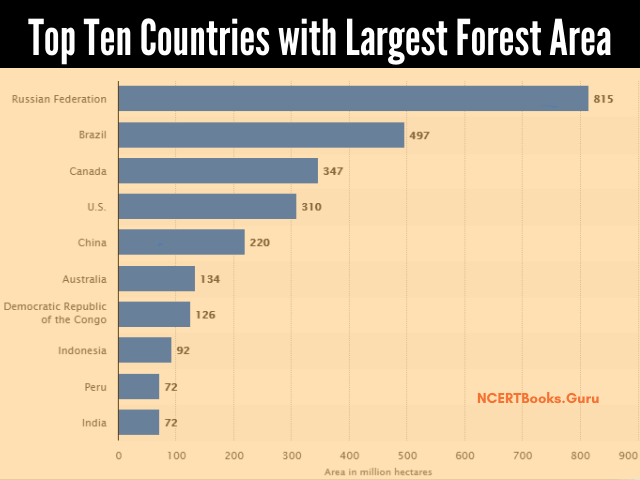
Top 10 Countries With The Largest Forest Cover In The World
The largest country by the percentage of forest cover in the world is ‘Brazil’, but the world’s largest country by land area and forest area is ‘Russia’. Since 1990, the forest cover in this country is growing, all credits go to the Russian government. More than 20% of the world’s untouched forests are in the Russian Federation. On the other hand, nearly 20% of the great Amazon rainforest has been slaughtered in the last 40 years.
The Amazon rainforest covers 9 countries, and approximately 60% of it is in Brazil. Thus, check the top 10 countries ranked by largest forest areafrom the below and remember each country’s details for answering various questions in bank or government or competitive exams.
List of 150+ Countries with Percentage of forest cover in world 2020
Here is the list of 150+ countries by forest area in the world 2020 given in the tabular form for better preparation and having a good grip on general knowledge topics about the world.
S.No
Country
Total Forest Area
Percentage of Forest Area
1
Russian Federation
8,450,487.791
49.4
2
Brazil
5,256,557.164
61.9
3
Canada
3,426,487.451
34.1
4
United States of America
3,173,720.996
33.3
5
China
2,100,915.088
22.3
6
Congo-Kinshasa
1,581,668.504
67.9
7
Australia
1,242,495.678
16.2
8
Indonesia
977,439.793
51.7
9
India
727,718.926
23.1
10
Peru
684,387.017
53
11
Mexico
650,665.949
33.3
12
Colombia
618,941.438
54.4
13
Angola
579,303.106
46.5
14
Bolivia
568,202.294
52.5
15
Zambia
497,232.336
66.3
16
Venezuela
475,417.132
52.1
17
Tanzania
350,298.43
37.3
18
Mozambique
343,490.345
43.7
19
Myanmar
322,569.065
48.2
20
Sweden
311,966.769
68.7
21
Argentina
297,849.04
10.7
22
Papua New Guinea
291,494.156
63.1
23
Japan
256,327.461
68.5
24
Finland
248,618.349
72.9
25
Congo-Brazzaville
225,083.193
65.6
26
Central African Republic
223,699.314
36.2
27
Gabon
212,470.445
81
28
Malaysia
204,435.874
62
29
Cameroon
194,563.679
41.7
30
Thailand
191,858.782
37.2
31
Spain
186,875.587
36.8
32
Paraguay
174,774.255
43.8
33
Chile
164,175.756
21.9
34
Guyana
163,160.885
77.4
35
France
161,071.646
29.2
36
Laos
156,148.939
67.9
37
Zimbabwe
154,115.706
39.5
38
Vietnam
148,095.036
45
39
Ethiopia
137,928.365
12.2
40
Suriname
137,543.845
94.6
41
Mali
127,928.677
10.2
42
Madagascar
126,525.694
21.5
43
Turkey
116,439.604
14.9
44
Chad
116,064.62
9.1
45
Botswana
114,319.876
19.8
46
Germany
114,116.408
31.8
47
Iran
110,644.917
6.8
48
Mongolia
110,000.043
7
49
Norway
108,449.231
27.8
50
Côte d’Ivoire
105,223.307
32.7
51
Cambodia
102,704.809
56.5
52
Ukraine
100,930.866
16.8
53
Ecuador
99,591.677
38.9
54
Poland
95,724.755
30.6
55
Italy
95,000.428
31.4
56
South Africa
92,496.571
7.6
57
Belarus
88,842.385
42.7
58
Nigeria
86,420.137
9.5
59
Senegal
86,002.053
43.8
60
New Zealand
84,075.452
31.4
61
Philippines
76,472.612
25.9
62
Namibia
72,375.157
8.8
63
Morocco
69,472.258
11.5
64
Romania
68,524.797
28.7
65
Somalia
67,104.802
10.6
66
Guinea
64,904.327
26.5
67
South Korea
64,437.684
63.9
68
North Korea
56,553.91
46
69
Burkina Faso
55,630.304
20.4
70
Honduras
50,809.222
45.3
71
Ghana
50,629.286
21.2
72
Benin
46,109.97
40
73
Turkmenistan
43,059.769
8.8
74
Liberia
42,837.255
44.6
75
Bulgaria
40,774.69
36.7
76
Greece
40,351.72
30.5
77
Malawi
40,295.91
34
78
Austria
39,667.126
47.2
79
Nepal
37,512.593
25.4
80
Guatemala
36,622.697
33.6
81
Kenya
35,485.916
6.1
82
Uganda
35,020.634
14.5
83
Latvia
34,987.516
54.1
84
Portugal
34,951.041
37.8
85
Uzbekistan
34,580.719
7.7
86
Bhutan
33,187.479
85.5
87
Kazakhstan
32,808.514
1.2
88
Panama
32,612.587
43.6
89
Nicaragua
32,517.011
25.3
90
Cuba
30,229.666
27.3
91
United Kingdom
29,258.818
11.9
92
Georgia
27,469.357
39.4
93
Sierra Leone
27,200.527
37.5
94
Czech Republic
27,162.5
34.4
95
Costa Rica
26,329.514
51.5
96
Serbia
24,558.69
31.6
97
Estonia
23,661.212
52.1
98
Lithuania
22,486.626
34.6
99
Solomon Islands
22,403.037
78.9
100
Bosnia and Herzegovina
21,937.907
42.8
101
Hungary
20,951.721
22.5
102
Slovakia
19,724.225
40.2
103
Uruguay
19,667.628
10.2
104
Dominican Republic
19,664.573
40.8
105
Croatia
19,454.051
34.4
106
Sri Lanka
19,429.223
29.4
107
Algeria
18,987.102
0.82
108
Guinea-Bissau
18,595.761
55.2
109
Pakistan
18,238.608
2.1
110
Eritrea
18,182.127
15.1
111
Bangladesh
15,581.844
11.1
112
Equatorial Guinea
15,547.52
57.5
113
Afghanistan
13,313.587
2.07
114
Belize
13,311.872
60.6
115
Switzerland
13,014.029
31.5
116
Slovenia
12,638.22
62.3
117
Niger
11,832.046
1
118
Fiji
10,431.302
55.7
119
Tunisia
10,225.792
6.6
120
Kyrgyzstan
10,143.702
5.1
121
Macedonia
10,140.993
39.8
122
Azerbaijan
9,712.391
11.3
123
Saudi Arabia
9,650.02
0.5
124
Iraq
8,293.528
1.9
125
Albania
8,111.109
28.19
126
Ireland
7,639.427
10.9
127
East Timor
7,309.94
49.1
128
Belgium
6,875.708
22.4
129
The Bahamas
6,182.815
51.4
130
Montenegro
5,612.022
40.4
131
Denmark
5,561.189
12.9
132
Swaziland
5,502.216
31.7
133
Syria
5,043.02
2.7
134
Gambia
4,940.096
43.9
135
Kosovo
4,549.391
41.7
136
Rwanda
4,549.145
18
137
Yemen
4,531.969
1
138
Vanuatu
4,408.917
36.1
139
Brunei
4,206.211
71.8
140
The Netherlands
4,171.591
10.8
141
Tajikistan
4,101.504
2.9
142
Moldova
4,033.198
11.9
143
Jamaica
3,413.078
31.1
144
El Salvador
2,811.794
13.6
145
Togo
2,788.802
4.9
146
Armenia
2,707.794
9.1
147
United Arab Emirates
2,698.538
3.8
148
Trinidad and Tobago
2,263.051
44
149
Mauritania
2,079.867
0.2
150
Burundi
1,766.008
6.6
151
Samoa
1,712.397
60.4
152
Cyprus
1,689.43
18.8
153
Libya
1,616.623
0.1
154
Israel
1,568.182
7.1
155
Lebanon
1,362.033
13.4
156
Egypt
1,001.628
0.1
157
Jordan
980.427
1.1
158
Haiti
970.307
3.6
159
Luxembourg
871.318
33.5
160
Cape Verde
853.063
21
161
Federated States of Micronesia
534.326
74.5
162
Saint Lucia
464.315
77
163
Lesotho
458.012
1.5
164
Dominica
444.857
59.2
165
Seychelles
410.756
88.5
166
Palau
406.777
87.6
167
Mauritius
347.784
17.3
168
Iceland
309.258
0.3
169
São Tomé and Príncipe
278.548
28.1
170
Saint Vincent and the Grenadines
268.569
68.7
171
Turks and Caicos Islands
196.286
36.2
172
Niue
186.016
71.2
173
Grenada
176.973
50
174
Kiribati
164.956
15
175
Andorra
158.351
34
176
Cook Islands
157.38
64.6
177
Cayman Islands
139.97
52.9
178
Saint Kitts and Nevis
110.882
42.3
179
Marshall Islands
102.863
49.3
180
Antigua and Barbuda
100.624
22.3
181
Tonga
88.543
12.5
182
Barbados
83.998
19.4
183
Liechtenstein
69.196
43.1
184
Kuwait
69.039
0.4
185
Anguilla
48.2
61.1
186
Djibouti
43.364
0.2
187
British Virgin Islands
37.77
24.3
188
Pitcairn Islands
36.06
74.5
189
Isle of Man
34.937
6.1
190
Montserrat
25.683
25
191
Singapore
24.2
3.3
192
Comoros
23.135
1.4
193
Bermuda
10.844
20
194
Tuvalu
9.541
33.3
195
Maldives
7.026
3
196
Bahrain
5.433
0.7
197
Malta
2.844
0.9
198
Faroe Islands
1.402
0.1
199
British Indian Ocean Territory
0
0
200
Qatar
0
0
Countries with the largest forest cover as a percentage of land area
Suriname (98.3%)
Micronesia (91.9%)
Gabon (90.0%)
Seychelles (88.4%)
Palau (87.6%)
American Samoa (87.5%)
Guyana (83.9%)
Laos (82.1%)
Solomon Islands (77.9%)
Papua New Guinea (74.1%)
Also, makes use of the below video to understand and learn easily about the World GK topic of Countries Ranked by Largest Forest Area.
FAQs on Largest Forest Area Covered Countries in the World
1. What percentage of forest cover in world 2020?
31 percentage of forests cover the global land area as of 2020.
2. Which country has the most Trees 2020?
Russia country is known as the world’s overall tree leader with 642 billion trees, as per the report of The Washington Post. Followed by two more other countries that fall in the list are Canada with 318 billion trees and Brazil with 302 billion trees.
3. What is the largest forest area in India?
The State of Madhya Pradesh has the largest forest cover in India, as per the 2019 Forest Survey report.
4. Name the highest percentage of forest area in the world?
The highest percentage of forest area in the world is Brazil with 61.90%.
5. Which country has the largest forest area across the world?
Russian Federation with a total forest area of 8,450,487.791 sq. km. is the first country ranked by the largest forest area.
Christmas Essay for Students & Children: Hello Kids, we are back with another important & crucial Essay article on Christmas Festival 2020. Every year, people celebrate Christmas on December 25th to celebrate the Birthday of Jesus. Christmas is also called A Festival of Christians and it means “Feast day of Christ”. We have come up with a brief introduction about the Christmas celebration, history, and preparation to draft an effective essay on Christmas in every essay writing competition.
Children can find a short essay on Christmas, a Merry Christmas essay in English, My Christmas celebration essay, and how I spent my Christmas vacation essay here on this page. So, we are here to share with you an essay on Christmas for class 1, 2, 3, 4, 5, 6, 7, 8, 9,10,11 & 12 students.
Short Essay On Christmas for Students | 200 Words Short Christmas Essay
“Christmas is celebrated on 25th December every year. This festival commemorates the birth anniversary of Jesus Christ – the Messiah of God. Although it is a Christian festival, people from different communities celebrate it with great fervour and enthusiasm.
A Christmas tree is an artificial pine tree that is decorated with lights, artificial stars, flowers, toys, and bells all over it. It looks beautiful when the decoration is complete. Churches are decorated with lights during Christmas and people hang star lanterns outdoors to mark the onset of the festive season. All members of the family sit and pray together in praise of Jesus Christ.
Kids are especially enthusiastic about Christmas as they expect Santa Claus to visit them and bring gifts to their homes on the night of Christmas Eve and the early hours of Christmas day. Presents are placed under the Christmas tree which is wrapped in gift boxes and opened on the day of Christmas.
Kids sing Christmas carols like, “Jingle Bell, Jingle Bell, Jingle all the way” and perform various skits celebrating the auspicious day. Christmas is a festival which is cherished by people from all faiths and religions. It reminds us of the importance of sharing, exchanging gifts, and living in peace and harmony with our family and friends.”
300-400 Words Essay on Christmas Festival 2020
Introduction:
Christmas is the season of joy, peace, and happiness. It is the special season set aside to celebrate the birth of Jesus Christ. Though this was its original purpose, the celebration of Christmas has grown to become a symbolic time for living in peace and love.
Christmas is essentially a reminder of why we should stick to the deepest parts of our humanity. That is, through celebration, we are reminded that we should share, give to the less privileged, spend time with loved ones and have a positive outlook about life in general.
Origin of Christmas:
Many people assume Christmas is strictly a Christian celebration and they would be right if modern evidence is to be considered. However, with regards to its origin, this notion cannot be farther from the truth. In actual sense, Christmas originated a few decades after the birth of Jesus in the old Roman Empire.
Christmas emanated as the Pagan celebration of the concept known as Saturnalia. This celebration was aimed at celebrating the return of the sun and the end of winter. The celebration is usually a weeklong affair and is marked by lawless activity and a system of penal exemption from lawless acts such as housing breaking.
In the 4th century, Christians adapted the last day of Saturnalia to be the celebration of Christmas. The aim was to get the pagans to associate this period with positive things. Consequently, lots of pagans converted to Christianity on the promise that they could still celebrate their tradition in this day. Whether Jesus was actually born on the 25 of December is not substantiated by historical evidence.
Importance of Christmas:
Why do we celebrate Christmas? Why do we go the extra mile to celebrate, give and create an atmosphere of merriment? The answers to these questions are numerous but we would mention a few.
1. Christmas reminds us of the importance of giving and sharing with friends and family.
2. Christmas shows the importance of joy and happiness.
3. Through Christmas, we know that Jesus’ birth is the beginning of great things in the world.
4. It is also an opportunity to correct actions we aren’t proud of in our lives.
5. It is generally an opportunity to think about nature and the reason for our existence.
Conclusion:
Whether you’re Christian or not, Christmas is an opportunity for you to put your biases and ill-thought behind in the celebration of a great cause.
Christmas Essay for Students and Children | 600-700 Words Essay on Merry Christmas
Introduction:
Christmas is a festival of Christians.
It is celebrated every year on the 25th of December.
But in today’s time, the festival of Christmas has surpassed the religious boundaries and became the symbol of the Holistic culture the winters in December carrier festive feeling.
Christmas is the season of joy, peace, and happiness.
It is the particular season set aside to celebrate the birth of Jesus Christ.
Festival Christmas lasts for 12 days from 25th December (Jesus’s birth) to 6th January (Epiphany).
Preparations for Christmas:
Christmas is a cultural festival and tells a lot of preparation.
It is a public holiday, and so people get a Christmas break to celebrate it.
People do shopping on Christmas and decorative items like food, cake, sweets, decorating lights, and other things.
Many Schools and Churches prepare a song for skits to be performed on Christmas Day, which is usually about the stories of the birth of Jesus Christ as in the Bible.
The church and schools are also being decorated for this special event; traveling plans for families are also made with friends.
You would like to spend your Christmas holiday in a beautiful place.
Christmas eve is also a day when we are still preparing for Christmas. By packing gifts and decorating the tree and house.
Celebrations:
Christmas Day is associated with a number of festivals all over the world, including numerous people who are generally known, Christian.
Activities on Christmas Day are usually very few because everything was prepared in advance on the eve the day begins with an account on at 11:59 p.m. whereby people shout in celebration when it gets to midnight, Christmas carols are played on radios and television to mark the day.
Most families start by going to Church where performances and songs are done, then later they join their families to exchange gifts and celebrate with food and music.
Happiness during Christmas is like nothing else.
Santa Claus or Father Christmas is a figure originating from the Western Christian culture, which is believed to bring gifts to disciplined children during Christmas.
Children tend to behave well as they anticipate gifts from Santa. Santa Claus is one of the critical parts of the celebrations of Christmas.
Santa gives gifts to the good children on Christmas eve, which is on the 24th December night for that children sleep early on this day hoping to get a gift from Santa Claus when they get up the next morning.
The famous poem Jingle Bell celebrates the coming of Santa to give away the gifts.
Countries Which Do Not Celebrate Christmas:
As Christmas is celebrated in many countries, there are few countries where Christmas is certainly not a formal festival which includes Afghanistan and Bhutan, Cambodia, China, except Hong Kong and Macau, North Korea, Oman, Pakistan, Thailand, Turkey, Turkmenistan, The United Arab Emirates among others however with the changing times even people from these countries have started to celebrate this festival.
Christmas in India:
India has a substantial population of Christians; moreover, being a secular country festivals of all religions is being celebrated with equal charge and electricity.
Christmas is not different from festivals celebrated in India, people from all religions and Faith celebrate it.
Whether in India, there are many questions about this festival. It is made with full joy and happiness in India by everyone.
Conclusion:
Christmas is a festival which is celebrated by people from all religions and Faith. World wide despite it being a Christian festival, it is the essence of this festival, which Unites the people so much.
We should learn the importance of such unity from this festival, and despite our religious differences, we should all celebrate the festival together.
Festivals are probably a medium that has the power to keep people United for the betterment of humanity in the future. In conclusion, Christmas is the best time of the year for both children and adults too.
Long Essay on Christmas in English for Students | 1000 Words Christmas Day Essay for School Kids
Introduction:
Christmas is a yearly festival which is celebrated on the birth of Jesus Christ, on December 25 by most people in the world. A few parts of Eastern Christians use the Julian system which marks it on January 7 on the Gregorian calendar, which is December 25 as indicated by their calendar. Armenian Churches have been celebrating Christmas on January 6 even before the Gregorian calendar started. Most Armenian Christians still use the Gregorian calendar and observe Christmas on January 6. In spite of all the controversies around the date, Christmas is regarded as a religious and social festival among people all over the world. It is the major Christian festival of the year.
History:
The Nativity accounts of Matthew and Luke are noticeable in the accounts and early Christian authors recommended different dates for the start of this festival. The first recorded Christmas festivity was in Rome in the year 336. Christmas assumed a job in the Arian debate of the fourth century. In the early Middle Ages, it was dominated by Epiphany. However, it regained its popularity after the year 800, when Charlemagne was delegated as the head on Christmas Day.
Today, most Christians celebrate on December 25 in the Gregorian calendar, which has been received generally in the common calendars used by nations all through the world. Be that as it may, some Eastern Christian Churches observe this festival on December 25 of the more seasoned Julian timetable, which right now relates to January 7 in the Gregorian calendar. This isn’t a difference over the date of Christmas all things considered, but instead, an inclination of which schedule should be used to decide the day that is December 25. In the Council of Tours of 567, the Church, with its craving to be general announced the twelve days among Christmas and Epiphany to be one bound together festal cycle.
Celebrations:
Christmas Day is associated with a number of celebrations all over the world including numerous people who are generally non-Christian. In some non-Christian regions, times of previous provincial guideline presented the festival such as Hong Kong. In others, Christian minorities or remote social impacts have driven people to celebrate this festival. Nations, for example, Japan, where Christmas is prevalent in spite of there being just a few Christians, have embraced huge numbers of the common parts of Christmas, for example, present-giving, decorations, and Christmas trees.
Countries which do not celebrate It:
Countries in which Christmas is certainly not a formal festival include Afghanistan, Bahrain, Bhutan, Cambodia, China, with the exception of Hong Kong and Macau, North Korea, Oman, Pakistan, Thailand, Tunisia, Turkey, Turkmenistan, the United Arab Emirates among others. However, with the changing times, even people from these countries have started to celebrate this festival.
Christmas in India:
India has a substantial population of Christians. Moreover, being a secular country, festivals of all religions are celebrated with equal charm and anxiety. Christmas is not different from festivals celebrated in India. People from all religions and faith celebrate it. Schools organize special assemblies in order to make children aware of the importance of this festival. People decorate their homes and give gifts to children.
Decorations:
The activity of decorating the trees on this day has a long history. In the fifteenth century, it was recorded that in London it was the custom at Christmas for each house and all the area temples to be “decked with holm, coves, and ivy which at all the period of the year stood to be green”. The heart-molded leaves of ivy were said to symbolize the coming to earth of Jesus, while holly was viewed as a defense against witches. Its red berries and thistles represent the Crown of Thorns worn by Jesus at the execution and the blood he shed.
The Christmas tree was first used by German Lutherans in the sixteenth century, with records demonstrating that such a tree was put in the Cathedral of Strassburg in 1539, under the administration of the Protestant Reformer, Martin Bucer. The Moravians put lit candles on those trees. When finishing the Christmas tree, numerous people put a star at the highest point of the tree symbolizing the Star of Bethlehem, a reality recorded by The School Journal in 1897.
In the nineteenth century, it wound up prominent for individuals to likewise place an angel on the top of a tree. This was intended to symbolize the angels referenced in the records of the Nativity of Jesus. The Christmas tree is considered by some as Christianisation of agnostic convention and custom surrounding the Winter Solstice, which combined the use of evergreen limbs, and an adjustment of agnostic tree worship.
Traditional Cuisine:
Depending on the regions, there are different traditional cuisines on this day. A few regions have exceptional suppers for Christmas Eve, for example, Sicily, where 12 sorts of fish are served. In the United Kingdom and nations impacted by its customs, a standard dinner incorporates turkey, goose, or other expansive flying creature, sauce, potatoes, vegetables, now and again bread and juice. Extraordinary treats are likewise arranged, for example, pudding, mince pies, nutty surprise, and Yule log cake
Santa Claus:
Santa Claus is one of the key parts of the celebrations of Christmas. As per the legend, Santa Claus gives gifts to good children on the eve of Christmas which is the night of the 24th December. Children sleep early on this day hoping to get a gift from Santa Claus when they get up the next morning. They also keep cookies and milk near their beds for the Santa and a carrot for the reindeer of the Santa on which he rides as a part of the tradition. The popular poem Jingle Bells celebrates the coming of Santa to give away the gifts.
Conclusion:
Christmas is such a festival which is celebrated by people from all religions and faith worldwide despite it being a Christian festival. It is the essence of this festival that unites the people so much. We should learn the importance of such unity from this festival and despite our religious differences; we should all celebrate the festivals together. Festivals are probably a medium that has the power to keep people united for the betterment of mankind.
Hindi Christmas Nibandh | Merry Christmas Essay in Hindi Language
क्रिसमस ईसाइयों का सबसे बड़ा त्योहार है। ईसाई समुदाय के लोग इस त्योहार को बहुत धूमधाम और उल्लास के साथ मनाते हैं। यह त्योहार हर वर्ष 25 दिसंबर को मनाया जाता है। इसी दिन प्रभु ईसा मसीह या जीसस क्राइस्ट का जन्म हुआ था।
जीसस क्राइस्ट एक महान व्यक्ति थे और उन्होंने समाज को प्यार और इंसानियत की शिक्षा दी। उन्होंने दुनिया के लोगों को प्रेम और भाईचारे के साथ रहने का संदेश दिया था। इन्हें ईश्वर का इकलौता प्यारा पुत्र माना जाता है। उस समय के शासकों को जीसस का संदेश पसंद नहीं था। उन्होंने जीसस को सूली पर लटका कर मार डाला था। ऐसी मान्यता है कि जीसस फिर से जी उठे थे।
क्रिसमस के दिन ईसाई लोग अपने घर को भलीभांति सजाते हैं। क्रिसमस की तैयारियां पहले से ही होने लगती हैं। लगभग एक सप्ताह तक छुट्टी रहती है। बाजारों की रौनक बढ़ जाती है। घर और बाजार रंगीन रोशनियों से जगमगा उठते हैं।
चर्च में विशेष प्रार्थनाएं होती हैं। लोग अपने रिश्तेदारों एवं मित्रों से मिलने उनके घर जाते हैं। सभी एक-दूसरे को उपहार देते हैं। इस दिन आंगन में क्रिसमस ट्री लगाया जाता है। इसकी विशेष सज्जा की जाती है। इस त्योहार में केक का विशेष महत्व है। मीठे, मनमोहन केक काटकर खिलाने का रिवाज बहुत पुराना है। लोग एक-दूसरे को केक खिलाकर पर्व की बधाई देते हैं। सांताक्लाज का रूप धरकर व्यक्ति बच्चों को टॉफियां-उपहार आदि बांटता है।
ऐसा कहा जाता है कि सांताक्लाज स्वर्ग से आता है और लोगों को मनचाही चीजें उपहार के तौर पर देकर जाता है।
10 Line Essay on Christmas Celebrations 2020 in English
Every year Christmas is celebrated on 25th December.
Christmas is celebrated on the eve of Jesus’s birthday or to commemorate the birth anniversary of Jesus Christ.
Christians mostly celebrate this with joy.
Christmas day is also known as Big Day or Bade Din.
The main sweet or food on the eve of Christmas is cake.
Santa clause gives/ offers chocolate and gift to the children.
On the day, people decorate the Christmas tree at their home and church with colorful balloons, lights, and tips with many other decorative items.
On Christmas eve people also celebrate it in the church by lighting the candle and worshipping Jesus.
On the eve of Christmas, people go to their friend’s house and celebrate the day by sharing gifts and sweets with their friends and family.
It is celebrated all over the country by Christians and by non-Christians also. In this modern era, non-christian people also celebrate Christmas with joy and enjoyment.
Final Words
We hope this article will help both parents & kids to understand about the festival and celebrate with full of joy and happiness by winning the essay writing competitions at schools & colleges. So, check out the Essay on Christmas Celebrations and enjoy the Festival of Christians. Also, you can find a Paragraph on Christmas Festival, 10 lines about Christmas from our site Ncertbooks.Guru
NCERT Solutions for Class 10 Social Science Geography Chapter 1 Resource and Development
Textbook Exercises
I. Multiple Choice Questions
Question 1.
Which one of the following type of resource is iron ore?
(a) Renewable
(b) Flow
(c) Biotic
(d) Non-renewable
Answer:
(d) Non-renewable.
Question 2.
Under which of the following type of resource can tidal energy be put?
(a) Replenishable
(b) Abiotic
(c) Human-made
(d) Non-recyclable
Answer:
(a) Replenishable.
Question 3.
Which one of the following is the main cause of land degradation in Punjab?
(a) Intensive cultivation
(b) Over irrigation
(c) Deforestation
(d) Overgrazing
Answer:
(a) Intensive cultivation
Question 4.
In which one of the following states is terrace cultivation practised?
(a) Punjab
(b) Haryana
(c) Plains of Uttar Pradesh
(d) Uttarakhand
Answer:
(d) Uttarakhand
Question 5.
In which of the following states is the black soil found?
(a) Jammu and Kashmir
(b) Rajasthan
(c) Gujarat
(d) Jharkhand.
Answer:
(c) Gujarat.
2. Answer the following questions in about 30 words.
Question 1.
Name three states having black soil and the crop which is mainly grown in it.
Answer:
Maharashtra, Madhya Pradesh, Chhattisgarh. Cotton is the crop which is mainly grown in the black soil.
Question 2.
Which type of soil is found in the river deltas of the eastern coast? Give three main features of this type of soil.
Answer:
Alluvial soil is found in the river deltas of the eastern coast.
The three main features of this type of soil are;
It contains proportions of sand, silt and clay;
It is highly fertile land; and
It contains proportion of potash, phosphoric, acid and lime.
Question 3.
What steps can be taken to control soil erosion in the hilly areas?
Answer:
The following steps can be taken to control soil erosion in the hilly areas:
Deforestation should be stopped;
Over-grazing needs to be controlled; and
Steps can be taken to control the running water.
Question 4.
What are the biotic and abiotic resources? Give some examples.
Answer:
Biotic resources are those which are obtained from biosphere. Such resources have life. Some examples of biotic resources are: human, flora and fauna, fisheries, livestock etc.
Abiotic resources are all those which are composed of non-living things. These include rocks and metals.
3. Answer the following questions in about 120 words.
(a) Explain land use pattern in India and why has the land under forest not increased much since 1960-61?
Answer:
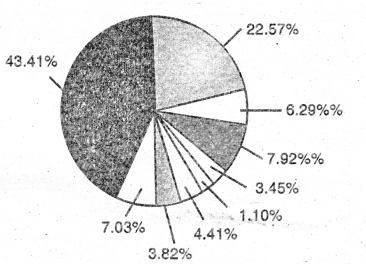
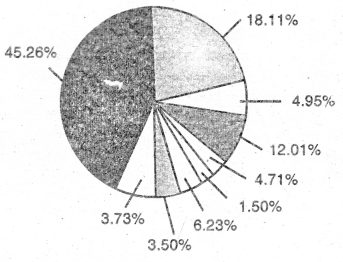
Land utilization is useful for vegetation, wildlife, human life and economic activities. The land resources are used for forest, farming, pastures, industries and the like. The land use pattern in India can be stated through the following figure: Figure.: 1 indicates the land use pattern in 2003-04 and Figure: 2, that of 1960-61 Figure 1: General land use categories 2000-2003.
Forest
Area under non-agricultural use
Barren and wasteland
Permanent Pastures and Grazing land
Area under misc. Tree crops and Groves
Culturable Waste
Fallow other than Current Fallow
Current Fallow
Net Sown Area
Figure 2: General land use categories 1960-61 Forest
Area under non-agricultural use
Barren and wasteland
Permanent Pastures and Grazing land
Area under misc. Tree crops and Groves ‘
Cultural Wasteland
Fallow other than current Fallow’
Current Fallow
(b) Net Sown Area – The land use under the forest cover has, since 1960-61, increased 4.56%, though land under forest cover has to be around one-third of the total land. Indeed, the increase has not been much. The main reasons are: over-grazing still continues and forest land is oftenly made use of for purposes such as farming and industries.
(ii) How have technical and economic development led to more consumption of resources?
Answer:
As we develop economically and technically, the consumption of our natural resources increase. Resources help us develop and this development is possible only through the development of oitr technology techniques and machines. More we use technology, more we exploit out natural resources and more we consume them which ultimately lead us to development.
The availability of resources is no guarantee for development of people. Development requires development of technology technote to use and consume our resources. Resources contribute to our development only when they are accompanied by appropriate technological development. The use and consumption of resource constitute the use of technology on the one hand and the resultant development of the society on the other.
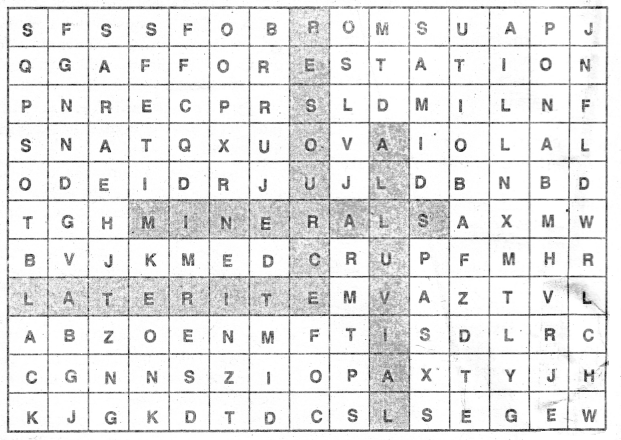
Project Activity
Question 1.
Natural endowments in the form of land, water, vegetation and minerals.
Answer:
Resource.
Question 2.
A type of non-renewable resource.
Answer:
Minerals.
Question 3.
Soil with high water-retaining capacity.
Answer:
black soil.
Question 4.
Intensively leached soils of the monsoon climate.
Answer:
Latente
Question 5.
Plantation of trees on a large scale to check soil erosion.
Answer:
Coricour, gullies.
Question 6.
The Great Plains of India are made up of these soils.
Answer:
Alluvial.
These Solutions are part of NCERT Solutions for Class 10 Social Science. Here we have given NCERT Solutions for Class 10 Social Science Geography Chapter 1 Resource and Development.