Naturopathy Courses | Career Oppurtunities, Eligibility Criteria, Top Colleges

Diploma in Naturopathy Courses

Naturopathy Courses: Are you having a great interest in learning natural ways to treat ailments? If yes, then the Diploma in Naturopathy is for you. It is a diploma level course, which includes the discipline of Yoga along with Naturopathy. The course is shaping a critical understanding of Yoga and other fundamental techniques among the candidates. The students can learn how to cure illness and other health-related issues by using the natural way of diet and efficient exercise.

The course encompasses of structuring a general establishment regarding nutrition and health. The students looking to get admission to the program should have an overall preference to learn about the information and latest technologies related to naturopathy. Additionally, the students must have the ability to apply logical reasoning to reach concrete solutions. After completing the Diploma in Naturopathy, the students become capable of offering excellent care accessible for patients in eliminating illness.

Diploma in Naturopathy – What’s the Program is About?

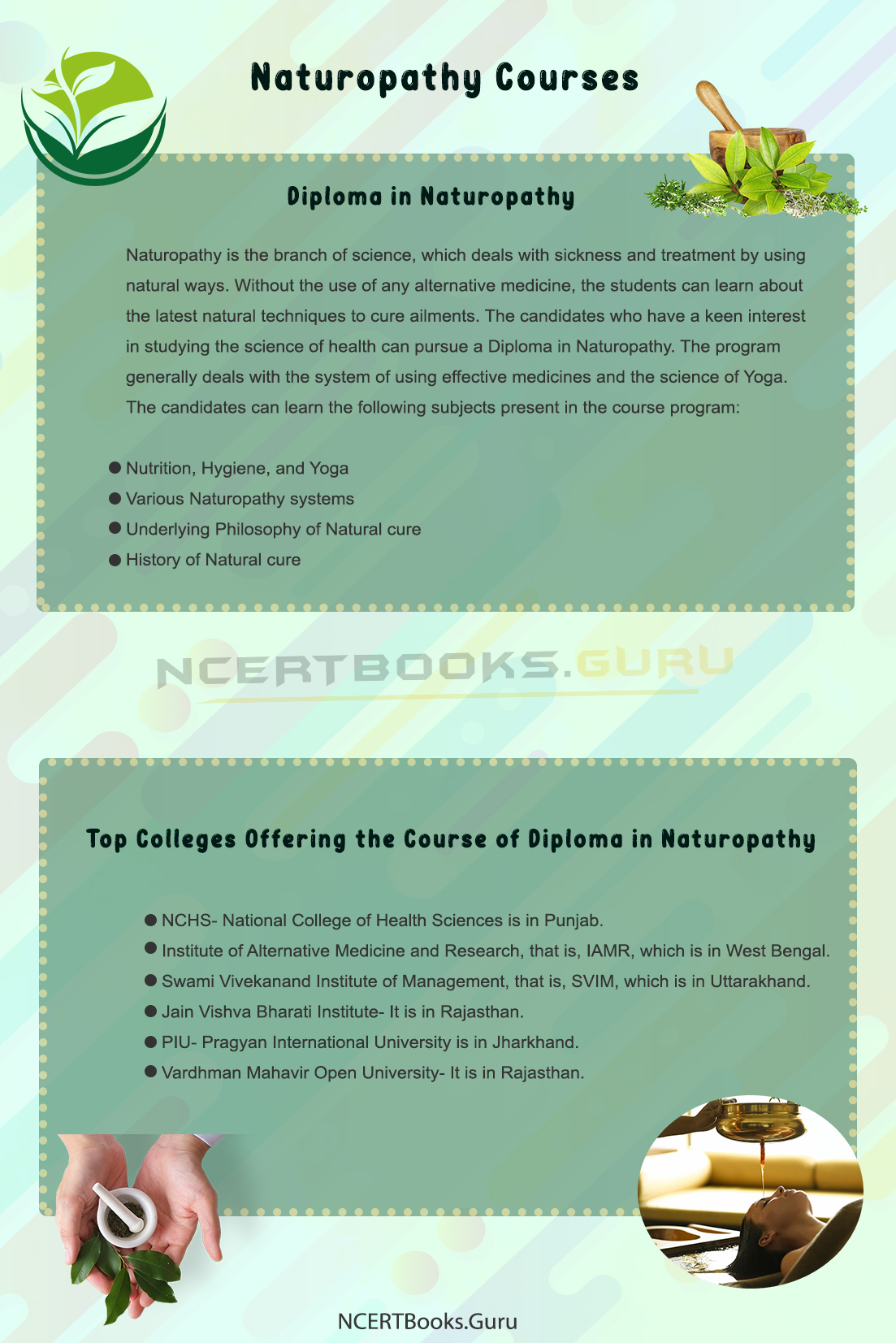
Naturopathy is the branch of science, which deals with sickness and treatment by using natural ways. Without the use of any alternative medicine, the students can learn about the latest natural techniques to cure ailments. The candidates who have a keen interest in studying the science of health can pursue a Diploma in Naturopathy. The program generally deals with the system of using effective medicines and the science of Yoga. The candidates can learn the following subjects present in the course program:

  • Nutrition, Hygiene, and Yoga
  • Various Naturopathy systems
  • Underlying Philosophy of Natural cure
  • History of Natural cure

The students can develop their learning in the following areas:

  • Anatomy
  • Public Health
  • Nutrition
  • Natural curing techniques
  • Physiology

The students get familiar with various techniques of massage, exercise, and directing diet, which is beneficial to treat illness. The program is well-organized to explain the aspirants with a developed knowledge of operative curing without supporting any antibiotics. Additionally, the students can acquire proficient skills to have patience and remain calm before going to start the illness treatment.

Top Colleges Offering the Course of Diploma in Naturopathy

  • NCHS- National College of Health Sciences is in Punjab.
  • Institute of Alternative Medicine and Research, that is, IAMR, which is in West Bengal.
  • Swami Vivekanand Institute of Management, that is, SVIM, which is in Uttarakhand.
  • Jain Vishva Bharati Institute- It is in Rajasthan.
  • PIU- Pragyan International University is in Jharkhand.
  • Vardhman Mahavir Open University- It is in Rajasthan.

Diploma in Naturopathy Eligibility Criteria

Eligibility Criteria to get admission in Diploma in Naturopathy

  • The aspirants applying for the course must have a passed-out 10th class with a minimum aggregate of 50%.
  • The candidates who have qualified 12th class in any stream with a minimum aggregate of 50% can apply for the program.
  • The students must be in good health status. If the applicants are suffering from any illness, then it can stop them from practicing or teaching yoga.
  • While taking admission for the course, the aspirants should be of 18 years or above.

Diploma in Naturopathy Admission Process

What is the admission process for the Diploma in Naturopathy?

Generally, the admission to the course program is on the Merit basis, which the students obtain in their qualifying exam. There is no entrance test accompanied for the course program, but the students must the eligibility requirements for pursuing the course.

The aspirants can apply for the program offline by visiting the respective colleges. Additionally, they have a choice to visit the official website of the college and apply there for the program. The students can get all the vital data related to the entrance exam, date of admission, and many more on the official site.

Diploma in Naturopathy Syllabus

The course introduces the students with the alternative methods and latest techniques involved in the field of curing ailments. The candidates get relevant training for treating ailments without making the use of any medicine. Generally, the course syllabus varies from college to college; however, the students will study the following fundamentals during the program:

  • Foundation of Health, Naturopathy, and Nutrition
  • Fundamental Anatomy of the Human Body
  • Method of Nature Care
  • Illness and Treatment by Naturopathy

Diploma in Naturopathy Course Fee

The duration for completing the Diploma in Naturopathy is 1 to 3 years in the country. The course fee ranges from Rs. 7,200 to 13 lakhs. Generally, the fees charged for the course vary from one college to another. Before taking admission in any college, the students must check their status, rating, location, and the staff. Additionally, it is beneficial to check out if the college is offering any scholarship or not.

Also, Read:

Diploma in Naturopathy Career Prospects

Undoubtedly, the program opens a broad range of prospects for the aspirants. From the research programs to teaching, the students can choose an opportunity to get a great career life. The candidates can practice in the following government agencies:

  • Ministry of health
  • Government of India
  • Ministry of AYUSH

The students can choose from any research councils mentioned below

  • CCRYN – Central Council for Research in Yoga and Naturopathy
  • NIN – National Institute of Naturopathy
  • Hospital Administration
  • Private Clinics
  • Research Centers
  • Management and Administration
  • Healthcare centers
  • Spa Centers

Additionally, the students have the opportunity to become

  • Assistant Research Officer
  • Research Officer
  • Publication Officer
  • Naturopathy Physician
  • Therapist
  • Naturopathy Experts
  • Naturopathy Consultant

Naturopathy Courses

Diploma in Naturopathy Salary Packages

After the completion of the program, the graduates can apply for jobs in various government sectors. Even students can pursue research programs to gain more knowledge. The candidates can earn about 1 to 9 lakhs INR per annum after the course program. However, the salary packages vary for graduates and post-graduates aspirants. Additionally, the status of the institute from which the students have completed their education matters while finalizing the salary.

Undoubtedly, the course program is a career turning in nature, which opens tremendous jobs in both government and private sectors. Though the minimum qualification for a Diploma in Naturopathy is one year, it can be a two or 3-year course depending on the institute. With the use of self-healing principles, non-medical testing, and natural therapy, the students get efficient training to cure illness efficiently.

While considering the salary packages, it depends upon several factors, and you must take care of them. Students can get a wide range of choices with a Diploma in Naturopathy course, and hence they can even pursue a job in many government agencies. They can refer to a good salary package through this.

FAQ’s On Diploma in Naturopathy Courses

Question 1.
Which place is best to perform yoga?

Answer:
Perform yoga in a neat and clean place away from insects and other animals. But if you prefer indoor areas, then the area must have full light and ventilation for airflow.

Question 2.
How often should you perform yoga?

Answer:
It is all on your capabilities to perform yoga, but for best results, perform the exercise for at least one hour a day in the morning or evening time. However, you must be aware of the purpose before performing yoga.

Question 3.
Is it important for your body to be flexible first to start yoga?

Answer:
There is no pre-requirement to perform yoga, but yoga brings flexibility in your body.

Question 4.
How will you state the minimum gap between your meal and the yoga session?

Answer:
Put the gap of at least four hours in between your meal and the yoga session. However, if you take a liquid diet, then there should be a gap of one hour, at least.
B.Sc Maths Syllabus PDF Downoad | Yearwise B.Sc Mathematics Course Structure & Exam Pattern

B.Sc Maths Syllabus

B.Sc Maths Syllabus: If you love solving Mathematics equations and playing with numbers, then B.Sc Maths Course is the best stream you should pick for your career. The B.Sc Maths Course stands for Bachelor of Science in Mathematics. Almost all universities and colleges across India provide B.Sc Maths, a 3 years course to those who have studied Maths in 10+2.

In B.Sc Maths, the students need to deal with structure, space, and change. If you want to pursue this course, then you have to meet the eligibility criteria as per any university or college. After pursuing this course, the student can set up their promising career ahead in various fields.

B.Sc Mathematics Eligibility Criteria

The desirable candidate needs to follow the eligibility criteria before applying for the Course. Well, the eligibility criteria may differ from universities to colleges. Have a look at the expected standard that follows every college in India.

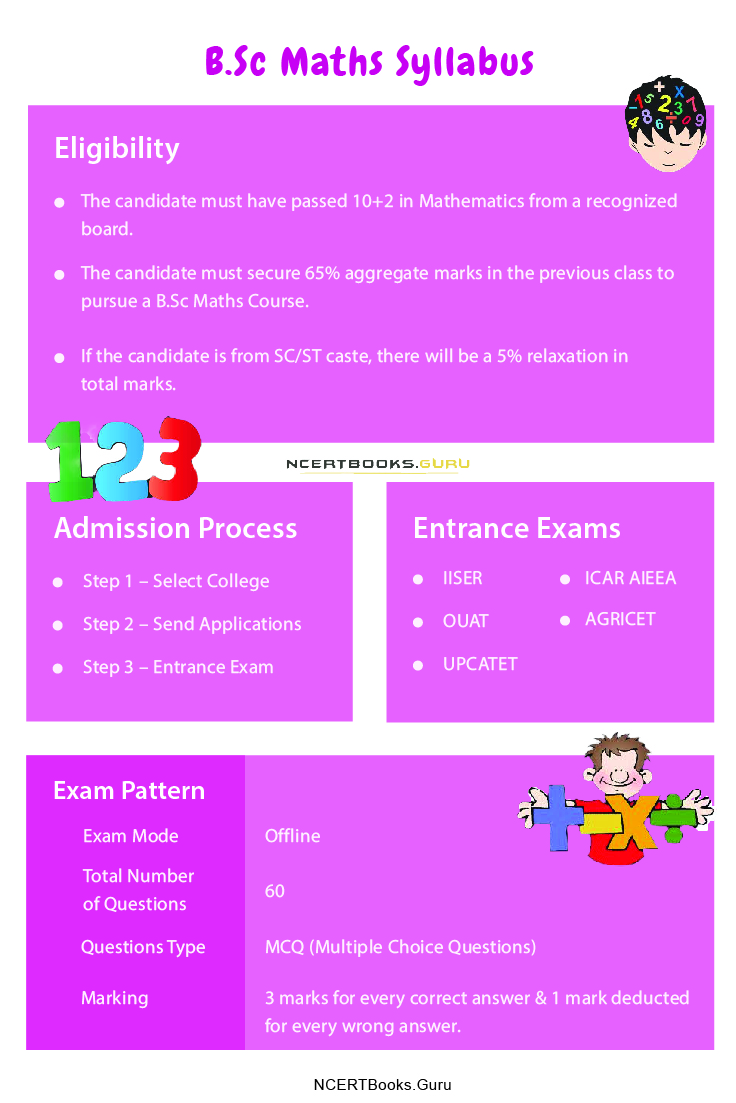
  • The candidate must have passed 10+2 in Mathematics from a recognized board.
  • The candidate must secure 65% aggregate marks in the previous class to pursue a B.Sc Maths Course.
  • If the candidate is from SC/ST caste, there will be a 5% relaxation in total marks.

B.Sc Maths Course Duration

The Course is designed in such a way that the candidate can learn and become a master in skills like algebra, calculus, and data analysis. The whole course provides in-depth knowledge of Math for three years, i.e., six semesters. The student also learns about data science and statistics.

Get to Know More about other types of Course Details in Streamwise, and Category wise.

B.Sc Maths Course Syllabus

In the below table, we have explained the B.Sc Maths syllabus that you’ll get in the Course. With this degree course and such a high level of education, you can go for higher studies.

Topics (Year one) Sub-Topics
Calculus Differential Calculus
Asymptotes
Integral Calculus
Multiple Integrals
Geometrical application of differential equations
Probability & Statistics Probability & Theoretical distributions
Testing of Hypothesis
Correlation & regression
Statistical Quality control
Transformation of Random Variable
Analytical Solid Geometry Analytical geometry of two dimensions
Analytical geometry of three dimensions
Paraboloids
Central Coincides
Transformation of Rectangular axis
Differential Equations Solving differential equations
Formation and solving PDE
Homogeneous linear differential equations
Laplace transforms
Differential equations with constant coefficients


Topics (Year Two) Sub-Topics
Real Analysis Real valued functions
Sets & functions
Real numbers
Least upper bounds
Equivalence and countability
Abstract Algebra Group & commutative group
Definition of subgroup & examples
Definition of a cyclic group
Permutation
Preliminaries
Mechanics Friction
Common catenary
Impact
Virtual work
Moment of force
Linear Algebra Inner product spaces
Linear transformations
Eigenvalues and Eigenvectors
Vector spaces
Topics (Year Three) Sub-topics
Discrete Mathematics Relations
Division algorithms
Logic
Graph Theory
Linear Programming & its Applications Year programming problem
Problem formulation
Types of solutions
Linear programming in the matrix
Complex Analysis Analytical functions
Transformation
Contour integral
Taylor and Laurent
Evaluation of integral
Numerical Analysis Direct & iterative Method
Numerical differentiation & integration
Polynomial approximation
Numerical solution of ordinary differential equations
Numerical solution of partial differential methods

B.Sc Maths Admission Process

If you’re ready to pursue this high-level undergraduate course, then check-out its admission process below.

  • Step 1 – Select College: The first step a candidate must do is search for the best colleges/universities offering a B.Sc Maths course. Once the list is prepared, make sure to check their Fees and Eligibility Criteria.
  • Step 2 – Send Applications: If the Candidate has identified the college for him/her, the next step is to apply for the course. A candidate needs to carefully fill up all the details, and he/she should know all the details in advance.
  • Step 3 – Entrance Exam: Most colleges/universities conduct entrance exams for students who want to take admission in their colleges. His/her score level will judge the student in the entrance exam along with the student’s 10+2 scores. If the Candidate has managed good marks in both, he/she will be offered admission.

Top Entrance Exams for B.Sc Maths

  • IISER
  • OUAT
  • UPCATET
  • ICAR AIEEA
  • AGRICET

Also, Check:

How to Prepare for the B.Sc Maths Entrance Exams?

To Crack B.Sc entrance exams, the Candidate should be right in aptitude such as:

  • Sets
  • Linear inequalities
  • Binomial Theorem
  • Conic Sections
  • Limits & Derivatives
  • Integers
  • Vectors
  • Matrices
  • Geometry
  • Conic sections

Besides these subjects, a candidate needs to prepare for Physics and Biology subjects as well.

B.Sc Maths Syllabus

B.Sc Entrance Exam Pattern

Exam Mode Online
Total Number of Questions 60
Questions Type MCQ (Multiple Choice Questions)
Marking 3 marks for every correct answer & 1 mark deducted for every wrong answer.
Duration 3 Hours

FAQ’s on B.Sc Maths Course

Question 1.
Which books should I refer to for the B.Sc Maths Entrance exam?

Answer:
For good scores, you need the best study material. So, here is the list of books that you could use for your help.

  • Problems Plus in IIT Mathematics by A. Das Gupta
  • D. Lee Concise Inorganic Chemistry by O.P. Jee
  • Concepts of Physics Volume by H.C Verma
  • Follow NCERT books of XI and XII.

Question 2.
Does B.Sc Math is more difficult than B.A Math?

Answer:
There is no significant difference between BA and B.Sc Mathematics. Both courses can help learners gain in-depth knowledge about statistics, data, regression, linear equations, and many more.

Question 3.
What jobs can I do after B.Sc Maths?

Answer:
After passing this high-level degree, candidates can open doors in multiple job opportunities in various fields such as:

  • Tutor
  • Accountant
  • Actuarial profession
  • Operational research
  • IT & computing
  • Banking

How to become a Neuropsychologist in India | Courses, Eligibility Criteria, Skill Set, Job Role and Salary

How to become a Neuropsychologist in India

How to Become a Neuropsychologist in India?: With the hustle and bustle in our fast-paced lives, stress and anxiety have gradually seeped in, and to overcome it, we need psychological support. Psychological support is a must in today’s time with the ongoing stressful environments; it doesn’t just confine itself to mental disabilities but looks into the overall mental well-being of individuals. One such branch of psychology is neuropsychology which is in demand in India.

Refer to Course Details to know more about related courses and find details like Admission Process, Eligibility Criteria, etc.

What is Neuropsychology?

Neuropsychology involves studying mental disorders, learning disabilities, brain injuries, memory loss, and other traumatic injuries related to the human brain.

Professionals in this area are specialized in studying different areas like memory thrashing disorder or disability, pediatric brain disability, sports, etc., and are called Neuropsychologists. Neuropsychology is a sub-domain of Psychology that imparts knowledge on how the human brain works and its related aspects. Students are taught how the brain works in the entire study, and the nervous system manipulates its positive and negative impact on human behavior. Besides the brain functions, it also studies disorders and illnesses of the brain. The study of neuropsychology is done with the primary objective to prepare the candidates in handling real-life challenges. Experiments and research work undertaken helps the students rectify the unusual thoughts and brain damage in patients.

Courses Available to Become A Neuropsychologist in India

Undergraduate level

B.Sc in Psychology: For pursuing a B.Sc in Psychology. The candidate should have passed the class 12th examination in the science stream with an aggregate of 50% marks from a recognized university.

Postgraduate level course in Psychology

There are two degrees available to pursue at the post graduate level: M.Sc in Psychology and MA in Applied Psychology.

M.Sc in Psychology: To get an admission into M.Sc Psychology, the candidate needs to qualify B.Sc in Psychology from any recognized university with a minimum of 55% aggregate marks

MA in Applied Psychology: To pursue MA in Psychology, candidates need to qualify for a Bachelor’s degree in a similar subject (BA). Those who have a B.Sc in Psychology are eligible to pursue an MA in Psychology. Students must have scored a minimum of 55% of marks to pursue an MA in Psychology.

M.Phil in Psychology (Specialization): An M.Phil in Psychology candidate should have passed M.Sc or MA in Psychology with a specialization from a recognized university with a minimum of 55% of marks.

Doctorate level course in Psychology

Ph.D. in Psychology (Specialisation): To pursue a Ph.D. in Psychology, the candidate needs to qualify for MA, M.Sc, or M.Phil. from any recognized university with a minimum aggregate of 60% marks.

Eligibility Criteria to Become A Neuropsychologist in India

Various institutes, colleges, and universities offer courses on neuropsychologist study.

For entrance to undergraduate level courses, you need to pass the class 12th examination with a minimum of 50% aggregate marks in the science stream and give the entrance examination of the respective college and universities.

Admissions to the postgraduate courses are based on the score of NEET (National Eligibility Entrance Test). Every college follows the procedure for NEET exams.

For the postgraduate level, students need to appear for the national level or state level entrance examinations. Some of the popular entrance exams to get into neuropsychology courses are.

  • Delhi University M.A. Applied Psychology Entrance test
  • National Institute of Mental Health and Neuro Sciences Entrance Exam
  • Rajiv Gandhi University of Health Sciences M.Sc in clinical Psychology Entrance Exam
  • Amity Institute of Psychology & Allied Science MA in Applied Psychology Entrance Exam.
  • Manipal University MA Clinical Psychology Entrance Exam
  • Institute of Human Behaviour and Allied Science, Clinical Psychology Entrance Exam
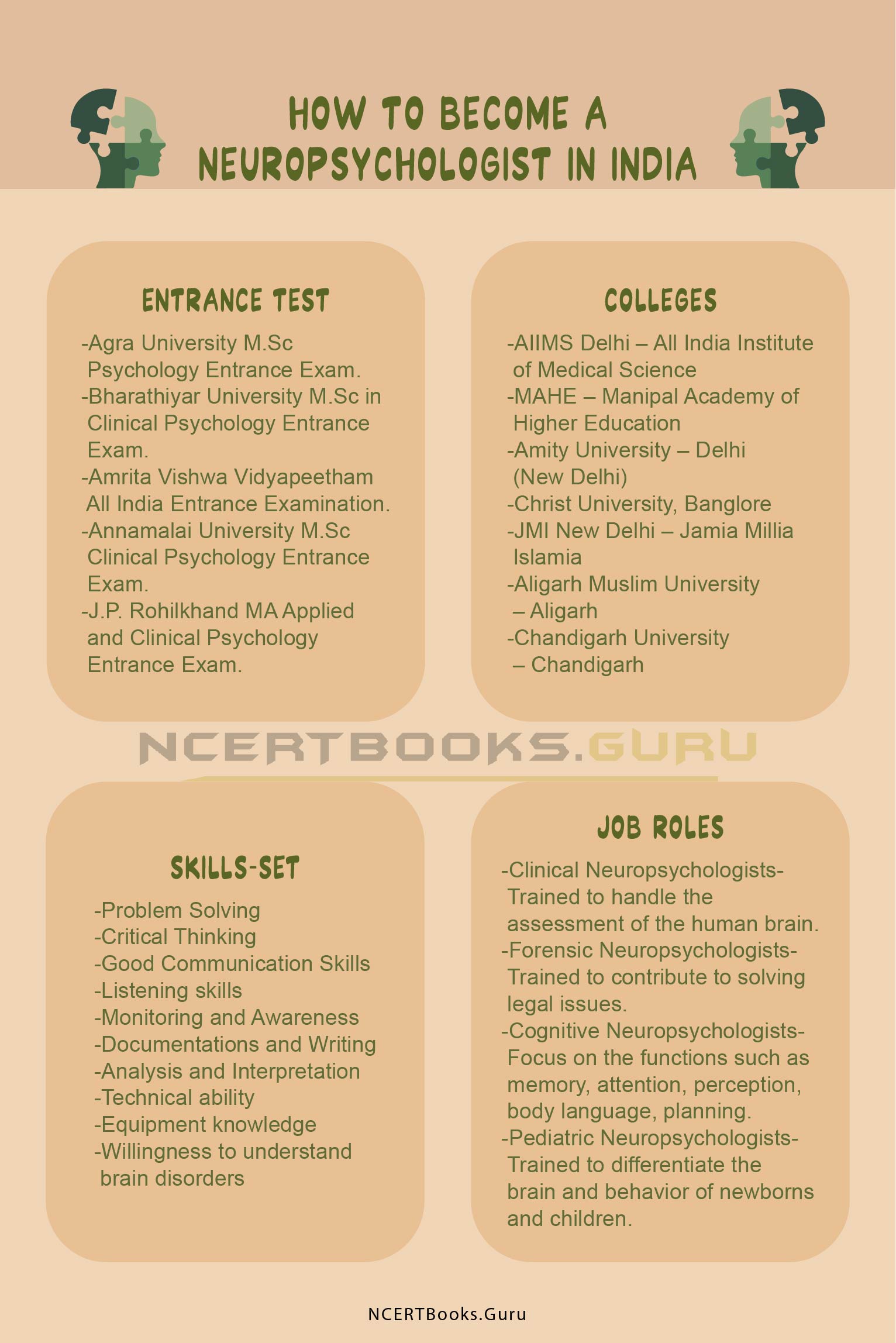
  • Agra University M.Sc Psychology Entrance Exam
  • Bharathiyar University M.Sc in Clinical Psychology Entrance Exam
  • Amrita Vishwa Vidyapeetham All India Entrance Examination
  • Annamalai University M.Sc Clinical Psychology Entrance Exam
  • J.P. Rohilkhand MA Applied and Clinical Psychology Entrance Exam

Earning a State License

Holding a professional degree alone doesn’t entitle you to work as a specialist. In order to work as a Neuropsychologist, you need to possess a license. Each state has its set of rules and regulations to follow enrollment procedures. Similar to other professional degree courses, you must hold a valid license to practice. In some states, a doctoral degree is mandatory for enrolment. Some consider and aggregate scores of a passing exam along with a 1-year experience. The state procedures vary, and professionals need to update themselves regularly with the respective state’s requirements.

Upholding Credentials

In order to have rapid growth in this field, you must manage the credentials as top organizations are primarily considering further education programs for talented and skilled individuals. Various states in India conduct educational tests or interviews for licensure renewals.

Selecting the right college or university which offers programmatic accreditation

Candidates are advised to check the college accreditation while selecting their college to pursue neuropsychology. Colleges with national or regional accreditation can be chosen for study as colleges with valid accreditation get more priority during the selection process. Many professional licenses and certifications need an accredited degree. Neuropsychology courses may opt for programmatic accreditation from boards like American Psychological Association as APA degree holders can earn a certificate or license or from the Association of State and Provincial Psychology Boards.

Prominent colleges for studying Neuropsychologist course

  • AIIMS Delhi – All India Institute of Medical Science
  • MAHE – Manipal Academy of Higher Education
  • Amity University – Delhi (New Delhi)
  • Christ University, Banglore
  • JMI New Delhi – Jamia Millia Islamia
  • Aligarh Muslim University – Aligarh
  • IGNOU Delhi – Indira Gandhi National Open University
  • LPU Jalandhar – Lovely Professional University
  • BHU Varanasi – Banaras Hindu University
  • Chandigarh University – Chandigarh
  • MSU Baroda – Maharaja Sayajirao University of Baroda
  • GGSIPU Delhi – Guru Gobind Singh Indraprastha University
  • B.R. Ambedkar Open University, Hyderabad
  • SPPU, Pune – Savaitribai Phule Pune University
  • MGR Educational and Research Institute, Chennai
  • MSRUAS Banglore – MS Ramaiah University of Applied Science

Do Refer:

Skills-Set Required in Neuropsychology

To become a neuropsychologist candidate, one needs to possess a high level of education and experience. Some of the primary skills required in this field are

  • Problem Solving
  • Critical Thinking
  • Good Communication Skills
  • Listening skills
  • Monitoring and Awareness
  • Documentations and Writing
  • Analysis and Interpretation
  • Technical ability
  • Equipment knowledge
  • Willingness to understand brain disorders

Job Roles of Neuropsychologists

Neuropsychologists may pursue many specializations in their field. Some of the significant job roles of neuropsychologists are-

Clinical Neuropsychologists – They are specifically trained to handle the assessment of the human brain. They rectify the brain symptoms and try to prevent them if any disorder is found in the brain. They even diagnose mental injuries and diseases by using techniques such as Computerized tomography (CT Scanning), MRI (Magnetic Resonance Imaging), and PET (Positron Emission Tomography).

Forensic Neuropsychologists – They are professionals trained to contribute to solving legal issues. Such experts are also called as a witness in injury cases of individuals. In India, demand for Forensic Neuropsychologists in the legal field is growing fast. Their significant role is in figuring out people accused of crimes and boosting mental health defense.

Cognitive Neuropsychologists –These professionals mainly focus on the association among the brain and functions such as memory, attention, perception, body language, planning, and others. These experts are directly in contact with their patients and provide counseling programs to patients.

Pediatric Neuropsychologists –Pediatric neuropsychologists are trained to differentiate the brain and behavior of newborns and children. Those who are experts in this field are specialized to test brain damage and functional disorders in children. They often provide counseling sessions to children and parents and teachers on how children can grow while having disorders.

Salary of Neuropsychologists

Neuropsychology is growing at a rapid pace, with new developments in this field bringing in a wide range of job opportunities within India and abroad. A lot of health care sectors find qualified and skilled neuropsychologists according to their requirements.

When it comes to PayScale, Neuropsychology is one of the most targeting fields as a career. Based on the experience, neuropsychologists get their salaries. A non-experienced neuropsychologist earns a salary between Rs 50,000 to Rs 80,000, whereas an experienced neuropsychologist may get a salary of Rs 1, 20,000 per month. Salaries depend on the job post obtained and the organization in which they work.

How to become a Neuropsychologist in India

Conclusion on How to Become A Neuropsychologist in India?

In neuropsychology, candidates attain the knowledge of human behavior and its connection with the nervous system. They are trained on neuropsychological evaluations, anatomy structure, cognitive rehabilitation, and treatment methods to understand neuropsychological disabilities. Overall, the course specializes in performing multiple tasks. They may handle clinical techniques like neuropsychological disabilities, memory damage or injury, memory loss, brain disorders of a child, etc.

Individuals studying the Neuropsychology course studies mental health, brain disorders, brain injuries, and trauma that occurs in the human brain. Neuropsychologists work in private or government hospitals, non-profitable organizations, and child care centers. Those employed in the government sector can attain a lot of growth. Many national and international hospitals offer vacancies to skilled professionals, and experts get an opportunity to become Mental health Counselors, Occupational Therapists, rehabilitation counselors, and Industrial-Organizational Psychologists. Apart from that, they can join educational centers to train candidates and pursue an academic career.

List of Architecture Courses after 12th Commerce | Know Eligibility, Top Colleges, Entrance Exams, Career Scope, and More

Architecture Courses after 12th Commerce

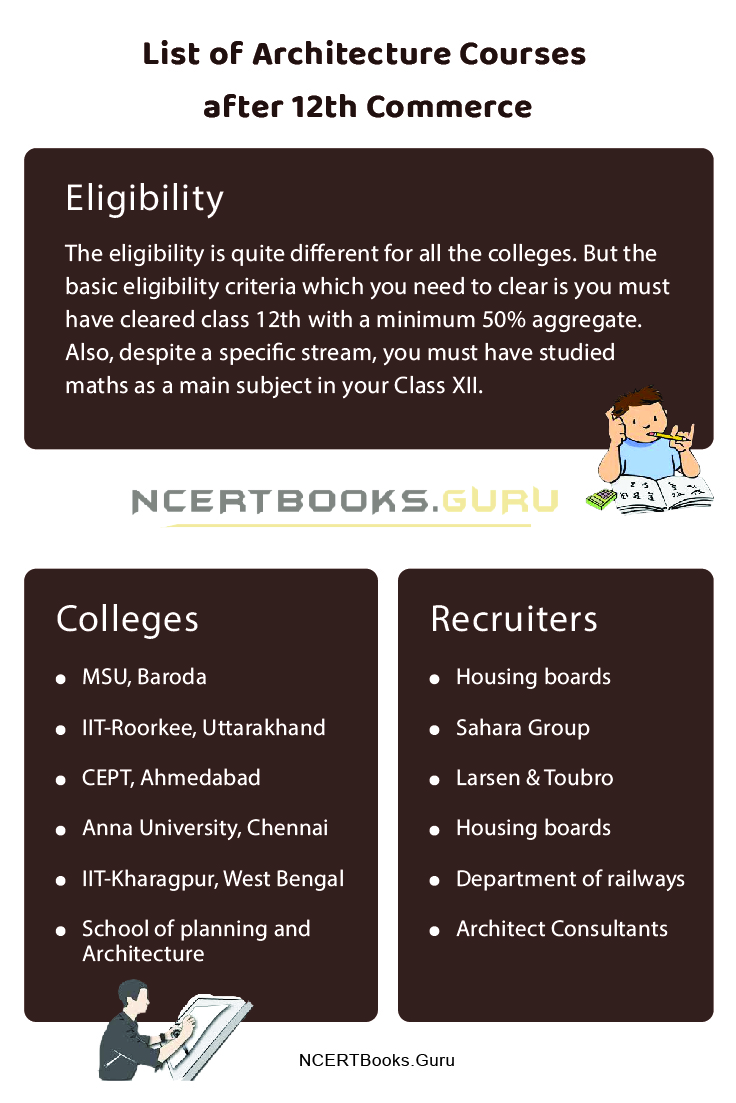
Architecture Courses after 12th Commerce: Architecture is an important field for the growth and development of society. But when it comes to applying for the courses people think that it is restricted for the students with a science background, but it is not true now. Council of architecture has now introduced that students from any stream in 10+2 with maths as an important subject are eligible for the architecture course.

Architecture teaches you about the planning, designing, and construction of buildings. The architecture courses after 12th commerce are also applicable for further government and private sector jobs. B.Arch is a 5-year course that includes 10 semsters which you can pursue after class 12.

Looking for answers to some questions like Can commerce students do architecture without maths? Can commerce students do architecture in India? If yes, this is the right guide for you. In this article, you will get the complete details on Architecture Courses after 12th Commerce eligibility criteria, entrance exams, admission career scope, and more.

For more Course Details click on the link, you will get stream-wise and category-wise courses.

List of B.Arch Specializations After 12th Commerce

The architect job requires them to hold specialization in designing, managerial ability, problem-solving ability, and more. Most of their tasks are dependent based on clients’ choices.

Thus, it makes them all-rounder and called artists as well as professionals. But the few specializations for the courses after Class 12th Commerce in architecture which you can choose are listed here:

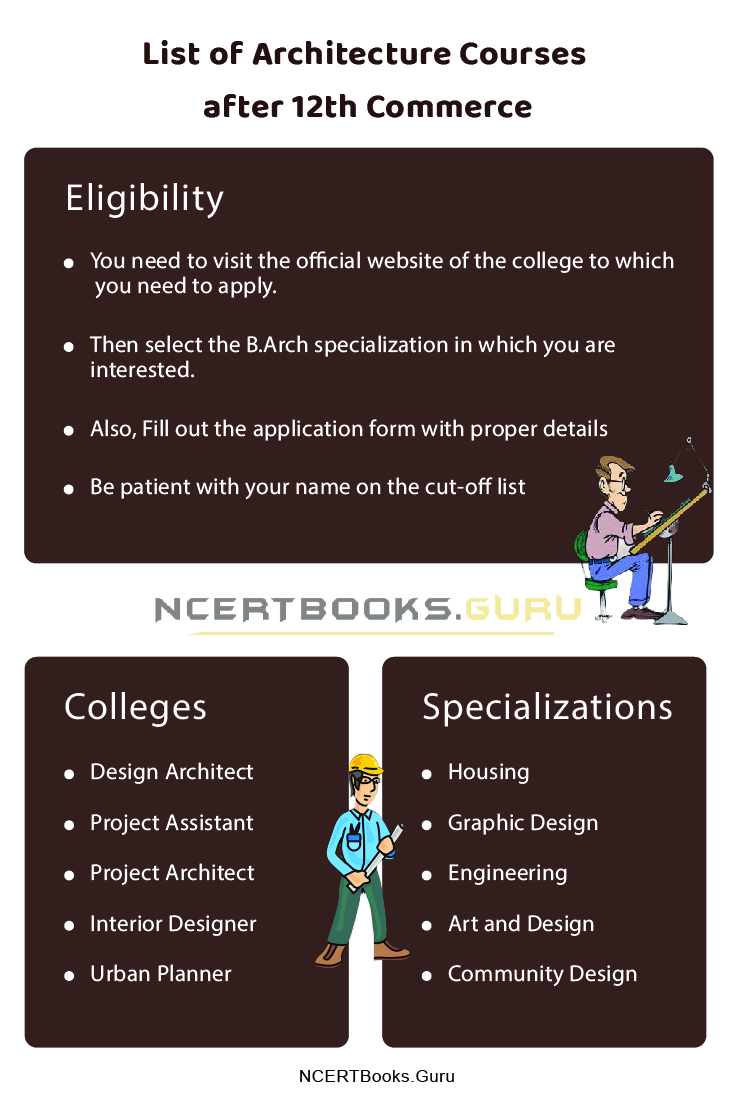
  • Housing
  • Building Information Modeling
  • Environment/sustainability
  • Community Design
  • Art and Design
  • Computer-aided Design
  • Graphic Design
  • Architectural Design
  • Engineering
  • Building Technology

Architecture Courses after 12th Commerce 2

Eligibility for Architecture after 12th Commerce

The eligibility is quite different for all the colleges. Some colleges admit students based on entrance exams and some admit them based on merit-based examinations. But the basic eligibility criteria which you need to clear is you must have cleared class 12th with a minimum 50% aggregate. Also, despite a specific stream, you must have studied maths as a main subject in your Class XII.

Related Articles: How to Become An Architect in India?

Entrance Exam for Architecture after 12th Commerce

A few colleges conduct their aptitude tests. But some colleges admit students based on national level entrance exams such as the National Aptitude Test in Architecture which is commonly known as NATA.

You must secure at least 80% imprints in NATA entrance tests to get admission to the top colleges for architecture. After clearing JEE Mains also become eligible for the architecture courses. Few other entrance exams can be AAT by CoA, GAT, AMUEE, and more.

Architecture Courses after 12th Commerce Admission Process

The admission process is entirely different for every college. Some may admit students based on entrance exams and some based on merit lists. Here you can have a review of the admission process for architecture courses after class 12 commerce:

  • You need to visit the official website of the college to which you need to apply.
  • Then select the B.Arch specialization in which you are interested.
  • Also, Fill out the application form with proper details
  • Be patient with your name on the cut-off list
  • Then submit the fees

NOTE: Some colleges may also interview the admission process.

Top Colleges for Bachelors in Architecture Courses After 12th Commerce

Several colleges all over India offer bachelor’s in architecture courses. You can also pursue the degree from distance. IGNOU is the best university that offers architectural courses in India through distance learning. Here, you can find the list of the top 10+ best colleges for B.Arch courses after completing 12th commerce.

Sir J J College of Architecture-Mumbai
School of planning and Architecture, New Delhi
School of Planning and Architecture, Bhopal
MSU, Baroda
Jamia Milia Islamia-New Delhi
IIT-Roorkee, Uttarakhand
IIT-Kharagpur, West Bengal
Chandigarh College of Architecture, Chandigarh
CEPT, Ahmedabad
Birla Institute of Technology, Pilani, Rajasthan]
Anna University, Chennai

Must Refer: B. Arch Course Details

Career Scope After 12th Commerce Architecture Courses Holders

Architecture is an interesting as well as high determination required course. After the completion of this course, the door to opportunities is open and waiting for you. You can either start working or you can look for further studies. The option for Masters of Architecture and MBA is also available for you. You can also pursue a diploma in architecture such as PG Diploma.

There are various career opportunities for 12th commerce students after the B.Arch. Some of you might also be placed with the top companies in the position of

  • Design Architect
  • Project Assistant
  • Project Architect
  • Interior Designer
  • Urban Planner

Top Recruiters for Architects after Class 12th Commerce

Due to the development stage in the world, there are world companies who want perfect architects for their companies. Even in India, the infra sector is providing a lot of opportunities for the students who are studying the architecture field.

Here, is the list of a few companies which hire certified candidates in architecture courses after class 12 commerce:

  • Hindustan aeronautics limited
  • DLF
  • Urban development corporation
  • City development corporation
  • Department of railways
  • Housing boards
  • Arcop
  • Larsen & Toubro
  • Sahara Group
  • Architect Consultants
  • Public works department

Architecture Courses after 12th Commerce 1

FAQs on Courses for Architecture after 12th Commerce in India

1. Are commerce students eligible for architecture courses?

Yes, the students from the commerce background are also eligible for the architecture courses in India. Earlier the course was only for the students in the science stream but now the Council of Architecture has made the course available to all.

2. What are the courses available for the students after 12th in architecture? 

After the 12th bachelor’s courses are available to the students. You can plan to pursue your degree in the Bachelor of Architecture (B.Arch), Bachelor of Architecture in Building and Construction Management, Bachelor of Planning (B.Plan), Bachelor of Engineering in Construction Technology, and more.

3. Can I take architecture after 12th commerce without maths? 

For architecture courses, it is necessary to have maths as a core subject. Even if you are from a commerce background you must have maths as an important subject.

4. Being a commerce student can I apply for NATA? 

To apply for NATA you need to clear class 12 with 50% marks with maths as an important subject in any field. Also, 40% marks are required for admission to various colleges.

Conclusion

We have provided complete information on the Architecture Courses after the 12th Commerce in India. If you have any doubts related to any course feel free to ask your queries in the comment section below. Also, do visit our official website Ncertbooks.Guru to get more details on the architecture courses.

B.Sc Optometry | Duration, Eligibility Criteria, Admission Process, Syllabus, Career Prospects

B.Sc Optometry

B.Sc Optometry: B.Sc. Optometry program envisions to develop and train a versatile ophthalmic workforce at the paramedic level. The course program enables candidates to become competent Optician, Optometrist, Optical Analysts, Refractionist, or Optical Executives in rural, semi-urban, and urban community settings.

In this article, viewers will be provided with a brief about the B.Sc. Optometry program, such as Course Details, Admission process, Course duration, Eligibility criterion, Top Institutions, and Vocation possibilities.

About B.Sc Optometry Program

B.Sc. Optometry is a four-year-long undergraduate program for candidates interested in  Allied Health Sciences. The undergraduate program is a healthcare professional course that educates candidates on examining, diagnosing, treating, and managing virtually-aided disorders and diseases.

The B. Sc. Optometry course is a three-year academics and one-year internship program that educates candidates about the practicality and subject-wise knowledge in the vision-care science field.

Optometry is a vision-care science that offers a challenging and dynamic career that enables candidates to help people, achieve community respect, reach personal growth, manage financial success and job flexibility, and offer virtually unlimited opportunities.

B.Sc Optometry Course Details

Course B. Sc. Optometry
Course Level Undergraduate-level
Course Duration Four years with three-years academics + one-year internship
Age Limit The lower age limit is 17 years.
Eligibility Criteria 10+2 level of graduation secured from a recognized board with a minimum of 45 percent aggregate.
Placement Opportunities Government or Private Optometry clinics, Optic Manufacturing stations, Hospitals, and more.
Employment Roles Optician, Optometrist, Vision Consultant, Optometry Researcher, Private Practitioner, Trainee Optometrist, and more.
Average Salary Offered Rs. 5 Lakhs to Rs. 10 Lakhs per annum

Skillset Required for B.Sc Optometry

Candidates opting for the B. Sc. Optometry course must possess the following skillsets-

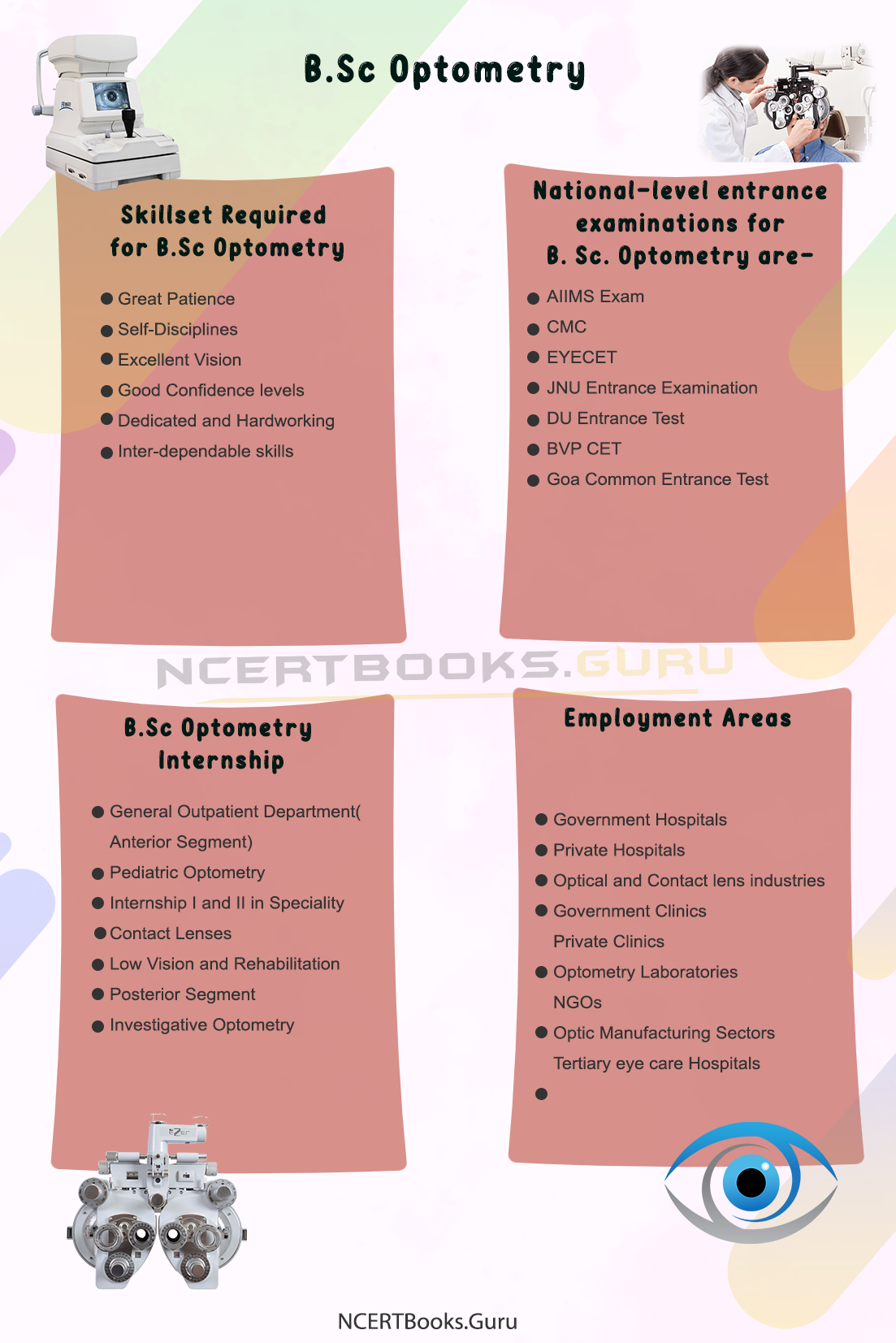
  • Great Patience
  • Self-Disciplines
  • Excellent Vision
  • Good Confidence levels
  • Dedicated and Hardworking
  • Inter-dependable skills
  • Compassionate and Empathetic
  • Excellent Mechanical Aptitude
  • Keen Observing

B.Sc Optometry Course Duration

The B. Sc. Optometry course is a four-year-long educational paramedical program. It is a three-year academics and one-year internship program. The three-year educational program is branched into six semesters that aims to cover optometry and its derivatives.

B.Sc Optometry Eligibility Criteria

The eligibility criteria required to pursue a B. Sc. Optometry course is as follows:

  • Candidates must have completed the 10+2 level of graduation from the science stream (core subjects- Physics, Chemistry, and Biology) with a 45 percent aggregate secured from a recognized board.
  • Candidates must have completed 17 years of age or more.

B.Sc Optometry Admission Procedure

The Admission Protocol for B. Sc. Optometry occurs as an Entrance-based Admission process or a Merit-based Admission process. Certain colleges also opt for the Counselling-based Admission process. The Admission procedure is entirely dependent on the University or the Institution.

Get to Know More about other types of Course Details in Streamwise, and Category wise

Entrance-Based Admission Procedure

The Entrance-based Admission is based on University-level entrance examinations. Candidates must participate in the entrance examination for admissions to the B. Sc. Optometry course program.

  • Most institutions and universities conduct their entrance examinations. However, a few state departments administer an annual Entrance examination for B. Sc. Optometry or other paramedical courses.
  • After attempting the University-level entrance examination(s), the institutions or universities will release the Merit List. The Merit lists comprise the names of all the candidates according to their scores or ranks.
  • Depending on the overall scores or grades, candidates will qualify for the other admission processes like Group discussions or Personal Interview.
  • Based on the overall scores or ranks in the Entrance examinations, Personal Interview, and Group discussions, prospective candidates will be offered admissions at the University or Institution.
  • The Entrance-based admissions for B. Sc. Optometry depends on the National-level entrance tests.
  • Institutions and Universities release a shortlist comprising candidates’ names based on their comprehensive national-level examinations.
  • National-level entrance examinations for B. Sc. Optometry are-
    • AIIMS Exam
    • CMC
    • EYECET
    • JNU Entrance Examination
    • DU Entrance Test
    • BVP CET
    • Goa Common Entrance Test

Merit-based Admission Procedure

Merit-based admission follows the guidelines listed by the Institutions or Universities. Candidates must apply and participate in the selection processes. The selection process by various Universities or Institutions may consist of Group Discussions or Personal Interview.

Based on the candidates’ overall performance in the Merit-based selection parameters such as performance in the Group discussion or Personal Interview or the academic record, Universities or Institutions will offer admissions to the prospective candidates.

Counseling-based Admission Procedure

The counseling-based admission process is a standard selection process opted by most Institutions and Universities with affiliated or constituent institutions across India.

  • The mode of selection for B. Sc. Optometry counseling-based admission procedure is based on both merit-basis and entrance-based admissions.
  • Universities offer counseling-based admissions and release a merit list comprising candidates’ names, calculated based on their entrance tests or scores in the qualifying examination.
  • Candidates must choose their preferred universities or institutions.
  • Based on the candidate’s performance in the qualifying examination or the entrance test and the score or rank, candidates are given the preferred university or institution of choice. This condition is dependent on the availability of the seats for the prospective candidates.

B.Sc Optometry Fee Structure

The fee structure for the B. Sc. Optometry differs from one institution to another. Candidates seeking admissions at governmental institutions are required to pay a lesser amount to that of private institutions.

The average fee structure for the B. Sc. Optometry course varies between Rs. 3000/- per annum to Rs. 1 Lakhs per annum.

B.Sc Optometry Course Program Syllabus

The course curriculum for B.Sc. Optometry is branched into six semester-wise breakups as tabulated below:

Semester I Semester II
Clinical Psychology Geriatric Optometry and Pediatric Optometry
Computer Basics General Biochemistry and  Ocular Biochemistry
Community and Occupational Optometry Functional English and Communication
Basic Accountancy Contact Lens


Semester III Semester IV
Geometrical Optics Nutrition
Hospital Procedures Low Vision Aids
General Anatomy and Ocular Anatomy Law and Optometry
General Physiology and Ocular Physiology Mathematics


Semester V Semester VI
Optometric Instruments and Clinical Examination of Visual System Squint and Binocular Vision
Microbiology and Pathology Physical Optics
Optometric and Dispensing Optics Public Relations
Pharmacology Visual Optics
Ocular Diseases and Eye and Systemic Diseases Research Methodology and Statistics

B.Sc Optometry Internship

B.Sc. Optometry offers a one-year internship program that comprises of the following curriculum

  • General Outpatient Department( Anterior Segment)
  • Pediatric Optometry
  • Internship I and II in Speciality
  • Contact Lenses
  • Low Vision and Rehabilitation
  • Posterior Segment
  • Investigative Optometry

B.Sc Optometry

Top Institutions Offering B.Sc Optometry

A few of the top institutions offering B. Sc. Optometry and each of the institutions’ city are as follows:

Institution Location
All India Institute of Medical Sciences (AIIMS) New Delhi
Lotus College of Optometry Mumbai
Elite School of Optometry (ESO) Chennai
Bharati Vidyapeeth University School of Optometry Pune
Sri Prakash Institute of Optometry (Dr.Agarwal’s Eye Hospital) (Affiliated to Alagappa University) Chennai
Vidyasagar College of Optometry & Vision Science Kolkata
Aditya Jyot Institute of Optometry Mumbai
Bausch & Lomb School of Optometry Hyderabad
College of Optometry and Ophthalmic Sciences Nasik
Manipal College of Allied Health Sciences Karnataka

B.Sc Optometry Career Prospects

B.Sc. Optometry offers a great career scope for graduates as Optometry is an on-demand profession in several paramedical fields. B.Sc. Optometry graduates hold great employment opportunities in Indian both at private and governmental institutions.

Employment Areas

Upon the completion of B.Sc. Optometry graduates find placements in both non-traditional and traditional areas of employment such as-

  • Government Hospitals
  • Private Hospitals
  • Optical and Contact lens industries
  • Government Clinics
  • Private Clinics
  • Optometry Laboratories
  • NGOs
  • Optic Manufacturing Sectors
  • Tertiary eye care Hospitals

Do Read:

Job Profiles Under B.Sc Optometry

Graduates can pursue multiple job profiles depending on the company or institution. Initially, the job profiles are numbered, but, with time and experience, graduates can take up different job profiles.

  • Optometrist
  • Vision Care Associate
  • Optician
  • Vision Consultant
  • Optometry Researcher
  • Trainee Optometrist
  • Private Practitioner

Top Recruiters of B.Sc Optometry

Multiple institutions and companies recruit graduates from the field of paramedics, especially graduates who have completed a B.Sc. Optometry.

  • Indraprastha Apollo Hospitals
  • Medanta Hospitals
  • All India Institute of Medical Sciences
  • Jaypee Hospital
  • Postgraduate Institute of Medical Education and Research
  • Fortis Healthcare Ltd.

Salary Prospects Under B.Sc Optometry

A fresher in the field of Optometry can earn a wage of Rs. 20,000 to Rs. 40,000 per month at the inception of their career. With time, experience, and reputation, an optometrist can earn an average of  Rs. 5 Lakhs to Rs. 10 Lakhs per annum.

FAQ’s on B.Sc. Optometry

Question 1.
What is the difference between Optometrists, Ophthalmologists, and Opticians?

Answer:
Optometrists are entirely focused on primary eye care and corrections, while Ophthalmologists are certified doctors who diagnose and treat people suffering from eye diseases and perform surgeries. Opticians are specialists who develop visual-opticals as prescribed by Ophthalmologists and Optometrists.

Question 2.
Can I pursue Medicine after completing B.Sc Optometry?

Answer:
Yes, candidates are eligible to pursue Medicine (MBBS) after completing B.Sc. Optometry. Candidates need to hold a 50 percent average in their graduation with PCB as their core subjects.

Question 3.
Name a few Entrance examinations for B.Sc. Optometry?

Answer:
A few National-level entrance examinations for B. Sc. Optometry are- AIIMS Exam, EYECET, CMC, DU Entrance Test, JNU Entrance Examination, BVP CET, and Goa Common Entrance Test

Question 4.
What is the salary package for B.Sc Optometry graduates?

Answer:
A fresher in the field of Optometry can earn a wage of Rs. 20,000 to Rs. 40,000 per month at the inception of their career. With time, experience, and reputation, an optometrist can earn an average of Rs. 5 Lakhs to Rs. 10 Lakhs per annum.

How To Become A Mathematician In India | Career and Job Opportunities for Mathematicians

How to Become A Mathematician in India: India has had a long tradition of mathematics that has given the world some great mathematicians who have made many valuable contributions to the field. Ancient mathematicians like Aryabhatta have given the world the value of Pi, a place value system. Other Indian mathematicians have given mathematics the numeral Zero, the modern way of writing numbers, the decimal place value system, the ratio of the circumference of a circle to its diameter,  and many more concepts.

Do you like numbers? Are you passionate about mathematics? You could make a career as a mathematician. If you have it in you, perhaps you could be the next Aryabhatta or Ramanujan. If you are deeply interested in the field or feel inclined towards the subject, find out all about being a mathematician and how to become one in India. First, let us start by exploring who is a mathematician?

Refer to Course Details to know more about related courses and find details like Admission Process, Eligibility Criteria, etc.

Who is a Mathematician? What do they do?

The definition of a mathematician is an easy one, a mathematician is somebody who is an expert in the field of mathematics. What do they do? They engage in the philosophy and study of mathematics and its theoretical constructs from formulating new theories, researching on existing mathematical fundamentals, to adding to existing theories. But that’s not all that mathematicians do. Mathematicians aren’t just academicians who deal with academic theories that do not find much substantial use in everyday life. And neither is a career in the field as Mathematician is not synonymous with being a teacher or a researcher although that is surely a domain of great scope. The skills of mathematicians can also be applied to real-world problems.

Mathematical theories, algorithms, techniques, often find their application and use in problem-solving for various other fields such as management, engineering, business, sciences and economics.

To give you a better picture and a clearer idea, let us tell you there are two types of mathematics and mathematicians: one is pure mathematics and the other is applied mathematics. Pure mathematics studies and focuses on the philosophy and theoretical constructs of maths while applied mathematics can be applied to any field from physics to robotics, architecture, engineering, computer graphics and computer technology.

How to Become a Mathematician in India?

Becoming a mathematician is a long and arduous journey that requires an in-depth study and immersion into the subject, it begins with the first and foremost requirement:

A bachelor’s degree in Mathematics from a recognised university. For that, you need to have studied mathematics in your 10+2 higher education to get into the course.

After obtaining a Bachelor’s degree in the subject, the next step and natural progression for a mathematician is to undertake further study and acquire a Master’s degree in Mathematics. You shall have to sit for an entrance, such as Joint admission tests which are often conducted for M. Sc. courses that can get into premier institutes such as IITs, NITs, and IISc.

The journey goes well beyond this, after a post-graduation, you need to take a full immersion into the field with a doctoral degree in the subject where you undertake a much deeper study and research in the domain of mathematics.

You can choose to pursue applied or pure mathematics at this stage, which shall decide which kind of vocation you shall get into. Theoretical or pure mathematics will lead you to an academic role such as a teacher or researcher in academia. Opting for Applied Mathematics can help you make a career in fields such as scientific research, finance and business, technology and information science etc.

You can enrol yourself in a PhD course for which you need to first clear an entrance exam such as IIT JAM. You can get into government-funded or autonomous-aided research institutes that offer purely research-based opportunities or one of the IITs for applied mathematics opportunities. There are also Joint M.Sc-PhD, M.Sc-M.tech and other dual degrees and courses as well.

Career and Job Opportunities for Mathematicians

Many Higher learning institutions offer opportunities for mathematicians in teaching and research in state and central universities, in purely research-oriented roles.

Outside academia, there are great employment options in government departments such as the Indian Space Research Organisation (ISRO), Defence Research and Development Organisation (DRDO), National Aeronautics Limited (NAL) and in big institutions and organisations as well.