NCERT Solutions for Class 9 Sanskrit Shemushi Chapter 12 वाडमनःप्राणस्वरूपम्

We have given detailed NCERT Solutions for Class 9 Sanskrit Shemushi Chapter 12 वाडमनःप्राणस्वरूपम् Questions and Answers will cover all exercises given at the end of the chapter.

Shemushi Sanskrit Class 9 Solutions Chapter 12 वाडमनःप्राणस्वरूपम्

अभ्यासः

प्रश्न 1.
अधोलिखितानां प्रश्नानामुत्तराणि संस्कृतभाषया लिखत –

(क) श्वेतकेतुः सर्वप्रथमम् आरुणिं कस्य स्वरूपस्य विषये पृच्छति?
उत्तर:
श्वेतकेतु सर्वप्रथमं आरुणिं मनसः स्वरूपस्य विषये पृच्छति।

(ख) आरुणिः प्राणस्वरूपं कथं निरूपयति?
उत्तर:
आरुणिः निरूपयतियत् “आपोमयो भवति प्राणाः।”

(ग) मानवानां चेतांसि कीदृशानि भवन्ति?
उत्तर:
मानवानां चेतांसि अशितान्नामुरूपाणि भवन्ति।

(घ) सर्पिः किं भवति?
उत्तर:
मथ्यमानस्य दनः योऽणुतमः यदुवं आयाति तत् सर्पिः भवति।।

(ङ) आरुणे: मतानसारं मनः कीदशं भवति?
उत्तर:
आरुणे: मतानुसारं मनः अन्नमय भवति।

प्रश्न 2.
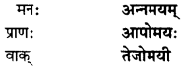
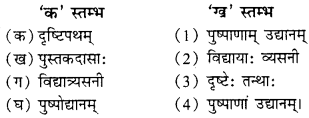
(क) ‘अ’ स्तम्भस्य पदानि ‘ब’ स्तम्भेन दत्तैः पदैः सह यथायोग्यं योजयत –
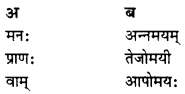
NCERT Solutions for Class 9 Sanskrit Shemushi Chapter 12 वाडमनःप्राणस्वरूपम् 1
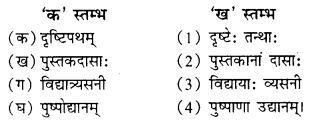
उत्तर:
NCERT Solutions for Class 9 Sanskrit Shemushi Chapter 12 वाडमनःप्राणस्वरूपम् 2

प्रश्न 2.
(ख) अधोलिखितानां पदानां विलोमपदं पाठात् चित्वा लिखत –

  1. गरिष्ठः – ……………..
  2. अधः – ……………..
  3. एकवारम् – ……………..
  4. अनवधीतम् – ……………..
  5. किञ्चित् – ……………..

उत्तर:

  1. गरिष्ठः – अणिष्ठः
  2. अधः – ऊर्ध्वः
  3. एकवारम् – भूयोऽपि
  4. अनवधीतम् – अधीतम्
  5. किञ्चित् – भूयः

प्रश्न 3.
उदाहरणमनुसृत्य निम्नलिखितेषु क्रियापदेषु ‘तुमुन’ प्रत्ययं योजयित्वा पदनिर्माणं कुरुत –
यथा – प्रच्छ् + तुमुन् – प्रष्टुम्

(क) श्रु + तुमुन् – ……………..
(ख) वन्द् + तुमुन् – ……………..
(ग) पठ् + तुमुन् – ……………..
(घ) कृ + तुमुन् – ……………..
(ङ) वि + ज्ञा . तुमुन् – ……………..
(च) वि + आ + ख्या + तुमुन् – ……………..
उत्तर:
(क) श्रु + तुमुन् – श्रोतुम्
(ख) वन्द् + तुमुन् – वन्दितुम्
(ग) पठ् + तुमुन् – पठितुम्
(घ) कृ+तुमुन् – कर्तुम्
(ङ) वि + ज्ञा + तुमुन् – विज्ञातुम्
(च) वि + आ + ख्या + तुमुन् – व्याख्यातुम्

प्रश्न 4.
निर्देशानुसार रिक्तस्थानानि पूरयत –

(क) अहं किञ्चित् प्रष्टुम् …………..। (इच्छ-लट्लकारे)
(ख) मनः अन्नमयं …………..। (भू-लट्लकारे)
(ग) सावधानं ………….। (श्रु-लट्लकारे)
(घ) तेजस्विनावधीतम् ………..। (असू-लट्लकारे)
(ङ) श्वेतकेतुः आरुणेः शिष्यः ………………..। अस्-लङ्लकारे)
उत्तर:
(क) अह किञ्चित् प्रष्टुम् इच्छामि
(ख) मनः अन्नमयं भवति
(ग) सावधानं शृणु
(घ) तेजस्विनावधीतम् अस्तु
(ङ) श्वेतकेतुः आरुणे: शिष्यः आसीत्

प्रश्न 5.
उदाहरणनुसृत्य वाक्यानि रचयत –
यथा – अहं स्वदेशं सेवितुम् इच्छामि।

(क) …………….. उपदिशामि।
(ख) ……………. प्रणमामि।
(ग) ……………… आज्ञापयामि।
(घ) ………………… पृच्छामि।
(ङ) ……………. अवगच्छामि।
उत्तर:
(क) अहं शिष्यं उपदिशामि।
(ख) अहं गुरुं प्रणमामि।
(ग) अहं सेवकं आज्ञापयामि।
(घ) अहं गुरुं पृच्छामि।
(ङ) अहं मनसः स्वरूपं अवगच्छामि।

प्रश्न 6.
(क) सन्धिं कुरुत –

  1. अशितस्य + अन्नस्य ………………
  2. इति + अपि + अवधार्यम् ……………..
  3. का + इयम् ……………..
  4. नौ + अधीतम् ……………..
  5. भवति + इति ……………..

उत्तर:

  1. अशितस्य + अन्नस्य – अशितान्नस्य
  2. इति + अपि + अवधार्यम् – इत्यप्यवधार्यम्
  3. का + इयम् – केयम्
  4. नौ + अधीतम् – नावधीतम्
  5. भवति + इति – भवतीति

प्रश्न 6.
(ख) स्थूलपदान्यधिकृत्य प्रश्ननिर्माणं कुरुत –

(i) मथ्यमानस्य दध्यः अणिमा ऊर्ध्वं समुदीषति।
उत्तर:
कीदृशः दधनः अणिमा ऊर्ध्व समुदीषति?

(ii) भवता घृतोत्पत्तिरहस्यं व्याख्यातम्।
उत्तर:
घृतोत्पत्तिरहस्यं व्याख्यातम्?

(iii) आरुणिम् उपगम्य श्वेतकेतुः अभिवादयति।
उत्तर:
आरुणिं उपगम्य कः अभिवादयति?

(iv) श्वेतकेतुः वाग्विषये पृच्छति।
उत्तर:
श्वेतकेतुः कस्य विषये पृच्छति?

प्रश्न 7.
पाठस्य सारांशं पञ्चवाक्यैः लिखत –

  • पाठे आरुणिः श्वेतकेतु विज्ञापयति। यत्
  • अन्नमयं भवति मनः
  • आपोमयो भवति प्राणाः।
  • तेजोमयी भवति वाक्।
  • मनुष्यः या दृशमन्नादिक खादति तादृशमेव तस्य चित्तादिकं भवति।

व्याकरणात्मक: बोधः

1. पदपरिचयः – (क)

  • भगवन् – भगवन् शब्द, सम्बोधन, एकवचन। हे भगवान। (गुरु, पिता)
  • मन: – मनस् शब्द, प्रथमा विभक्ति, एकवचन। मन।
  • अपाम् – अप् शब्द, षष्ठी विभक्ति, बहुवचन। जल का। यह शब्द नित्य बहुवचनान्त प्रयुक्त होता है।
  • तेजस: – तेजस् शब्द, षष्ठी विभक्ति, एकवचन। अग्नि का।
  • नौ – आवयोः की जगह प्रयुक्त। हम दोनों का।

पदपरिचयः – (ख)

  • समुदीषति – सम् + उद् + इ + लट्लकार, प्र.पु. , एकवचन। ऊपर आ जाता है, उठ जाता है।
  • इच्छमि – इष् धातु, लट्लकार, प्र.पु., एकवचन। चाहता हूँ।
  • शृणु – श्रू धातु, लट्लकार, मध्यम प्र.पु., एकवचन। सुनो।
  • विज्ञापयतु – वि + ज्ञा + लट्लकार, प्र.पु., एकवचन। (आप) शिक्षा दें।

2. प्रकृतिप्रत्ययविभाग:

  • अन्नमयम् – अन्न + मयट्
  • आपोमयः – आप: + मयट्
  • तेजोमयी – तेजः + मयी
  • मयट् प्रत्यय (तद्धित) विकार (अवयव) अर्थ में प्रकृति (शब्द) के पीछे जुड़ता है। ‘अन्नमयम्’ का अर्थ अन्न (प्रकृति) का विकार (एक अवयव) – मन। एकमन्यत्र ज्ञेयम्।
  • प्रष्ट्रम् – प्रच्छ + तुमुन् (पूछने के लिए) प्रष्टव्यम्-प्रच्छ + तव्यम् (पूछने के योग्य)
  • अशितस्य – अश् + क्तः षष्ठी विभक्ति. एकवचन। (मधे जाते हुए का)
  • अवधार्यम् – अव + धृ + व्यत् (धारण करने योग्य)

परिशिष्ट

  • अणिष्ठः – अणु + इष्ठ (सबसे छोटा)
    इसका विपरीतार्थक शब्द
  • गरिष्ठः – गुरु + इष्ठ (सबसे बड़ा, भारी)
    इस प्रकार,
  • उरु + इष्ठ = वरिष्ठ (सबसे ऊपर) बड़ा.
  • युवन् + इष्ठ – कनिष्ठ (सबसे छोटा)
  • प्रशस्य + इष्ठ – ज्येष्ठ (सबसे बड़ा)
  • बल + इष्ठ = बलिष्ठ (सबसे बलवान्)
  • प्रिय + इष्ठ – प्रेष्ठ (सबसे प्रिय)
  • प्रशस्य + इष्ठ = श्रेष्ठ (सबसे उत्तर)
  • अणिमा = अणु + इमनिन्। (अणु (सूक्ष्मता) का भाव)
    इसी प्रकार
  • गुरु + इमनिच् = गरिमा (बड़प्पन का भाव)
  • लघु + इमनिच् = लघिमा (छोटेपन का भाव)

Class 9 Sanskrit Shemushi Chapter 12 वाडमनःप्राणस्वरूपम् Summary Translation in Hindi

सन्दर्भ – प्रस्तुत पाठ हमारी पाठ्य – पुस्तक (संस्कृत) ‘शेमुषी’ प्रथमोभागः में संकलित है। यह पाठ छान्दोग्योपनिषद् के छठे अध्याय से संग्रहीत है। इसमें मन, प्राण तथा वाक् के स्वरूप का वर्णन बड़े रोचक संवाद के द्वारा प्रस्तुत किया गया है।

श्वेतकेतुः – भगबन्। श्वेतकेतुरहं बन्दे।
श्वेतकेतु – हे पूज्या मैं श्वेतकेतु आपको प्रणाम करता हूँ।
आरुणिः – वत्स! चिरञ्जीव।
आरुणि – पुत्र, चिरकाल तक जीओ।
श्वेतकेतुः – भगवन्! किञ्चित्प्रष्टुमिच्छामि।
श्वेतकेतु – पूज्य! (आपसे) कुछ पूछना चाहता हूँ।
आरुणि: – वत्स! किमद्य त्वया प्रष्टव्यमस्ति?
आरुणि – पुत्र! आज तुम्हें क्या पूछना है?
श्वेतकेतुः – भगवन्! प्रष्टुमिच्छामि किमिदं मनः?
श्वेतकेतु – हे पूज्य! मैं यह पूछना चाहता हूँ कि यह मन क्या है?
आरुणिः – वत्स! अशितस्यान्नस्य योऽणिष्ठः तन्मनः।

आरुणि – पुत्र! खाए हुए अन्न का जो सबसे सूक्ष्म (लघुत्तम) भाग है, वही मन है। अर्थात् अन्न ही सार रूप में ‘मन’ में परिणत होता है।
श्वेतकेतु: – कश्च प्राणः? श्वेतकेतु – और प्राण कौन (क्या) है?
आरुणि: – वत्स! अशितस्य तेजसा योऽणिष्ठः सा वाक्। सौम्य! मनः अन्नमयं, प्राणः आपोमयः वाक् च तेजोमयी भवति इत्यप्यवधार्यम्।
आरुणि। पुत्र! खाए हुए अन्न से उत्पन्न तेज (ऊर्जा) का जो सबसे सूक्ष्म (छोटा) भाग है, वह वाणी है। अर्थात् ऊर्जा ही सार रूप में वाणी में परिणत होती है। “हे सुशील! यह मन अन्न का विकार होता है, प्राण जल का तथा वाणी तेज (ऊर्जा) का विकार होती है। यह भी समझने योग्य है।”
श्वेतकेतुः – भगवन्! भूय एव मां विज्ञापयतु। श्वेतकेतु – हे पूज्य! मुझे एक बार पुनः समझाएं।
आरुणिः – सौम्य! सावधानण। मथ्यमानस्य दनः योऽणिमा, स ऊर्ध्वः समुदीपति। तत्सर्पिः भवति।
आरुणि – हे सौम्य! सावधान होकर सुनो। मथे जाते हुए दही का लघुत्तम साररूप जो भाग है, वह ऊपर उठ जाता है और वही धृत (घी) होता है।
श्वेतकेतुः – भगवन्! व्याख्यातं भवता घृतोत्पत्तिरहस्यम्। भूयोऽपि श्रोतुमिच्छामि।

श्वेतकेतु – पूज्य! आपने धृत की उत्पत्ति के रहस्य का वर्णन कर दिया। इसके आगे भी कुछ और सुनना चाहता है।
आरुणिः – एवमेव सौम्य! अश्यमानस्य अन्नस्य योऽणिमा, स ऊर्ध्वः समुदीषति। तन्मनो भवति। अवगतं न वा?
आरुणि – हे सुशील! इसी तरह जो अन्न (प्राणी के द्वारा) खाया जाता है, उसका जो सबसे छोट भाग है, वह ऊपर उठ जाता है और वही मन होता है। समझे या नहीं?
श्वेतकेतुः – सम्यगवगतं भगवन्! श्वेतकेतु – अच्छी प्रकार से समझ गया पूज्य।
आरुणि: – वत्स! पीयमानानाम् अपां योऽणिमा स ऊर्ध्व: समुदीपति स एव प्राणो भवति।
आरुणि – पुत्र! (प्राणियों के द्वारा) जो पानी पोया जाता है, उसका जो सबसे सूक्ष्मतम रूप है जो ऊपर उठता है, वह ही प्राण होता है।
श्वेतकेतु: – भगवन्! वाचमपि विज्ञापयतु। श्वेतकेतु – वे वन्द्य! वाणी के विषय में भी समझाएं।

आरुणिः – सौम्य अश्यमानस्य तेजसो योऽणिमा, स ऊर्ध्वः समुदीषति। सा खलु वाग्भवति। वत्स! उपदेशान्ते भूयोऽपि त्वा विज्ञापयिमतुमिच्छामि यदन्नमयं भवति मनः, आपोमयो भवति प्राणास्तेजोमयी च भवति वागिति। किञ्च यादृशमन्नादिकं गृह्णाति मानवस्तादृशमेव तस्य चित्तादिक भवतीति मदुपदेशसारः। वत्स। एतत्सर्व हदयेन अवधारय।
आरुणि – हे सौम्य! (प्राणियों के द्वारा) जो तेजोयुक्त अन्न (धृत, चिकनाई आदि) खाया जाता है, उससे उत्पन्न तेज (ओज) का जो सूक्ष्मतम स्वरूप है तथा जो ऊपर उठता है, निश्चय ही वह वाणी होती है। पुत्र! इस उपदेश के अन्त में मैं एक बार पुनः बार पुन: तुम्हें समझाना चाहता हूँ कि (खाए गए) अन्न का ही परिणाम (विकार) मन होता है अर्थात् प्राणी जैसा अन्न सात्विक! राजसी! तामसी खाता है, उसका वैसा ही मन बन जाता है। इसी तरह (पीये गए) जल का परिणाम (विकार) ही प्राण होता है अर्थात् प्राण जलमय होता है। अर्थात् जल ही प्राण रूप में परिणत होता है। तथा खाए हुए धृत आदि अन्न से उत्पन्न तेज (शक्ति) का ही परिणाम (विकार) वाणी होता है। अर्थात् तेजोयुक्त पदार्थ (अन्न) खाने से वाणी में ओज का प्रवाह आता है। और अधिक क्या? मनुष्य जैसा भी अन्न आदि खाता है वैसा ही उसका मन आदि हो जाता है, यही मेरे उपदेश (शिक्षा) का सार है। पुत्र! यह सारा (ज्ञान) अपने हृदय में धारण कर लो।

श्वेतकेतुः – यदाज्ञापयाति भवगत् एष प्रणमामि।
श्वेतकेतु – जैसी आप आज्ञा दें पूज्य। यह (मैं) प्रणाम करता हूँ अर्थात् विदा लेता हूँ।
आरुणि – पुत्र! आयुष्मान होओ (जीते रहो) हम दोनों (गुरु – शिष्य) के द्वारा अधीत (गृहीत) ज्ञान तेजोयुक्त हो अर्थात् हमारे द्वारा गृहीत ज्ञान दिव्य हो।
NCERT Solutions for Class 7 Sanskrit Chapter 7 सड.कल्पः सिद्धिदायकः

We have given detailed NCERT Solutions for Class 7 Sanskrit Ruchira Chapter 7 सड.कल्पः सिद्धिदायकः Questions and Answers will cover all exercises given at the end of the chapter.

NCERT Solutions for Class 7 Sanskrit Ruchira Chapter 7 सड.कल्पः सिद्धिदायकः

अभ्यास के प्ररनौं के उत्तर

प्रश्न 1.
उच्चारणं कुरुत
NCERT Solutions for Class 7 Sanskrit Chapter 7 सड.कल्पः सिद्धिदायकः 1
उत्तर
छात्राः स्वयमेव उच्चारणं कुर्वन्तु।

प्रश्न 2.
उदाहरणम् अनुसृत्य रिक्तस्थानानि पूरयत
NCERT Solutions for Class 7 Sanskrit Chapter 7 सड.कल्पः सिद्धिदायकः 2
उत्तर
NCERT Solutions for Class 7 Sanskrit Chapter 7 सड.कल्पः सिद्धिदायकः 3

प्रश्न 3.
प्रश्नानाम् उत्तराणि एकपदेन लिखत
(क) निर्भय जनं कः स्वयमेव रक्षति ?
उत्तर
ईश्वरः।

(ख) पार्वती तपस्यार्थं कुत्र अगच्छत् ?
उत्तर
वनम्।

(ग) कः अशिवं चरति ?
उत्तरम्-
शिवः।

(घ) शिवनिन्दां श्रुत्वा का क्रुद्धा जाता ?
उत्तर
पार्वती।

(ङ) वटुरूपेण तपोवनं कः प्राविशत् ?
उत्तर
शिवः।

प्रश्न 4.
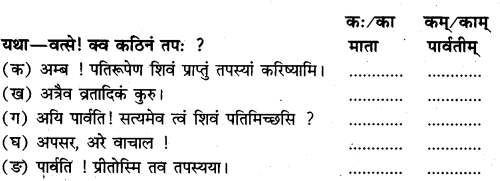
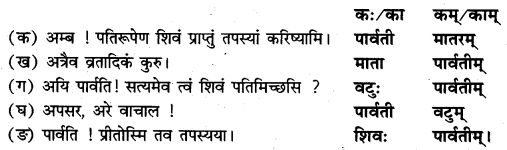
कः/का कं/कां प्रति कथयति
NCERT Solutions for Class 7 Sanskrit Chapter 7 सड.कल्पः सिद्धिदायकः 4
उत्तर
NCERT Solutions for Class 7 Sanskrit Chapter 7 सड.कल्पः सिद्धिदायकः 5

प्रश्नः 5.
प्रश्नानाम् उत्तराणि लिखत

(क) वटुं दृष्ट्वा पार्वती सादरं किम् अवदत् ?
उत्तर
सा अवदत्-“वटो, स्वागतं ते। उपविशतु भवान्।”

(ख) वटुः पार्वतीं किम् अपृच्छत् ?
उत्तर
वटुः अपृच्छत्-“हे पार्वति ! किमर्थं कठिनं तप: समाचरसि ?”
अथवा
वटुः अपृच्छत्-“हे पार्वति ! किं सत्यमेव त्वं शिवं | पतिमिच्छसि ?”

(ग) नारदवचनप्रभावात् पार्वती किं कर्तुम् ऐच्छत् ?
उत्तर
नारदवचनं प्रभवात् पार्वती तपस्यां कर्तुम् ऐच्छत्।

प्रश्न 6.
मञ्जूषातः पदानि चित्वा समानार्थकानि पदानि लिखत
NCERT Solutions for Class 7 Sanskrit Chapter 7 सड.कल्पः सिद्धिदायकः 6
वने …………
पशवः ……………….
जननी ……………….
नयनानि ……………….
विलोक्य ……………….
उत्तर
वने – कानने
पशवः – जन्तवः
जननी – माता
नयनानि – नेत्राणि
विलोक्य – दृष्ट्वा
NCERT Solutions for Class 7 Sanskrit Chapter 7 सड.कल्पः सिद्धिदायकः 7

प्रश्न 7.
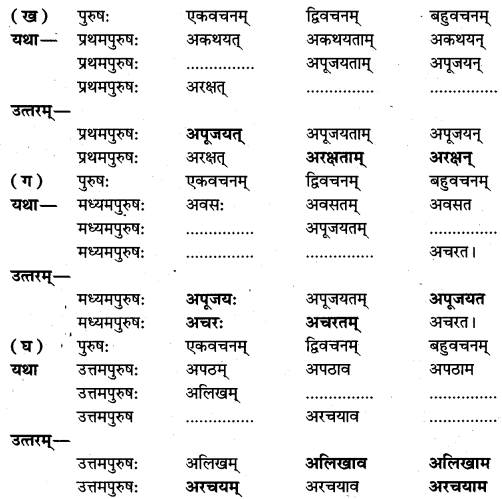
उदाहरणानुसारं पदरचनां कुरुत
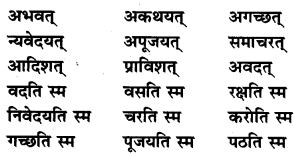
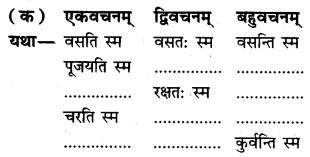
(क) यथा – वसति स्म = अवसत्।
(क) पश्यति स्म = …………….
(ख) लिखति स्म = …………….
(ग) चिन्तयति स्म = …………….
(घ) वदति स्म = …………….
(ङ) गच्छति स्म = …………….
उत्तर
(क) पश्यति स्म = अपश्यत्
(ख) लिखति स्म = अलिखत्
(ग) चिन्तयति स्म = अचिन्तयत्
(घ) वदति स्म = अवदत्
(ङ) गच्छति स्म = अगच्छत्
(ख) यथा-अलिखत् = लिखति स्म
(क) ………. = कथयति स्म
(ख) …………….. = नयति स्म
(ग) ……………… = पठति स्म
(घ) ………….. = धावति स्म
(ङ) …………….. = हसति स्म
उत्तर
(क) अकथयत् = कथयति स्म
(ख) अनयत् = नयति स्म
(ग) अपठत् = पठति स्म
(घ) अधावत् = धावति स्म
(ङ) अहसत् = हसति स्म

ध्यातव्यम्

‘स्म’ इत्यस्य प्रयोगः।
यदा वर्तमानकालिकैः धातुभिः सह ‘स्म’ इत्यस्य प्रयोग: भवति तदा ते धातवः भूतकालिकक्रियाणाम् अर्थ प्रकटयन्ति।

यथा-पठति स्म – पढ़ता था।
गच्छति स्म – जाता था।
लट्लकार वर्तमान काल के क्रियापद के साथ ‘स्म’ अव्यय का प्रयोग होता है और फिर उस क्रियापद का अर्थ भूतकालवाचक हो जाता है।

जैसेपठति = पढ़ता है।
पठति स्म = पढ़ता था।
गच्छति = जाता है।
गच्छति स्म = जाता था।
पठामि = पढ़ता हूँ।
पठामि स्म = पढता था।
गच्छसि = (तुम) गच्छसि
स्म = (तुम) जाते जाते हो।

बहुविकल्पी प्रश्न

(i) कस्याः माता चिन्ताकुला अभवत् ?
(A) ब्रह्मचारिणः
(B) पार्वत्याः
(C) हिमालयस्य
(D) शिवस्य।
उत्तर
(B) पार्वत्याः

(ii) निर्भयं जनं कः स्वयमेव रक्षति ?
(A) ईश्वरं
(B) पतिः
(C) पिता
(D) जननी।
उत्तर
(A) ईश्वरं

(iii) पार्वती तपस्यार्थं कुत्र अगच्छत् ?
(A) गृहम्
(B) वनम्
(C) नगरम्
(D) न कुत्रापि।
उत्तर
(B) वनम्

(iv) कः अशिवं चरति ?
(A) तापसी
(B) जनक:
(C) अशिवः
(D) शिवः।
उत्तर
(D) शिवः।

(v) शिवनिन्दां श्रुत्वा का क्रुद्धा जाता ?
(A) जननी
(B) मनोरमा
(C) पार्वती
(D) रमा।
उत्तर
(C) पार्वती

(vi) वटुरूपेण तपोवनं कः प्राविशत् ?
(A) इन्द्रः
(B) शिवः
(C) यमः
(D) नारदः।
उत्तर
(B) शिवः

(vii) कस्याः कोमलतनुं दृष्ट्वा जननी आदिशत् ?
(A) पार्वत्याः
(B) सुमत्याः
(C) जनन्याः
(D) वन्याः
उत्तर
(A) पार्वत्याः

(viii) कुत्र हिंस्राः पशवः विचरन्ति ?
(A) नगरे
(B) गृहे
(C) मन्दिरे
(D) वने।
उत्तर
(D) वने।

(ix) पार्वत्याः तपस्यया कः प्रीत: अभवत् ?
(A) नरः
(B) वानरः
(C) शिवः
(D) यमः।
उत्तर
(C) शिवः

(x) वने का निर्भया वसति स्म ?
(A) शृगाली
(B) सिंही
(C) लक्ष्मी
(D) पार्वती।
उत्तर
(D) पार्वती।

Class 7 Sanskrit Chapter 7 सड.कल्पः सिद्धिदायकः Summary Translation in Hindi

1. नारदवचनप्रभावात् पार्वती शिवं पतिरूपेण इच्छन्ती तपस्या कर्तुम् इच्छति स्म। सा स्वसङ्कल्यं मात्रे न्यवेदयत्। तच्छ्रुत्वा पार्वत्याः माता चिन्ताकुला अभवत्। पुत्र्याः कोमलतनुं दृष्ट्वा जननी आदिशत्-“वत्से! क्व कठिनं तपः क्व च तव कोमलं शरीरम् ? कथम् आतपात् शीतात् वा आत्मानं रक्षिष्यसि ?” तर्हि तपः मा चर। सुखेन स्वगृहे एव वस। अत्रैव व्रतादिकं कुरु । एतेनैव तव मनोरथपूर्तिः भविष्यति।”

शब्दार्थाः-
नारदवचनप्रभावात् = नारद के वचन के प्रभाव से।
पतिरूपेण = पति के रूप में।
इच्छन्ती = इच्छा करती हुई।
कर्तुम् = करने के लिए।
इच्छति स्म = इच्छा की।
स्वसङ्कल्पम् = अपने संकल्प को।
मात्रे = माता से, माता को।
न्यवेदयत् (नि + अवेदयत्) = निवेदन किया, कहा।
तच्छ्रुत्वा (तत् + श्रुत्वा) = यह सुनकर।
पार्वत्याः = पार्वती की।
चिन्ताकुला = चिन्ता से व्याकुल।
पुत्र्याः = पुत्री का, की, के।
कोमलतनुम् = कोमल शरीर को।
आदिशत् = आदेश दिया।
वत्से = हे पुत्री !
क्व = कहाँ।
आतपात् = धूप से।
आत्मानम् = स्वयं को, अपने आपको।
रक्षिष्यसि = रक्षा करोगी, बचाओगी।
तर्हि = तो, इसलिए।
तपः मा चर = तपस्या मत करो।
अत्रैव (अत्र + एव) = यहाँ पर ही।
व्रतादिकम् (व्रत + आदिकम् ) = उपवास आदि को ।
एतेनैव (एतेन + एव) = इससे ही।
मनोरथपूर्तिः = मन की इच्छापूर्ण।

सरलार्थ:-नारद के वचन के प्रभाव से पार्वती ने शिव को पति के रूप में चाहते हुए तपस्या करने की इच्छा की। उसने अपने संकल्प को माता से कहा। यह सुनकर पार्वती की माता चिन्ता से व्याकुल हो गई। पुत्री के कोमल शरीर को देखकर माता ने आदेश दिया”बेटी कहाँ तो कठोर तपस्या और कहाँ तुम्हारा कोमल शरीर? धूप से या सर्दी से स्वयं को कैसे बचाओगी ? इसीलिए तपस्या मत करो। सुखपूर्वक अपने घर में ही रहो। यहाँ पर ही उपवास आदि करो। इससे तेरे मन की इच्छा पूर्ण हो जाएगी।”

2. परन्तु पार्वती अकथयत्-“अम्ब ! शिवं पतिरूपेण प्राप्तुं तपस्यामेव करिष्यामि इति मे सङ्कल्पः । ईश्वरः मम रक्षा करिष्यति। तपस्यार्थ कोऽपि न गृहे वसति।” एवमुक्त्वा दृढनिश्चया सा पितृगृहं परित्यज्य कानने निर्मितां स्वपर्णकुटीम् अगच्छत् शिवं च अनन्यमनसा अपूजयत्, चिरं तपस्यां च समाचरत्। कानने हिंस्त्राः पशवः विचरन्ति स्म। तथापि पार्वती निर्भया वसतिस्म। यतो हि निर्भयं जनम् ईश्वरः स्वयमेव रक्षति।

शब्दार्थाः-
अम्ब = हे माँ !
प्राप्तुम् = प्राप्त करने के लिए ।
तपस्यार्थम् = तपस्या के लिए।
कोऽपि (कः + अपि) = कोई भी।
उक्त्वा = कहकर
दृढनिश्चया = दृढ़ निश्चय
वाली। पितृगृहम् = पिता के घर को।
परित्यज्य = छोड़कर।
कानने = वन में, जंगल में।
स्वपर्णकुटीम् = अपने पत्तों की कुटिया में।
अनन्यमनसा = एकाग्र चित्त से।
चिरम् = बहुत समय तक।
समाचरत् = करने लगी, करने लगा।
हिंसाः = हिंसक।
विचरन्ति स्म = घूमा करते थे।
यतोहि = क्योंकि।

सरलार्थ:-परन्तु पार्वती ने कहा-‘हे माँ शिव को पति के रूप में प्राप्त करने के लिए तपस्या ही करूँगी, यही | मेरा संकल्प है। ईश्वर मेरी रक्षा करेगा। तपस्या के लिए |कोई भी घर में नहीं रहता।’ यह कहकर दृढ़ निश्चय वाली वह (पार्वती) पिता का घर छोड़कर वन में बनाई गई अपनी | पत्तों की कुटिया में चली गई और शिव की एकाग्र मन से पूजा की, और बहुत समय तक तपस्या की। वन में हिंसक पशु घूमा करते थे तो भी पार्वती निर्भय रहती थी। क्योंकि निर्भय मनुष्य की रक्षा ईश्वर स्वयं करता है।

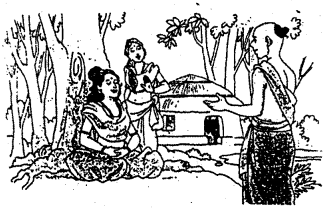
3. कतिचित् मासा: गताः । एकदा कश्चित् वदुः तपोवनं प्राविशत्। वटुं दृष्ट्वा पार्वती आसनात् उत्थाय तमुपगम्य सादरम् अवदत्-“वटो, स्वागतं ते। उपविशतु भवान्।” वदुः कुशलं पृष्ट्वा कौतूहलेन अपृच्छत्-“हेतपस्विनि ! किमर्थं कठिनं तपः समाचरसि ? स्वकीयां तनुं च मलिनां करोषि ?” पार्वती न किञ्चित् वदति स्म। तत्सखी एव तस्याः सङ्कल्पस्य प्रयोजनं वटवे निवेदयति स्म।
NCERT Solutions for Class 7 Sanskrit Chapter 7 सड.कल्पः सिद्धिदायकः 8

शब्दार्था:-
कतिचित् = कुछ।
गताः = बीत गए।
वटुः = ब्रह्मचारी।
प्राविशत् (प्र + अविशत्) = प्रवेश किया, आया।
उत्थाय = उठकर।
तमुपगमय (तम + उपगम्य) = उसके पास जाकर
उपविशतु = बैठो, बैठिए।
कौतूहलेन = उत्सुकता से।
पृष्ट्वा = पूछकर।
समाचरसि = करती हो, करते हो।
स्वकीयाम् = अपने।
तनुम् = शरीर को।
वटवे = ब्रह्मचारी को।
निवेदयति स्म = निवेदन किया, कहा।

सरलार्थ:-(पार्वती को तपस्या करते हुए) कुछ महीने – बीत गए। एक बार कोई ब्रह्मचारी तपोवन में आया। ब्रह्मचारी को देखकर पार्वती ने आसन से उठकर उसके पास जाकर आदरपूर्वक कहा-“हे ब्रह्मचारी आपका स्वागत है। आप | बैठिए।” ब्रह्मचारी ने कुशल पूछकर उत्सुकता से पूछा-“हे तपस्या करने वाली ये कठोर तप क्यों कर रही हो ? और अपने शरीर को क्यों मलिन कर रही हो ?” पार्वती ने कुछ नहीं कहा। उसकी सखि ने ही इसके संकल्प के प्रयोजन को ब्रह्मचारी के सामने निवेदन किया।

4. तत् श्रुत्वा वटुः अपृच्छत्-“अयि पार्वति ! किं सत्यमेव त्वं शिवं पतिमिच्छसि यो हि अशिवं चरति, श्मशाने वसति ? यस्य त्रीणि नेत्राणि, यस्य वसनं गजचर्म, यस्य अगरागः चिताभस्म, यस्य परिजनाश्च भूतगणाः, किं तमेव शिवं पतिम् इच्छसि ?”
NCERT Solutions for Class 7 Sanskrit Chapter 7 सड.कल्पः सिद्धिदायकः 9

शब्दार्थाः-
अशिवम् = अमगंल।
श्मशाने = श्मशान में।
वसनम् = वस्त्र, कपड़ा।
गजचर्म = हाथी का चमड़ा।
अङ्गरागः = सौन्दर्य सामग्री।
चिताभस्म = चिता की राख।
परिजनाश्च (परिजनाः + च) = सेवक आदि।
भूतगणाः = भूत-प्रेत आदि।

सरलार्थ:-
यह सुनकर ब्रह्मचारी ने पूछा- “हे पार्वती क्या तुम सचमुच ही शिव को पति के रूप में चाहती हो, जो शिव अमंगल आचरण करता है और श्मशान में रहता है जिसके तीन नेत्र हैं, जिसका वस्त्र हाथी का चमड़ा है, जिसकी सौन्दर्य सामग्री चिता की राख है और जिसके सेवक भूत-प्रेत आदि हैं। क्या तुम उसी शिव को पति के रूप में चाहती हो ?”

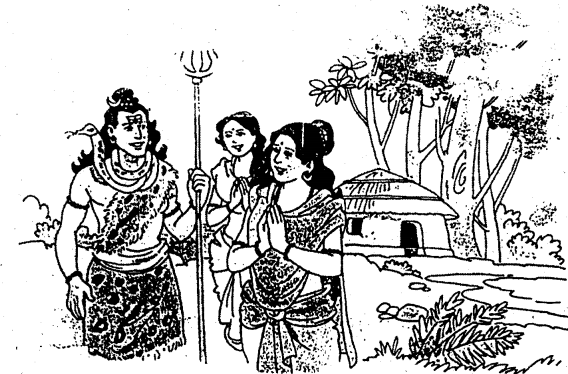
5. शिवनिन्दां श्रुत्वा पार्वती क्रुद्धा जाता। सा अवदत्”अपसर अरे वाचाल ! त्वं महेश्वरस्य परमार्थस्वरूपमेव न जानासि। जनाः अनादिकालात् सङ्कल्पसिद्धये शिवमेव पूजयन्ति । तत् नोचितं त्वया सह सम्भाषणम्।” एवमुक्त्वा यदा सा प्रस्थानाय उद्यता, तावदेव शिवः वटोः रूपं परित्यज्य तस्याः मार्गम् अवरुध्य अवदत् “पार्वति ! प्रीतोऽस्मि तव सङ्कल्पेन तपस्यया च।”

शब्दार्थाः-
अपसर = दूर हट जाओ।
वाचाल = व्यर्थ ,बोलने वाले।
परमार्थस्वरूपमेव (परम + अर्थस्वरूपम् + एव) = दिव्यरूप को ही/यथार्थस्वरूप को ही।
सड़कल्पसिद्धये = संकल्प को पूरा करने के लिए।
नोचितम् (न + उचितम्) = उचित (ठीक) नहीं है।
प्रस्थानाय = जाने के लिए।
सम्भाषणम् = बात-चीत।
उद्यता = तैयार हुई।
तावदेव ( तावत् + एव) = तभी।
अवरुध्य = रोक कर।
प्रीतोऽस्मि (प्रीतः + अस्मि) = प्रसन्न हूँ।

सरलार्थ:-
शिव की निन्दा सुनकर पार्वती क्रुद्ध हो गई। वह बोली-“हे व्यर्थ बोलने वाले ! दूर हट। तू महेश्वर शिव के दिव्यस्वरूप को नहीं जानता है। लोग अनादिकाल से अपने संकल्प की सिद्धि के लिए शिव को ही पूजते हैं। इसीलिए तेरे साथ बात-चीत करना उचित नहीं है।” यह कहकर जब वह जाने के लिए तैयार हुई, तभी शिव ब्रह्मचारी के रूप को छोड़कर उसका रास्ता रोककर बोले”हे पार्वती ! मैं तेरे संकल्प से तथा तेरी तपस्या से प्रसन्न

National Game of India: Check India’s National Game is Hockey or Not?

National Game of India

Have you wondered why Field hockey declared as the National Game of India? or Do you guys have any doubt like Is India’s National Game is Hockey or not? If yes, then you will find all answers to your questions in this article. Here, we have shared some of the facts, key points, history, rules about the hockey Indian national game. These sections will make you understand why the hockey game is known as the national sport of India in past and why it is not in present? For a better understanding of the content, we have given direct links below. Tap on the required link and gain knowledge about the National Game of India. Also, you can find more GK topics on our website to learn and answer all kinds of questions in various competitive or govt exams.

Overview of Indian National Game

Name Field Hockey
Teams Two teams at a time
Two teams 11 in each team
Distribution of Players  10 Player on Field and one as Goal Keeper
Number of Olympic Gold Medals Eight (08)
Number of World Cup Wins One (1975)
Women’s Common Wealth Winner One (2002)
Governing Body Hockey India

Key Points About National Game of India

Here are some of the important details about the Indian national game ie., Field Hockey. Check out the points from below and gain deeper knowledge for further reference.

  • In 1925, the Indian Hockey Federation was organized.
  • In the 1928 Olympics, the Indian Hockey team won a gold medal for the country.
  • Between 1928 and 1956, the Indian Hockey Team won six consecutive Olympic Gold Medals,
  • The team again won a gold medal in the 1964 Tokyo Olympics and 1980 Moscow Olympics.
  • Indian Men’s Hockey team was the winner of the Hockey World Cup in 1975 held in Kualalampur, Malaysia.
  • Indian Hockey team winning streak ended in the 1960 Rome Olympics when the team lost 0-1 to the Pakistan Hockey team in the finals.
  • The Indian Women’s Hockey team won a Gold medal in the 2002 Commonwealth Games held in Manchester, England.
  • The Olympic team members were Richard Allen, Dhyan Chand, Michael Gately, William Goodsir- Cullen, Leslie Hammond, Feroze Khan, Santosh Manglani, George Marthins, Rex Norris, Broome Pinninger, Michael Rocque, Frederick Seaman, Shaukat Ali, Jaipal Singh, Kher Singh Gill.
  • Indian hockey took its first international trip to New Zealand where they played 21 matches, won 18, lost 1, and drew 2 among them. This trip marked the emergence of the legendary Dhyanchand.
  • Indian Hockey Team has won 24 back-to-back matches scoring 178 goals while conceding only 7 in their half.

Rules of the Hockey National Game

Prior, the hockey game was played in two halves, 35 minutes each later in 2014 it was changed to 4 halves of 15 minutes each. After every period, there will be a 2-minute break. The team consists of 11 members whom 10 are on the field and one is the goalkeeper. Every player holds a hockey stick, 150 to 200 cm long slender shaft, finish in a flattened extension called the blade. The allowed maximum weight of the hockey stick is 737 grams. The ball is small in size and made with hard plastic. The hockey stick is made with hickory or mulberry wood and generally, the stick is flat on the playing side.

The main aim of the game is to hit, dribble and push the ball around the field and try to pass the ball on the other side of the goal post. The goalkeeper should not allow the ball to goal and miss their point. The field players need to hold, kick or carry the ball to the opposite end & goal it. The game starts at the center point and the sides are revered after the first half. To qualify as a goal, the scoring shot needs to be taken from within the striking circle. Game umpires will be two on-field and they monitor the match from the close and stop any rule breaks or misconduct. That’s all about Hockey game rules, follow them while practicing or remember them for any reference purpose.

History of the Indian National Game

One of the most ancient games performed in the present world is Hockey. The simple sport of directing a ball by using a has been played approximately 1200 years before the launch of the ancient Games of Olympia in Greece. You can see different variations of this game played through ages by almost all important races in the world.

The modern accepted version of the sport of Field hockey was established by the British. The London hockey union was standard in 1921 and the rules were combined. This game was initiated in India at the time of the British Raj. In 1855, the first hockey club was established in India. India participated in the Olympics conducted in Amsterdam for the first time in 1928.

National Sport of India: Conflict

Back in 2012, the Times of India reported a 10-year-old Aishwarya Parashar filed an RTI query to confirm her doubts about India’s national sport. The RTI query prompted a swift response from the Ministry of Youth Affairs and Sports, which confirmed that it had not declared any sport or game as the ‘national game.’ Since then India is not having any national game of the country, even on the official website of the government.

FAQs on Indian National Sport

1. How many gold medals have been won by the Indian hockey team in the Olympics?

The Indian hockey team has won eight gold medals in the Olympics till date.

2. Who will host National Games 2021?

National Games 2021 will host by Chattisgarh.

3. Is hockey is the national game of India?

Well, not. And even it is not cricket. In fact, India does not have a national sport officially. Even though some specialists consider that Hockey is the national game of India, but there is no official confirmation on that.

UPSC Indian Administrative Service Salary 2021 | Check Salary of an IAS Officer, Grade-wise Pay Scale, Allowances & IFS, IAS, IRS Salary Details

UPSC IAS Salary details

UPSC IAS Salary 2021: Have you cracked UPSC Indian Administrative Service Exam and want to know the basic Salary, Allowance, etc for IAS Officer? Then, this page is the right choice to attain all the answers to the questions raised in your head. Everyone knows that an amazing job holds a good amount of pay scale or salary package. With an IAS officer job, a candidate can get a chance to serve for India and honor from every person along with a high amount of pay & HRA & Transport allowance.

Hence, we can say that not just lakhs of money attracts the job aspirants but also the powers and responsibilities of the IAS Officer. In the below modules, you will get a clear idea about UPSC IAS Salary in India as well as pay scale, grades, allowances, job profile, salary structure of Indian Administrative Service officer after seventh pay commission, etc.

More to Know:

UPSC IAS Officer Salary 2021 Structure After 7th Pay Commission

Candidates who are looking for the salary structure of the most desired IAS job or post after the UPSC Exam can check the below table. The table includes the basic salary of an IAS Officer per month and can go on high up to a cabinet secretary. Also, aspirants can check the pay level, pay scale for each level of the IAS salary from the table given below. Hence, you can compare Pay band and Pay Level in the table for a fine understanding of the IAS Salary Structure.

Grade Post No. Of Years Old System New System
Grade Pay Pay Scale(INR) Pay Level Basic Pay (INR)
Junior or Lower Time Scale ASP/SDM/ Asst. Commissioner 1-4 5400 15600 – 39100 10 56100
Senior Time Scale ADM/Deputy Secretary/ Undersecretary 5-8 6600 15600 – 39100 11 67700
Junior Administrative DM/ Joint Secretary/ Deputy Secretary 9-12 7600 15600 – 39100 12 78,800
Selection Grade DM/ Special Secretary cum director/ Director 13-16 8700 37400 – 67000 13 1,18,500
Selection Grade Divisional Commissioner/ Secretary Cum Commissioner/ Joint Secretary 16-24 8700 37400 – 67000 14 1,44,200
Super Time Scale Divisional Commissioner/ Principal Secretary/ Additional Secretary 25-30 12000 37400 – 67000 15 1,82,200
Above Super Time Scale Additional Chief Secretary 30-33 NA 80000 (Fixed) 16 2,05,400
Apex Scale Chief Secretary 34-36 NA 90000 (Fixed) 17 2,25,000
Cabinet Secretary Grade Cabinet Secretary of India 37+ years NA 90000 (Fixed) 18 2,50,000

Pay Scale, Grades & Salary of IAS Officer

IAS officers are promoted from junior level to highest position on the basis of the number of years in the service, performance, and experience. The Indian Administrative Service salary structure is divided into 8 grades. Every single grade contains fixed basic pay and grade pay, House Rent Allowance, Dearness Allowance, Medical Allowance, and Conveyance Allowance. All these allowances are discussed elaborately in the below section so have a look at the following table of grade-wise IAS Pay Scale and Grade pay details at first.

Grade Pay Scale Grade Pay Years of Service
Junior Scale INR 50000 -1,50,000 INR 16,500 NA
Senior Time Scale INR 50,000 – 1,50,001 INR 20,000 5 years
Junior Administrative Grade INR 50,000 – 1,50,002 INR 23,000 9 years
Selection Grade INR 1,00,000 – 2,00,000 INR 26,000 12 – 15 years
Super Time Scale INR 1,00,000 – 2,00,000 INR 30,000 17 – 20 years
Above Super Time Scale INR 1,00,000 – 2,00,000 INR 30,000 Varies
Apex Scale INR 2,25,000 (Fixed) NA Varies (around 30 years)
Cabinet Secretary Grade INR 2,25,000 (Fixed) NA Varies

About Indian Administrative Service(IAS) Allowances: HRA, DA & TA

IAS Officer Salary includes basic salary and other allowances like HRA, TA, DA, etc. According to the 7th Pay commission norms, the HRA Allowances is 24 percent, 16 percent, and 8 percent and it depends on the city you have posted. In addition to these, the seventh pay commission has suggested an increase of HRA when DA crosses 50% and 100%. There is no enhancement in Transport allowance.

Do Refer: How to become an IAS Officer in India?

On the other hand, DA which is 125% has been integrated with ongoing Transport Allowance. As well as Pay Band – Grade Pay System which prevails before has stopped by the 7th pay commission. For more information about IAS Officer allowances, check the table below and get to know about different allowances in Indian Administrative Service(IAS) Officer Salary.

HRA Distribution
Class X 8 Cities only- 24% HRA (Delhi, Mumbai, Kolkata, Chennai, Bangalore, Hyderabad, Ahmedabad, and Pune)
Class Y Around 100 Towns (With a Population above 5 Lakhs) – 16% HRA
Class Z Rural Areas – 8% HRA
Dearness Allowance
DA DA now crosses 50 to 100 %
Transport Allowance
The Transport allowance is not included in the DA which can reach up to 125% now

IFS Salary Structure, Job Profile

IFS full form is Indian Foreign Services. It gives you to serve the country in the foreign country. A lot of perks are offered to the candidate along with a high salary and many family allowances. You can check the complete details about the salary of UPSC IFS from the table mentioned below:

Grade Rank Basic Pay in INR (as of 7th Pay Commission)
Junior Time Scale Under Secretary 8000
Senior Time Scale Under Secretary 10700
Junior Administrative Scale Deputy Secretary 12750
Selection Grade Counselor Director 15100
Senior Administrative Scale Joint Secretary 18400
High Commissioner/ Ambassador Foreign Secretary 26000

Job Profile and Salary Structure of IPS

The only post that comes with the Uniform is the IPS officer. A candidate who appointed as an IPS Officer will get great power, respect, and prestige along with a good pay scale. The details of the salary structure for UPSC IPS Officer is given below:

Post Basic Pay (INR)
Deputy Superintendent of Police 56,100
Additional Superintendent of Police 67,700
Senior Superintendent of Police 78,800
Deputy Inspector General of Police 1,31,100
Inspector General of Police 1,44,200
Director General of Police 2,05,400
Director General of Police/ Director of IB or CBI 2,25,000

Also Check: Difference Between IAS and IPS & Their Similarities

IRS Pay Scale & Job Profile

The second most sought-after job under UPSC Exam is IRS. The candidates who employed in the role of IRS hold more social value, Indian Revenue Service Officer also provides a fruitful salary. Aspirants can find more details about UPSC IRS Salary structure and job level from the below table:

Designation Pay Scale
Assistant Commissioner of Income Tax INR 15,600 – 39100 + Grade Pay of INR 5400
Deputy Commissioner of Income Tax INR 15,600 – 39100 + Grade Pay of INR 6600
Joint Commissioner of Income Tax INR 15,600 – 39100 + Grade Pay of INR 7600
Additional Commissioner of Income Tax INR 37400 – 67000 + Grade Pay of INR 8700
Commissioner of Income Tax INR 37400 – 67000 + Grade Pay of INR 10000
Principal Commissioner of Income Tax INR 75000 to INR 80000
Chief Commissioner of Income Tax INR 75000 to INR 80000
Principal Chief Commissioner of Income Tax INR 80000 fixed

IAS Salary Perks & Other Facilities

Besides the IAS officer salary, he/she also offered some other perks and benefits as such,

  • Transportation: Vehicles will be provided along with a driver.
  • Service Quarter (3 or 4 BHK): IAS Officers are provided with a service quarter at the place of their posting.
  • Security: Two bodyguards and three home guards are allotted.
  • All Medical expenses will be looked after.
  • Electricity & Water Bills: Completely taken care of or subsidised.
  • Free Phone Call
  • Study leave
  • Abroad Study Option
  • Household Helpers
  • Dearness Allowance (As governed by the inflation index) (at 65 percent)
  • Pensions and Retirement Benefits.

IAS Officer Roles & Responsibilities

  • Maintenance of Law and Order.
  • Collect revenue.
  • Function as courts in revenue matter.
  • Implementation of developmental schemes.
  • Function as Executive Magistrate.
  • Function as Chief Development Officer.
  • Traveling to other places for the implementation of policies.
  • Function as District Development Commissioner.
  • Implementation and supervision of policies of the State Government and Central Government.
  • Supervise the expenditure of public funds as per norms of financial propriety.
  • Handle daily affairs of the government, which includes framing and implementation of policy in consultation with the minister-in-charge.
  • Handle regular proceedings of the government.
  • Contribution in the State secretariat or as head of departments or Public Sector undertakings.

Also, our team of Ncertbooks.Guru prepared the elaborated UPSC Syllabus for efficient exam preparation. So, Candidates are advised to check the UPSC Prelims and Mains Syllabus to kickstart their preparation & crack the job as an IAS officer.

FAQs on UPSC IAS Salary 2021

1. What is the per month Salary of IAS Officers in India?

The basic salary of an Indian Administrative Service officer in India per month starts at Rs. 56,100 with extra allowances like TA, DA, and HRA.

2. What is the IAS salary structure 2021?

The IAS officer salary structure can be like this at the Entry level position or junior scale:

Basic Pay: INR 56,100
Dearness Allowance 2%: INR 1,122
Travel Allowance: INR 3,200
DA on Travel Allowance 125%: INR 4,000
Deduction: (-) INR 6,287
Total: INR 58135

3. Do Indian Administrative Service(IAS) trainees get paid?

Yes, the elected candidates get a certain salary during the training period at Lal Bahadur Shastri National Academy of Administration (LBSNAA). In training, officers get Stipend/Special Pay Advance ₹45,000 per month.

NCERT Solutions for Class 9 Sanskrit Shemushi Chapter 6 भ्रान्तो बालः

We have given detailed NCERT Solutions for Class 9 Sanskrit Shemushi Chapter 6 भ्रान्तो बालः Questions and Answers will cover all exercises given at the end of the chapter.

Shemushi Sanskrit Class 9 Solutions Chapter 6 भ्रान्तो बालः

अभ्यासः

प्रश्न 1.
अधोलिखिताना प्रश्नानाम् उत्तराणि संस्कृतभाषया लिखत –

(क) बालः कदा क्रीडितुं निर्जगाम?
उत्तर:
बालः विद्यागमनकाले क्रीडितुं निर्जगाम।

(ख) बालस्य मित्राणि किमर्थ त्वरमाणा बभूवुः?
उत्तर:
बालस्य मित्रणि पाठं स्मृत्वा विद्यालयगमनाय त्वरमाणाः बभूवुः।

(ग) मधुकरः बालस्य आहान केन कारणेन न अमन्यत?
उत्तर:
मधुकरः मधुसंचये सस्य आसीत् अनेन सः तस्य आह्वानं न अमन्यत्

(घ) बालकः कीदृशं चटकम् अपश्यत्?
उत्तर:
बालकः तृणानाददानं चटक अपश्यत्।

(ङ) बालकः चटकाय क्रीडनार्थ कीदृशं लोभ दत्तवान्?
उत्तर:
बालकः लोभं ददन् उवाच-त्यज शुष्क तृण अहं ते स्वाभोजनं दास्यामि।

(च) खिन्नः बालकः श्वानं किम् अकथयत्?
उत्तर:
खिन्न बालक : अकथयत् – रे मनुष्याणां कमत्र। कि पर्यटसि वृथा? आगच्छ अत्र शीतलछायायां क्रीडावः।।

(छ) विनितमनोरथः बालः किम् अचिन्तयत्?
उत्तर:
विनितमनोरथः बालः अचिन्तयत्-जगति सर्व निज कार्ये व्यस्ताः अहमिव न कोऽपि वृथा कालक्षेप नयति।

प्रश्न 2.
निम्नलिखितस्य श्लोकस्य भावर्थ हिन्दीभाषया आङ्ग्लभाषया वा लिखत –

यो मां पुत्रप्रीत्या पोषयति स्वामिनो
गृहे तस्य। रक्षानियोगकरणान्न मया भ्रष्टव्यमीषदपि
उत्तर:
इस संसार में सफल जीवन हेतु प्रत्येक प्राणी को स्वोचित कर्म को नियमित रूप से करना होता है। सम्पूर्पा प्रकृति जैसे सूर्य का प्रतिदिन समय पर उदित होना, वृक्षों का समय पर फलना-फूलना, बादलों को मय पर बरसना, यही संकेत करता है कि इसी प्रकार मनुष्य को भी अपना-अपना कर्म समय पर नियमित रूप से करना चाहिए। क्योंकि जीव-जन्तु भी ऐसा ही करते हैं। जैसे प्रस्तुत श्लोक में कुत्ते का अपने कर्म (स्वामिभक्ति) को बड़ी तत्परता से करते हुए दिखाया गया है। वह रक्षा कर्म में थोड़ी भी असावधानी नहीं करता।

प्रश्न 3.
“भ्रान्तो बालः” इति कथायाः सारांशं हिन्दीभाषया आङ्ग्लभाषया वा लिखत।
उत्तर:
प्रस्तुत कहानी में एक भ्रान्त (पथभ्रष्ट) बालक को अपने अध्ययनकर्म की अपेक्षा खेलकूद में व्यर्थ में समय बिताते हुए दिखाया गया है कि संसार में जब अन्य सभी प्राणी, जीवजन्तु भी अपने अपने कर्म को तल्लीन होकर करते हैं तो मनुष्य को भी अपना कर्म अवश्य करना चाहिए, उसे समय को व्यर्थ नहीं गवाना चाहिए। वह बालक कभी भ्रमर को अपने साथ खेलने के लिए आह्वान करता है, तो कभी चटक को, कभी कुत्ते को। परन्तु सभी स्वोचित कर्म में तल्लीन होन के कारण उसके साथ कोई भी खेलने को तैयार नहीं होता। थक कर उसे यह अहसास होता है कि उसे भी अपने कर्म के प्रति प्रमाद नहीं करना चाहिए अपितु विद्यालय जाकर विद्या ग्रहण करनी चाहिए। और कुछ समय पश्चात् उसी बालक ने विद्वत्ता में सफलता (प्रसिद्धि) प्राप्त की तथा खूब धन-सम्पत्ति को भी प्राप्त किया।

प्रश्न 4.
स्थूलपदान्यधिकृत्य प्रश्ननिर्माण कुरुत –

(क) स्वादूनि भक्ष्यकवलानि ते दास्यमि।
उत्तर:
कीदृशानि भक्ष्यकवलानि ते दास्यामि?

(ख) चटक: स्वकर्मणि व्यग्रः आसीत्।
उत्तर:
चटक: कस्मिन् व्यग्रः आसीत्।

(ग) कुक्कुरः मानुषाणां मित्रम् अस्ति।
उत्तर:
कुक्कुरः केषां मित्रं अस्ति।

(घ) स महती वैदुषीं तब्धवान।
उत्तर:
स काम् लब्धवान?

(ङ) रक्षानियोगकरणात् मया न भ्रष्टव्यम् इति।
उत्तर:
कस्मात् मया न भ्रष्टव्यम् इति?

प्रश्न 5.
” एतेभ्य: नमः” इति उदाहरणनुसृत्य नमः इत्यस्य योगे चतुर्थी विभक्तेः प्रयोग कृत्वा पञ्चवाक्यानि रचयत।
उत्तर:

  1. नमः शिवाय।
  2. गुरवे नमः।
  3. शारदायै नमः।
  4. पित्रे नतः।
  5. परमात्मने नमः।

प्रश्न 6.
‘क’ स्तम्भे समस्तपदानि ‘ख’ स्तम्भे च तेषां विग्रहः दत्तानि, तानि यथासमक्षं लिखत ‘क’ स्तम्भ

NCERT Solutions for Class 9 Sanskrit Shemushi Chapter 6 भ्रान्तो बालः 1
उत्तर:
NCERT Solutions for Class 9 Sanskrit Shemushi Chapter 6 भ्रान्तो बालः 2

प्रश्न 7.
(क) अधोलिखितेषु पदयुग्मेषु पदयुग्मेषु एक विशेष्यपदम् अपरञ्च विशेषणपदाम्। विशेषणपदम् विशेष्यपदं च पृथक-पृथक चित्वा लिखत –

विशेषणम्  – विशेष्यम्

(क) खिन्नः बाल …………. – ……………
(ख) पलायमान श्वानम्। ………… – ………….
(ग) प्रीतः बालक: ………….. – …………..
(घ) स्वादूनि भक्ष्यकवलानि ……….. – ………….
(ङ) त्वरमाणाः वयस्याः ……….. – ……………
उत्तर:
(क) खिन्न : बाल विशेषणम् – विशेष्यम्
(ख) पलायमान श्वानम् खिन्नः – बालः
(ग) प्रीतः बालकः प्रीतः – बालकः
(घ) न स्वादूनि भक्ष्यकवलानि स्वादूनि – भक्ष्यकवलानि
(ङ) न त्वरमाणाः वयस्याः त्वरमाणाः – वयस्याः

(ख) कोष्ठाकगतेषु पदेषु सप्तमीविभक्तेः प्रयोगं कृत्वा रिक्तस्थानपूर्ति कुरुत –

  1. बाल:…………………………..क्रीडितु निर्जगाम। (पाठशालागमनवेला)
  2. ……………………..जगति प्रत्येक स्वकृत्ये निमग्नो भवति। (इदम्)
  3. खगः …………………………..नीड करोति। (शाखा)
  4. अस्मिन् ………………………….किमर्थ पर्यटसि? (निदाघदिवस)
  5. ………………..हिमालयः उच्चतमः (नग)

उत्तर:

  1. बालः पाठशालागमनवेलायाम् क्रीडितुं निर्जगाम।
  2. अस्मिन जगति प्रत्येक स्वकृत्ये निमग्नो भवति।
  3. खगः शाखायाम् नीड करोति।
  4. अस्मिन् निदाघदिवसे किमर्थ पर्यटसि?
  5. नगेषु हिमालयः उच्चतमः परियोजनाकार्यम्

परियोजनाकार्यम्

(क) एकस्य उद्यानस्य चित्र निर्माय संकलय्य वा पञ्चवाक्येषु तस्य वर्णन कुरुत।
उत्तर:

  1. चित्रे एक अद्यानं अस्ति।।
  2. उद्याने अनेके वृक्षाः शोभन्ते।
  3. अत्र विविधवर्णानि पुष्पाणि शोभन्ते।
  4. पुष्पेषु भ्रमराः अपि तिष्ठन्ति।
  5. एतद् दृश्य अतिमनोहरी वर्तते।

(ख) “परिश्रमस्य महत्त्वम्” इति विषये हिन्दी भाषया आङ्ग्लभाषया वा पञ्च वाक्यानि लिखत।
उत्तर:

  1. परिश्रम रूपी सीढी से ही सफलता रूपी शिखर पर पहुँचा जा सकता है।
  2. इस संसार में सभी जीव-जन्तु यहां कि चींटी भी परिश्रम के द्वारा ही जीवन-यापन करती है।
  3. अभी तक दुनिया में प्रसिद्धि के शिखर पर पहुंचे लोगों से यदि उनकी सफलता का राज पूछा जाए तो वे एक हो शब्द में उत्तर देंगे और वह शब्द है-‘परिश्रम’।
  4. धन लक्ष्मी भी परिश्रमी व्यक्ति का ही वरण करती
  5. अतः मनुष्य को परिश्रमशील होना चाहिए, क्योंकि परिश्रम ही सफलता की कुंजी है।

व्याकरणात्मकः बोधः

1. पदपरिचयः – (क)

  • वयस्येषु – वयस्य शब्द, सप्तमी विभक्ति, बहुवचन। सङ्गी-साथियों में।
  • अनेन – इदम् (पु.) शब्द, तृतीया विभक्ति, एकवचन। इसके द्वारा।
  • मित्रम् – मित्र शब्द (पु.) प्रथमा विभक्ति, एकवचन। मित्र अस्मिन्- इदम् (पु.) शब्द, सप्तमी वि.. एकवचन। इस में
  • मे – अस्मद् शब्द के षष्ठी के मम के स्थान पर प्रयुक्त (मेरी) यह “महाम्” के स्थान पर भी प्रयुक्त होता है।
  • यैः – यत् (पु.) शब्द, तृतीया वि. बहुवचन। जिनके द्वारा।
  • ते – ‘तुभ्यम्’ के स्थान पर प्रयुक्त। तेरे लिए।
  • केलिभिः – केलि शब्द, तृतीया, बहुवचन। खेलों के द्वारा।

पदपरिचयः – (ख)

  • निर्जगाम् – निर् + गम् धातु, लिट्लकार, प्रथम पुरुष, एकवचन। निकल गया।
  • आसीत् – अस् धातु, लङ्लकार. प्रथम पुरुष एकवचन। था।
  • बभूवु – भू धातु. लिट्लकार, प्रथम पुरुष, बहुवचन। हुए।
  • प्रविवेश – प्र + विश् धातु. लिट्लकार, प्र.पु. एकवचन। प्रविष्ट हुआ।
  • आह्वयत् – आ + हे धातु, लङ्लकार, प्र.पु.. एकवचन। पुकारा
  • आश्रयस्व – आ + श्रि धातु, लोट्लकार, म.पु., एकवचन। आश्रय ग्रहण करो
  • लेभे – लभ् (आ.प), लिट्लकार, प्रथम पुरुष, एकवचन। प्राप्त किया।
  • उवाच – वच् धातु, लिट्लकार, प्र.पु., ऐकतचन। बोला।

2. प्रकृतिप्रत्ययविभाग: –

  • क्रीडितुम् – क्रीड् + तुमुन् (खेलने के लिए) क्षेप्तुम्-क्षिप् + तुमुन् (व्यतीत करने के लिए)
  • उपलभ्यमानः – उप + लभ् + यत् + शानच् (उपलब्ध) कर्मवाच्य में प्रत्यय
  • त्वरमाणा: – त्वर + शानच् (शीघ्रतारत) परिहरन्-परि + इ + शत् (चुराता हुआ) व्रजन्तम्-व्रज + शत्, द्वितीया विभक्ति, (जाते हुए का)
  • आददानम् – आ + दा + शानच् द्वितीया विभक्ति, (लाते हुए को)

Class 9 Sanskrit Shemushi Chapter 6 भ्रान्तो बालः Summary Translation in Hindi

भ्रान्तः कश्चन ………………………………. प्रविवेश

सरलार्थ – कोई भटका (पथभ्रष्ट) बालक विद्यालय जाने के समय पर खेलने के लिए बाहर निकल गया। लेकिन उसके साथ खेलकुद में समय बिताने के लिए, उस समय कोई भी साथी (मित्र) उसे नहीं मिल रहा था। क्योंकि वे सभी पहले दिन के (विद्यालय में पठित) पाठों को याद कर विद्यालय जाने की जल्दी में थे। आलसी वह बालक लज्जा (शर्म) के कारण उनकी निगाह बचाकर अकेला ही किसी उद्यान (बाग) में प्रविष्ट हो जाता है।

स चिन्तयामास …………………….. वयस्या इति

सरलार्थ – उसने सोच-“रहने दो इन बेचारे पुसतकदासों को अर्थात् ये किताबी कीडे मरे साथ खेलने नही चलते हैं तो रहने दो। मैं तो अपना मनोरञ्जन ही करूँगा। नहीं तो पुिर से उस कुपित शिक्षक का मुंह देखना पड़ेगा। (विद्यालय में गया ता) ठीक है, मैं इन कोटरवासियों (वृक्ष के कोटर रूपर घर में रहने वाले) पक्षियों को ही साथी बना लेता हूँ। (पक्षी ही मेरे साथ खेलने वाले साथी होंगे।)

अथ स पुषोद्यानं ……………. स्वकर्मव्यग्रो बभूव

सरलार्थ – उसने बाद उसने बगीचे में जाते भ्रमर को देखा तो उसे अपने साथ खेलने के लिए बुलाया। दो-तीन बार उसके बुलाने भी वह भ्रमर नहीं माना। तब उस बालक के बार-बार हठ (जिद करने पर वह गाने लगा, अर्थात् “हम तो मधू (फलों का मीठा रस, शहद) का संचय करने में व्यस्त है।” (हमारे पास खेलने को समय नहीं हैं) तब उस बालक ने “व्यर्थ में, गर्व (घमण्ड) से युक्त इस कौडे को रहने दो।” अतः दूसरी ओर निगाह करने पर, चोंच में घास (सूखी घास) के तिनके ले जाने हुए चटक (नर चिड़िया) को देखा और (वह) बोला-“अरे प्रिय चिड़े। (चिड़िया के बच्चे) तुम मनुष्य (मेरे) मित्र बनोगे, चलो खेलते हैं। छोड़ो इस सूखी घास को, मैं तुम्हें स्वादिष्ट तथा खाने की शाखा (टहनी) दंगा। परन्तु वह तो “वटवृक्ष की शाखा” ‘ठहनी) पर घोसला बनाना है, इसलिए मुझे तो कार्य (करना) है, मैं जा रहा हूँ।” यह कहकर अपना कार्य करने में व्यस्त हो गया।

तदा खिन्नो …………………….. प्रत्याह  –

सरलार्थ – तब खिन्न (उदास) हुए उस बालक ने पक्षी (मुझ जैसे) मनुष्यों के पास नहीं आते, इसलिए मनुष्य की रतह मनोरञ्जन करने वाले किसी अन्य (प्राणी) को देखता (खोजता) हूँ (ऐसा सोचकर) घूमकर उसने भागे जाते हुए एक कुत्ते को देखा। प्रसन्न हुए बालक ने उसे प्रकार से सम्बोधित किया-“अरे। मनुष्य के मित्र! क्यों तुम इस गर्मी के दिन में (व्यर्थ) भटक रहे हो? इस पेड़ के नीचे की सघन और शीतल (ठण्डी) छाया का आश्रय ले लो। मैं भी तुम्हारे जैसे किसी, साथ खेलने वाले (सहयोगी) की तलाश में था”। कुत्ते ने उत्तर दिया

यो मां पुत्रप्रत्या पोषयति स्वामिनो गृहे तस्य।
रक्षानियोगकरणान्न मया भ्रष्टव्यमीषदपि।। इति ।।

सरलार्थ – जो मुझे पुत्र की भाँति प्रसन्नता पूर्वक भोजन देता है (पोषण करता है) उस स्वामी के घर की रक्षाकर्म (रखवाली) को करने में मैं जरा भी असावधानी नहीं कर सकता।” (अत: मैं जा रहा हूँ।)

सवैरेवं निषिद्धः ……………….. च लेभे

सरलार्थ – सभी के द्वारा इस प्रकार से मना कर दिए जाने पर खण्डित काम (निराश) वह बालक किस प्रकार से इस संसार में प्रत्येक प्राणी अपने अपने कार्य में तल्लीन रहता है। मेरी तरह कोई भी व्यर्थ में समय व्यतीत नहीं करता। इन सभी (प्राणियों) को नमन है जिहोंने मुझसे आलस्य के प्रति वैरस्य अर्थात् घृणा उत्पन्न कर दी। अतः मैं भी अपने योग्य कान करता हूँ, यह सोचकर वह शीघ्र पाठशाला में चला गया।
तब से लेकर वह (भ्रान्त) बालक विद्याभ्यासी बनकर महान् विद्वज्जनयोग्य प्रसिद्धि को तथा सम्पदा (धन-धान्य) को प्राप्त हुआ।

General Knowledge Questions for Class 4 Kids | Access GK Quiz Questions And Answers for Maths, Science, & GA

GK Questions for Class 4 Students

The sounding of GK questions for Class 4 might strange for the students but it is very important for their improvement in knowledge. Class 4 Maths, Science, Social Science, General, Sports GK Quiz Questions helps your child to gain more general Knowledge at an early age.

General Knowledge is the awareness regarding what’s occurring in the world or around you. With the help of several sources, you can acquire it that may include books, websites, people, experiences, etc. Kids who are studying grade 4 can now obtain the complete GK updates from here. This article covers the list of General Knowledge Questions for Class 4 students that ranges from maths to social science, science, and sports.

This Blog Includes:

Science GK Quiz Questions & Answers for Class 4

The list of Science & Technology GK Questions for Class 4 in English is here below. Spend your activity time with this list of newly updated grade 4 GK Quiz Questions for science and get more familiar with the world of science around you. Also, it is surely going to benefit the kids to get sharper and more knowledgeable.

1. Earth is surrounded by layers of gases collectively called the —?

Answer: Atmosphere

2. Which organ purifies our blood?

Answer: Kidney

3. How many bones are there in a newborn baby?

Answer: 300

4. Who invented Penicillin?

Answer: Alexander Fleming

5. Who discovered the Computer?

Answer: Charles Babbage

6. Which planet is called the red planet in our solar system?

Answer: Mars

7. Who invented the Bicycle?

Answer: Kirkpatrick Macmillan

8. Which popular material used in making beddings is obtained from the husk of coconuts?

Answer: Coir

9. Which of the following planets of our Solar System does not have a natural satellite?

A) Venus
B) Uranus
C) Jupiter
D) Mars

Answer: Venus

10. What country is number one in robotics?

Answer: Japan

Maths General Knowledge Quiz Questions for Grade 4

GK helps students to gain confidence level and prove them great at certain events in the future. You can find so many sources to learn and practice the simple GK questions for Class 4 Maths but the reliable site is Ncertbooks.Guru. So, access the below given General Knowledge Maths Quiz Questions with Answers Class 4 and score high in all general quizzes at the level of school or in various competitive exams at the level of high school or graduation or post-graduation.

1. Which number does not have a reciprocal?

Answer: Zero

2. Who is the Father of Geometry?

Answer: Euclid

3. Which number is the smallest factor of a number?

Answer: 1

4. Which of the following figures is symmetrical?

A) option a
B) option b
C) option d
D) option c

Answer: C

5. What is the distance between Earth and Sun?

Answer: 149.6 Million Km

6. How many sides are there for Heptagon polygon?

Answer: 7 sides

7. Is 90° a Right angle?

Answer: Yes

8. What is the roman numeral for 15?

Answer: XV

9. How do you write 0.09 as a fraction?

Answer: 9/100

10. What is the sum of the angles in a triangle?

Answer: 180 degrees

Do Refer: GK Questions for Class 1

4th Class Social Science/General GK Questions with Answers

Below provided are some of the important GK questions and answers for class 4 social science/general awareness which aids students in improving their interest levels while learning various facts on history, universe, world, India, and many others.

1. _________ voted to exit from the European Union?

Answer: The United Kingdom

2. who won the Booker Prize in 2019

Answer: Margaret Atwood

3. Which place is called the Orchid Paradise in India?

Answer: Arunachal Pradesh

4. Who wrote the discovery of India?

Answer: Jawaharlal Nehru

5. Where is the smallest bone in our body located?

Answer: Ear

6. Who is the current Chief of the Indian Army?

Answer: Manoj Mukund Naravane

7. Who was the first Asian to be awarded the Nobel Prize?

Answer: Rabindranath Tagore

8. When was the International Day of Friendship celebrated all over the world?

Answer: 30th July

9. Who has been sworn in as the new Prime Minister of Nepal?

Answer: KP Sharma Oli

10. When is the National Girl Child Day in India celebrated?

Answer: 24th January

Sports & General Awareness Topics related GK Questions for Class 4

Learning and Answering General Knowledge Questions for Class 4 will improve your child’s memory power on current & static matters and make your child stand out from the crowd. The current affairs like sports, states, countries, world GK questions for Class 4 will make kids more aware of what’s happening in the world at present. These GK Quiz Questions for Grade 4 involve both General Knowledge Questions for Class 4 CBSE & ICSE. These simple class 4 GK Sample Question & Answers will engage your child and acquire the knowledge with passion.

1. Which is the largest animal on earth?

Answer: Blue whale

2. Which is the tallest statue in India?

Answer: The Statue of Unity, India

3. How many players are there in the team of cricket?

Answer: 11

4. In which year & which country started the Olympic Games?

Answer: Greece(1896)

5. How many times has India hosted the Olympic games?

Answer: Zero

6. Where is the tower of silence situated in India?

Answer: India

7. Which team was the runner-up in the 2011 Cricket World Cup?

Answer: Sri Lanka

8. The first modern Olympics was held in 1896 in which country?

Answer: Athens

9. Who was the inventor of television?

Answer: J.L Baird

10. Who was the first black president of the United States of America?

Answer: John Hanson

Other Classes Articles Related to GK Questions:

Final Words

The questions provided above are some of the most prominent General knowledge Questions for Grade 4 on major subjects like Maths, science, social science, sports, etc. You can also find all the answers to the provided GK Questions for Class 4. To find more such interesting & new GK Questions and Answers for Kids in English, visit our site Ncertbooks.Guru and practice other GA topics-related questions.