Appealing Permission Letter Formats & Samples for Different Situations | Template for A Letter of Permission

Permission Letter formats, samples, templates

Permission Letter Format & Template: A letter of Permission is a formal letter where one asks for leave or confirmation in different situations. People usually utilize this permission letter writing for asking for leave from the office, going on vacation or school trips from parents, attending a funeral, or any other activity. The letter of permission should be written in a polite manner always by using “may I, could I, shall I words”.

For helping you all, we have provided the best ideas on how to write the permission letter along with the format Permission letter, template, and samples on this page. Let’s dive into the article and check once before you write any permission letter.

How to write a Permission Letter?

To write a perfect permission letter, you need to follow some set of rules which are given here. After drafting the letter of permission by following the guidelines then it becomes easy to grant your permission by the higher authority. They are as such:

  • Get the addresses you need
  • State the purpose of the letter
  • Stay on the subject
  • Line up all these aspects perfectly and proofread the permission letter before you send it to the concerned person for correcting the Content Accuracy, Grammar, and Spelling Mistakes.

Attain more Formal and Informal Letter Writing Topics and their Format along with Free Samples from our site NcertBooks.Guru

Permission Letter Standard Format

This is the standard format of a permission letter where people can use in any situation.

Addresses: Write down the required addresses. If you are using both sender and receiver addresses, start with the receiver address and add your address inside.
Salutation: Add some form of polite & respectful greeting.
Title: It should be centered, brief and informative.
Body: This should be a maximum of 4 paragraphs. All well-formatted, with no spelling or grammatical mistakes for easy readability.
Sign out: Here you mention your name and offer your signature for authentication. You can also provide some contact information if necessary.

Check out the tabulated permission letter general format and make use of it without any hassle.

To

[Name of the Receiver]

[Designation]

[Address]

Date:

Subject:

Salutation [Sir/Mam]

Body:

[Paragraph 1]

[Paragraph 2]

[Paragraph 3]

Thank you

Sincerely,

[Sender’s Signature]

[Sender’s Name]

[Designation]

[Contact Details]

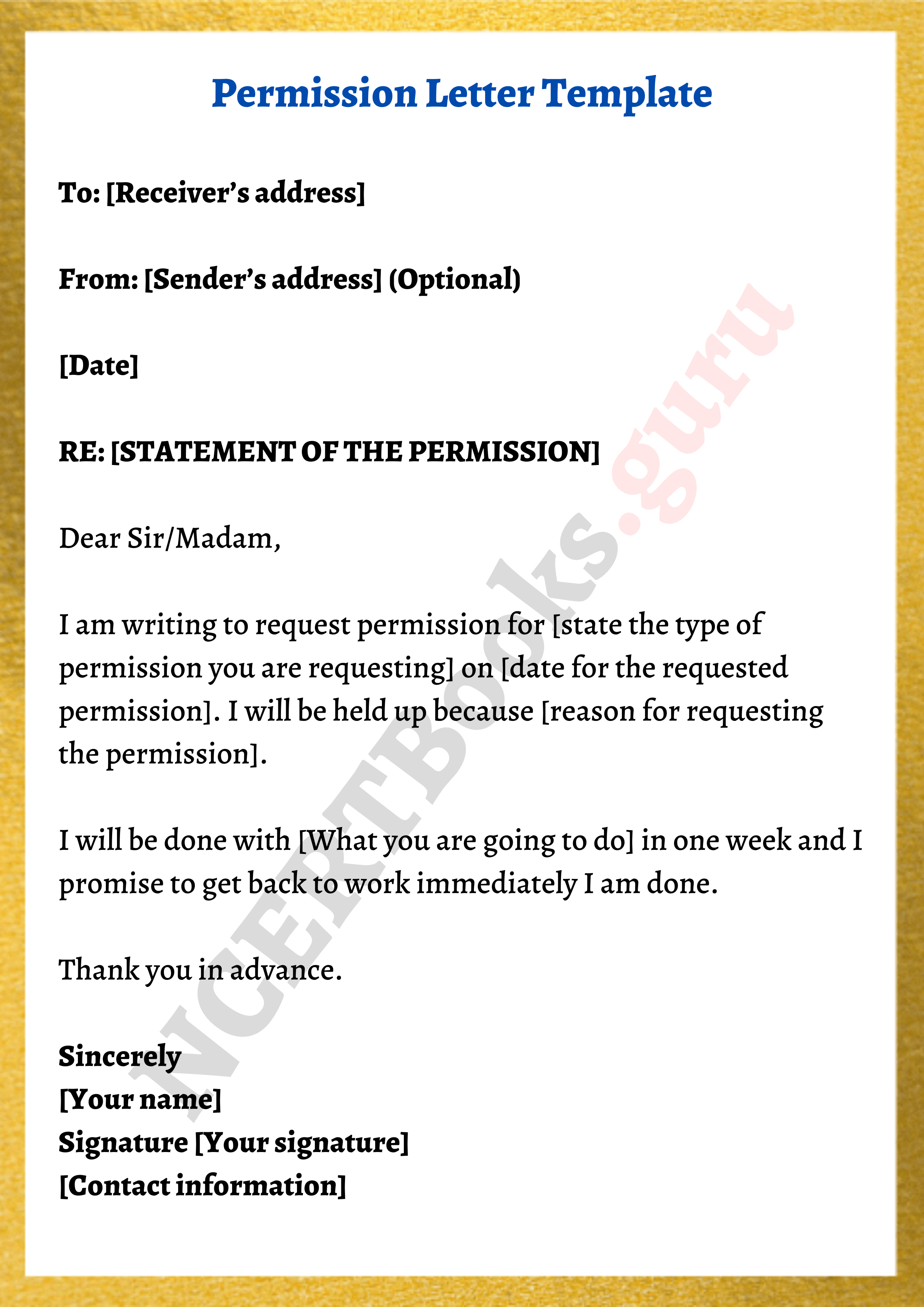
Permission Letter Template

A permission letter template is a format that intends to write a letter to ask for permission for some purpose or event that you may need to attend. Permission Letter Template will be provided in Formal form to seek permission from a higher authority. It makes your things simple and clear as it’s a known and honest format of asking for permission. Check out the image form of the permission letter template below.

Permission Letter Template

Different Types of Samples for Permission Letter Writing

As, we have previously read how to write the permission letter, what should be the format, and what to include in the letter, we can go for some of the sample letters below for asking permission from the higher authority on various cases. It helps you all to get a good idea of writing the Permission letter in the future.

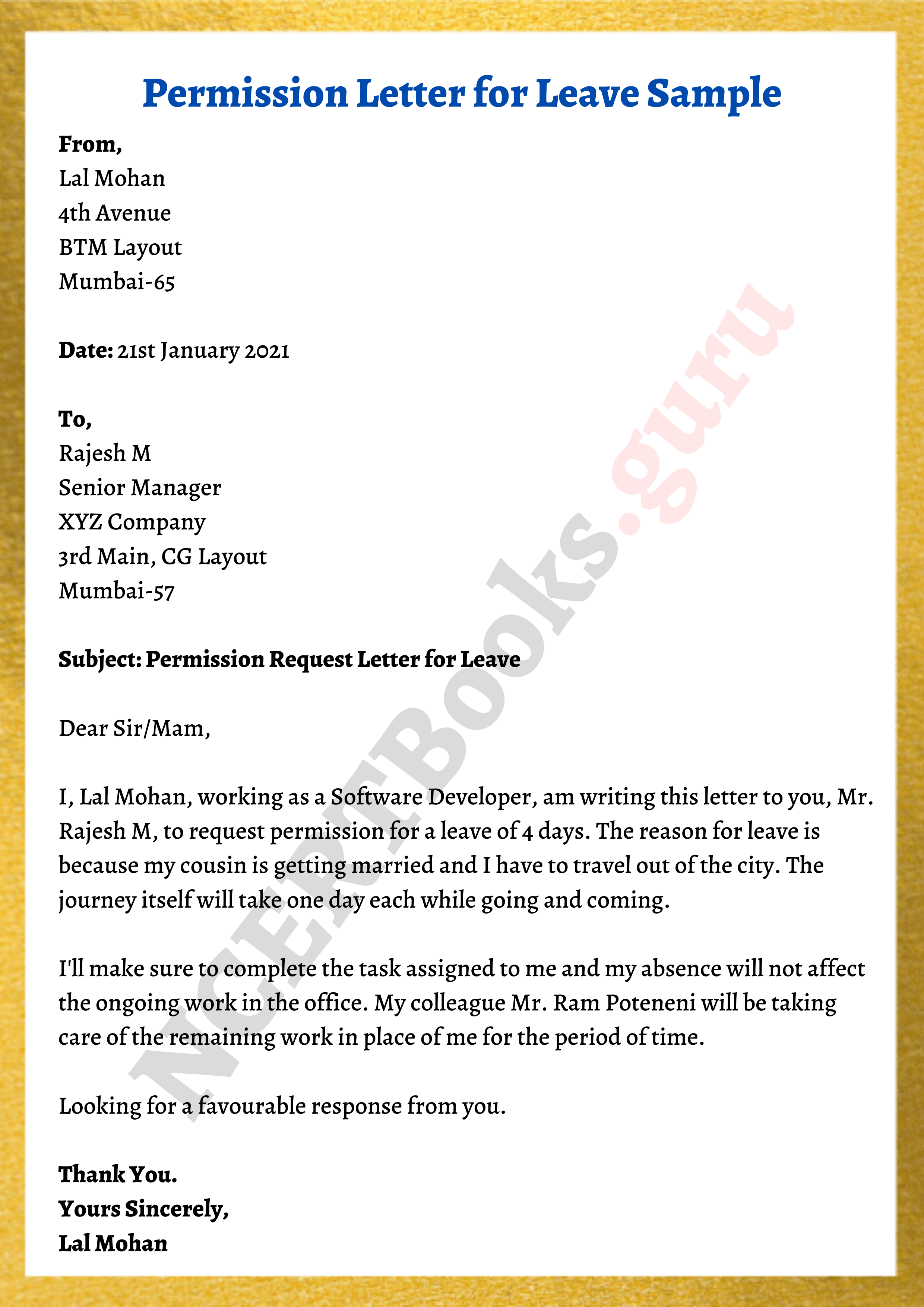
Sample Letter for Leave Permission

Sample permission letter for leave

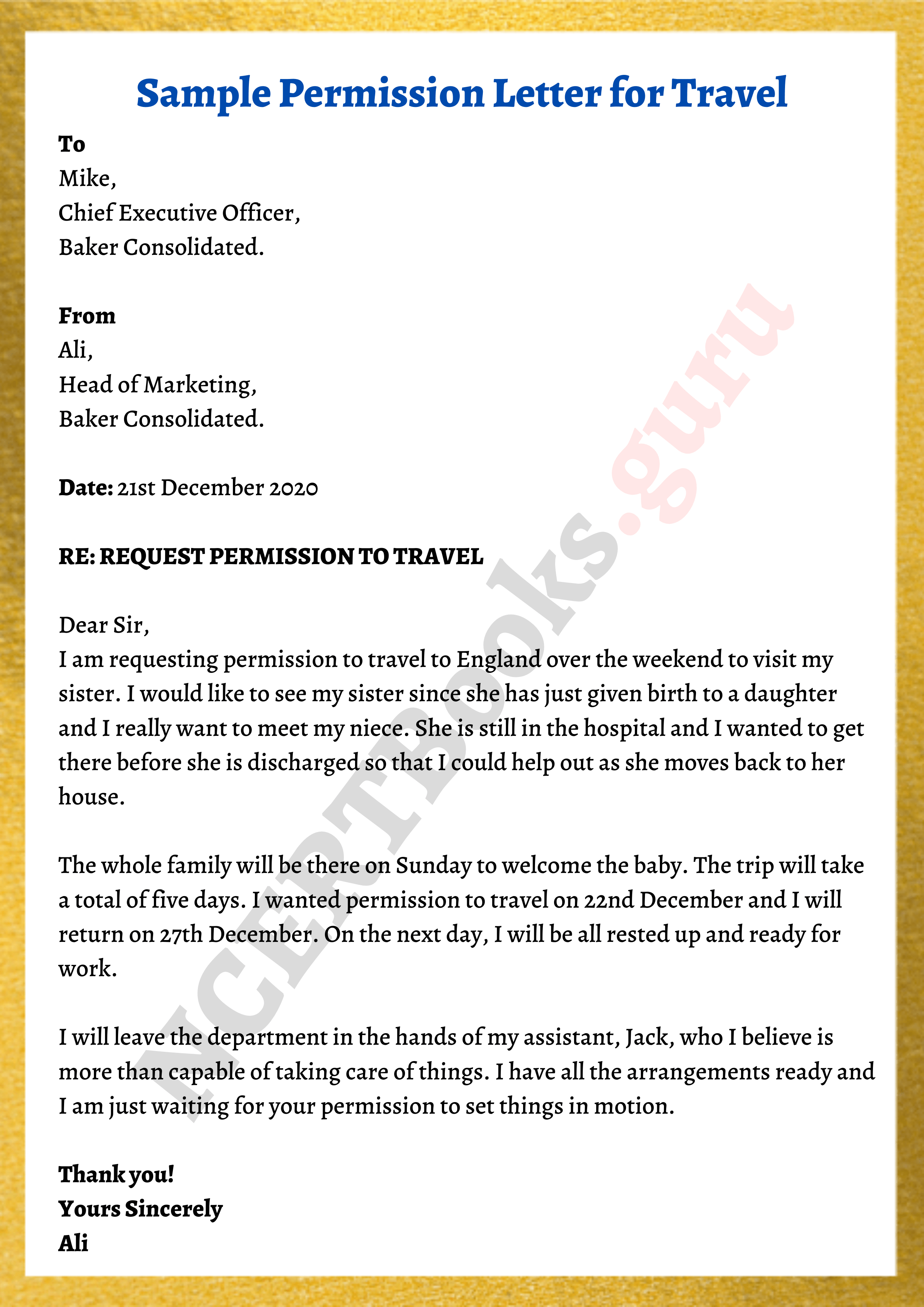
Permission Letter for Travel Sample

sample permission letter for travel

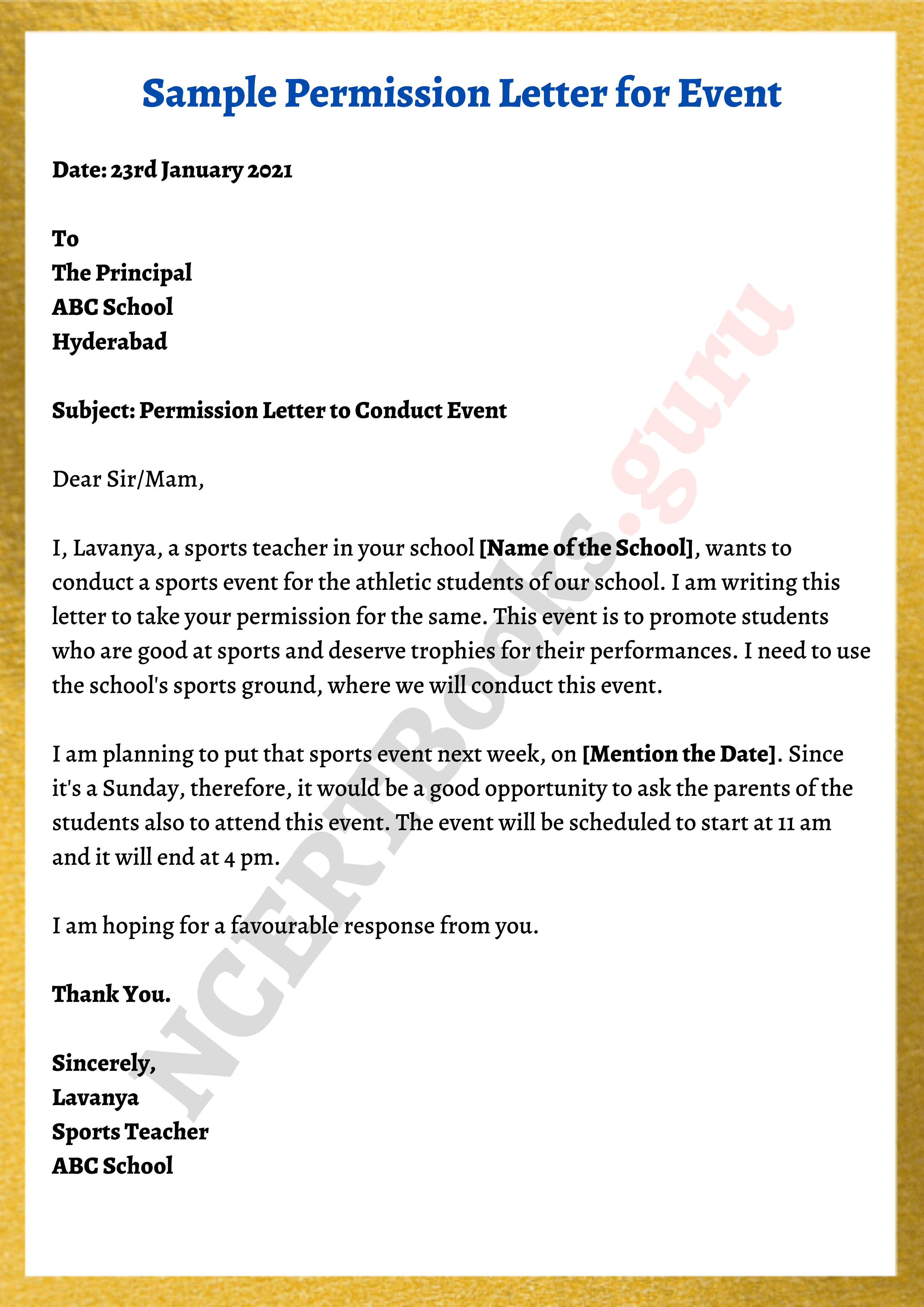
Permission Letter for Event 

permission letter for hosting event

Tips to write an engaging Permission Letter

  • In the letter, make sure you address the person to whom you are writing the letter.
  • Write a letter in a formal way and make sure to use formal language and straight to the point.
  • Address the reason for the letter carefully and evade missing out on the most relevant points.
  • Keep it keen and cross-check the letter once again to avoid any spelling and grammatical mistakes.
  • Ensure you give the information like the address and contacts precisely and accurately.

FAQs on Permission Letter Writing

1. What to Include in a Permission Letter to Principal?

  • Proper Heading.
  • The Date.
  • Address the Intended Recipient.
  • Recipient’s Address.
  • Salutation.
  • Subject.
  • Body of The Letter.
  • Closing.

2. How to write a permission letter for a school trip?

In the letter of permission for a school trip, the details required to be included in the letter are the child’s name, date of birth, travel dates, the name of the adult companion, the allowed travel destinations, and the reason for the trip. Contact phone numbers for both parents/guardians, their full names, and their signatures.

3. How do you write a Letter of Permission?

Permission Letters should be genuine and honest to the best of your knowledge. Be particular regarding the reasons & facts then write a letter in an appealing form. Make sure to add perfect subject lines and closures while Permission Letter Writing.

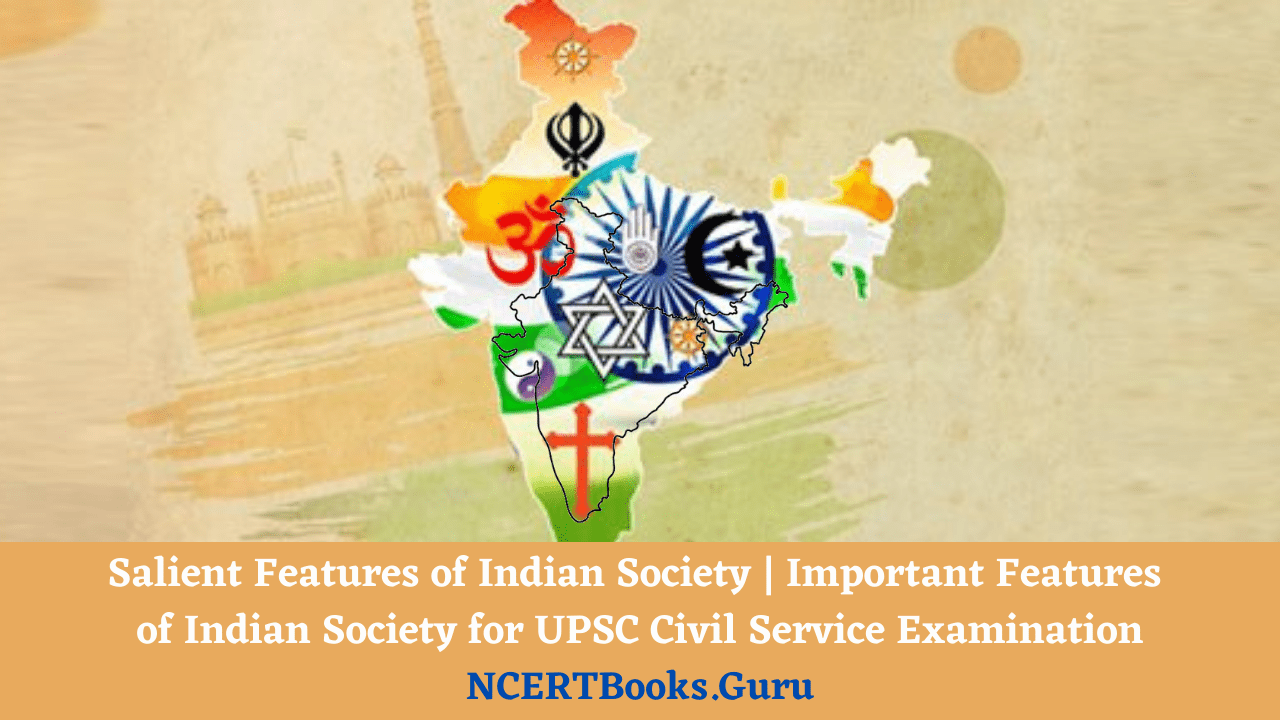
Salient Features of Indian Society | Important Features of Indian Society for UPSC Civil Service Examination

Salient Features of Indian Society

Are you looking for guidance on the Salient Features of Indian Society while preparing for UPSC Exam? You have landed on the right page and we will provide you with the entire information. You will find info regarding What is Indian Society, the Features of the Indian Society, and the Significant Issues Stagnating the Indian Society.

By going through the further modules you will learn about the Significant Features of Indian Society in detail in terms of UPSC Perspective. Let’s dive deep into the article and understand why studying about Indian Society is crucial in cracking the UPSC Exam.

What is the Indian Society?

Society is the sum of human relations depending on some common characteristics like tradition, norms, and values. Answering the Question What is Indian Society can be a bit difficult due to Indian Diversity. There is no Common Religion, Caste, or Community the only thing they share in common is being Indian. Indian Society can be described in broad terms with the following features

  • Dynamic and Syncretic
  • Traditionalism with modernity
  • Unity in Diversity
  • Caste and Class
  • Patriarchy
  • Rural and Agrarian
  • Mutual respect and Tolerance
  • Spiritual and Materialistic
  • Individualism and Collectivism

About Indian Society

One thing that is unique about the Indian Society is due to its feature Unity in Diversity. The Name itself suggests oneness the citizens of India enjoy irrespective of culture, ethnic, geographical, and social differences.  Unity in Diversity is best explained when the Citizens of India identify themselves as Indians in spite of their cultural differences.

Accommodation without assimilation is a prominent feature in Indian Society. India welcomed and interacted with various elements of society without making any of them lose their roots and authenticity. Every Indian living here enjoys the freedom to live their own life.

Significant Issues inhibiting the Growth of Indian Society

Below are some of the common issues in Indian Society that are stopping the country in terms of development. These need to be overcome to have an overall growth of the Country.

  • Vast spread regionalism
  • Modern-day urbanization and its problems
  • Various problems arising out of a large population
  • Threat of communalism
  • Apparent social backwardness
  • Effects of globalization of Indian society
  • The vicious cycle of poverty
  • Major developmental issues

Features of Indian Society for UPSC

  • Indian Society is a crucial topic in UPSC Exam Syllabus and appears in UPSC Mains General Studies Paper I
  • It is as important as Indian History, World History, and Physical Geography.
  • In Comparison with other topics Indian Society is fairly easy to study and requires no specific knowledge or mugging up of facts. So, Prepare it without much effort.
  • UPSC Exam will test your level of understanding of Indian Society.

Also, read:

Salient Features of Indian Society for UPSC CSE/ IAS Exam

Have a glance at the Salient Features of Indian Society that you might need as a part of your IAS Exam. They are described in detail in the forthcoming modules.

Merging of Tradition with Modernism

Globalization has bought a surge of modern values and practices. However, Traditionalism is still prevalent in the country, and traditions of the country have made their way to the outside world.

  • Indian Dance and Music have become quite popular along with their Western Counterparts. However, the Fusion of them has been a prominent theme in Arts.
  • Gyms might have gained popularity in the Indian LifeStyle, but Yoga has equal importance.
  • Nuclear Families are common whereas Children still take care of their parents at their Old Age.
  • International Cuisines and Food Habits are equally popular as the Local Ones.

India Society is Syncretic and Dynamic

Our Society Promotes accommodation as well as assimilation. Over the years multiple tribes have lost their core culture due to assimilation into the Indian Society. However, contact with different cultures gave birth to newer practices. Society is becoming dynamic day by day.

Assimilation

  • The increase in the number of particularly vulnerable tribal groups is an example of Assimilation.
  • On the other hand, ethnic tribes such as Naga are struggling to protect their culture from the outside world.

Syncretism

  • Urdu arrives from both Arabic and Hindavi
  • Rashtrapathi Bhawan is an Architectural Splendor created by the fusion of European, Rajput, and Mughal Design.
  • Sufi and Bhakti Movement are complementary to each other.

Underlying Theme Unity in Diversity

Many political thinkers were doubtful regarding India’s amalgamation as one nation due to vast differences in language, culture, etc. Core Values in the Constitution and reorganization of State on basis of language and the efforts made by the government helped in maintaining the Unity intact.

Patriarchy

Patriarchy is a family system in which the supreme power lies with male members of the family. Women are considered second class citizens in the patriarchal society. This system hinders the emotional and social development of the fairer sex of the society.

Society is Largely Agrarian and Rural

For more than half of the population in India Agriculture remains the major source of livelihood. Agrarian festivals celebrate the harvest of crops and are celebrated namely as Holi, Lohri, Pongal, Onam, Sankrant, etc. Rural art forms such as Madhubani, Fabric Weaves like Khadi are equally popular in Urban Areas.

Class and Caste Division

The modern Caste System is the result of age-old varna system. Economic Reforms led to flourishing Urban Areas and people are categorized depending on class rather than social identity. However, the emerging class system closely resembles the caste hierarchy. Thus, downtrodden sections are given a chance for upward social mobility.

Coexistence through inter-caste marriages are examples of this.

Tolerance and Mutual Respect

Indian Society has accommodative values of tolerance and mutual respect from the early values. Invaders who entered India and made them this home lead to the co-existence of different cultures.

The mixing of Nagara and Dravid styles led to Vesara style, Arabic and Hindavi to Urdu, Bhakti and Sufi movements (Teachings of Kabir, Guru Nanak, Khwaja Chishti, etc.), Dīn-i Ilāhī of Akbar are good examples of mutual respect.

Final Words

Hope the information shared regarding the Salient Features of Indian Society has shed some light on you. If you need any help as a part of your UPSC Exam Preparation do leave us your queries. Bookmark our site to avail latest updates on UPSC Books, Syllabus, etc. in no time.

GSEB Details – About Gujarat Secondary and Higher Secondary Education Board, Duties & Responsibilities, Examinations, Exam Resources

GSEB

GSEB Board Complete Details are provided here for you all. Just have a glance at this article and get full-fledged knowledge about Gujarat Board. The full form of GSEB is the Gujarat Board of Secondary and Higher Secondary Education and it was established under ‘The Gujarat Secondary Education Act 1972’ also called Gujarat Act No. 18 of 1973.

Also, Gujarat Board was formed to improve secondary education in the state of Gujarat and to place board for that plan. However, GSEB is also the conducting body for GUJCET (Gujarat Common Entrance Test). Find more about the Gujarat Board of Secondary and Higher Secondary Education from this page and choose the best option for kids’.

All About GSEB

Gujarat Board of Secondary and Higher Secondary Education (abbreviated as GSEB) is the body of state education that conducts the state level exams under ‘The Gujarat Secondary Education Act 1972’. The main responsibility of GSEB is prescribing the syllabus for secondary schools and suggested textbooks to be taught in government schools as well as registered private schools.

Apart from this, there are various roles that can be regulated, managed, developed by the Gujarat Board are the duties of recognizing new schools, performance evaluation of schools, and inspections of various schools. Please have a look at the below tabulated GSEB Overview and get basic details in a short span.

GSEB Full Form  Gujarat Secondary and Higher Secondary Education Board
Type Governmental Board of Education
Jurisdiction Gujarat
Location Near Old Sachivalaya, Sector 10B, Sector 10, Gandhinagar, Gujarat 382910
Official Language Gujarati
Phone 079 2322 0538

Roles & Responsibilities of Gujarat Board

The major duties and responsibilities of the Gujarat Board of Education are listed below:

  • It conducts the state level exams every year for all affiliated schools in the Gujarat state.
  • It fully functioned in prescribing a well-oriented syllabus for the secondary & higher secondary level schools.
  • Also, it issues the textbooks that include the complete syllabus with proper explanations for all the State and private schools coming under its administration.
  • Finally, GSEB is also in charge of roles such as evaluating the performance of already registered schools, inspections of the schools under the Gujarat education board, and affiliating new schools to the GSEB board.

GSEB Syllabus

The most important one that you have to look for during the exam preparation is the syllabus. Without GSEB Syllabus, you can’t get any idea about the subjects and its topics and subtopics which are taught in class by teachers. So, refer to the Gujarat Board prescribed Syllabus for the respective class or course and kickstart your preparation effectively.

Grading Pattern of GSEB Board

The ranking system of the Gujarat Board has updated. Now, students of GSEB check their grades in percentile. Before 2011 it was based on percentage. Calculating the percentile is also a simple task for students to know their rank. If you feel it impossible then please visit our site & comment us to take assistance from our team in determining the GSEB Ranking & Gujarat Board Grading Pattern.

Gujarat Board SSC and HSSLC Results

GSEB Board declares the results of class 1o and class 12 exams officially at the official portal of the Gujarat board. So, students can check their scores from the official site or else visit our site. You can also get the steps to check the Gujarat Board Results on our webpages. For more assistance, be with us and share your views in the comments.

Previous Year’s Pass Percentage Statistics of SSC

Year No. Students Took part in the exam No. Students Passed the Exam Total Pass Percentage
2019 8,22,823 5,51,023 81.89%
2018 11,03,854 5,75,165 67.50%
2017 7,75,013 5,28,870 68.24%
2016 7,91,672 5,27,113 67.60%
2015 10,46,000 5,69,000 54.42%

Statistics of Previous year’s HSSLC Pass Percentage

Year Number of Appeared Students Pass Percentage
2019 8,22, 823 66.97%
2018 3, 35, 000 55.55%
2017 5,05,651 56.82%
2016 4,90,645 54.56%
2015 4,01,234 56.76%

Sample Papers of Gujarat Secondary and Higher Secondary Education Board(GSEB)

Preparing for the exams becomes easy when you solve or practice with the GSEB board released sample papers or previous year papers. By sample papers of GSEB, students can get helped with answering question papers in the final exams. Also, students can analyze their preparation level and knowledge gap after solving the previous year question papers of the Gujarat Board. So, download GSEB Question Papers from the official site or from here and get confident to answer all types of questions.

Textbooks of GSEB

Gujarat Board of secondary and higher secondary education (GSEB) also issues the textbooks for all courses and classes for easy understanding of the subjects or concepts. Subject experts design these class-wise GSEB Books in a simple language to learn and grasp the concept of every subject easily by all students.

Here, we have compiled a list of Gujarat Board textbooks in download pdf links. So, click on the link and download available classes GSEB Textbooks Pdf in English and Gujarati mediums.

We hope the details furnished over here about GSEB is enough to get clarity about the state education system. If you need more about Gujarat Board, feel free to comment here or visit our site ncertbooks.guru to avail any kind of exam resources or functions details related to the Gujarat Secondary and Higher Secondary Education Board(GSEB).

FAQs on All About Gujarat Board (GSEB)

1. What is the abbreviation of GSEB?

The abbreviation of GSEB is Gujarat Secondary and Higher Secondary Education Board.

2. When was GSEB established?

Gujarat Secondary and Higher Secondary Education Board established under ‘The Gujarat Secondary Education Act 1972’ also known as Gujarat Act No. 18 of 1973 and responsible for conducting the state level exams like Class 10 & Class 12.

3. How Students can check GSEB SSC & HSSLC Results Online?

Gujarat Board of Secondary and Higher Secondary Education (GSEB) 12th & 10th Result can be reviewed online on the official web portal of GSEB ie., www.gseb.org. Also, students may check their GSEB Results from our site after the declaration of results on its official board.

Tamil Nadu History Books for UPSC Exam | List of Tamilnadu State Board History Textbooks

Tamil Nadu History Books

Are you looking for a one-stop destination where you can get Tamil Nadu History Books? If so, you have come the right way and you don’t have to fret as we have organized all of them efficiently here. History plays an integral part in the UPSC Exam both in Prelims & Mains. We know how important it is to clear the Civil Service Examination. For the sake of your convenience, we have curated the List of Tamilnadu History Textbooks Classwise and what to cover in them.

The majority of the Candidates refer to the NCERT Books instead of going through the TN Board History Textbooks and fumble at the end minute. Don’t be one among them and be on right track and make the most out of the Tamil Nadu State Education Board History Books provided here.

Tamilnadu History Books for UPSC Civil Service Exam Preparation

Tamil Nadu History Books are written in a simple and lucid language so that you can retain the concepts of the subject for a long time. At times, TN History Textbooks are very much useful compared to your New NCERT Books. However, preparing from the Tamilnadu State Education Board History Books is quite easy as they are more chronological. These Books can great for those who are clueless about the Kings and Kingdoms.

In fact, the Tamil Nadu State Board History Books cover the details like East India Company’s Governors-General like Dalhousie, Hastings, etc. which are not a part of the Regular NCERT Books. You can cover topics from both Textbooks as they complement each other. You can download the TN State Board History Textbooks for free of cost via quick links available and stand out from the crowd in UPSC CSE Examination.

Do Read Related Articles:

What to Read in History Textbooks of Tamilnadu State Education Board for UPSC Exam?

Class 6 Class 7
  1. Prehistoric Period
  2. Indus Valley Civilization
  3. The Vedic Period
  4. Jainism and Buddhism
  5. Rise of Kingdoms
  6. Kushana Empire
  1. Kingdoms in Rajasthan, Deccan, and South India, Vijaynagar, Bahmani
  2. Arab and Turkish invasions
  3. Delhi sultanate
  4. Bhakti, Sufi
Class 8 Class 9
  1. The Great Mughals
  2. Rise of Marathas
  3. Advent of Europeans
  4. Anglo-French Struggle (Carnatic wars)
  5. Rule of East India Company: Cornwallis, Hastings, Bentinck, and Dalhousie.
  6. Revolt of 1857
  1. Ancient Civilizations
  2. Intellectual Awakening in 6th Century B.C.
  3. Medieval Age
  4. Modern Age
  5. Industrial Revolution
Class 10 Class 11
  1. World history: imperialism, two world wars, UNO
  2. Freedom struggle in India
Ancient and Medieval Indian history- upto the coming of Europeans.
Class 12
  1. Indian History: From East India company to freedom struggle to India After independence
  2. World History: Imperialism, American Revolution, French Revolution, Nazism, Fascism Two world wars, UNO, Cold war.

Final Words

We wish the knowledge shared regarding the Tamil Nadu History Books has enlightened you to the possible extent. If you still have any queries feel free to reach us via comment box so that our expert team can guide you at the soonest. Stay connected to our site to avail latest updates on UPSC Books, Syllabus, Study Materials, etc. in no time.

NCERT Solutions for Class 7 Sanskrit Chapter 13 अमृतं संस्कृतम्

We have given detailed NCERT Solutions for Class 7 Sanskrit Ruchira Chapter 13 अमृतं संस्कृतम् Questions and Answers will cover all exercises given at the end of the chapter.

NCERT Solutions for Class 7 Sanskrit Ruchira Chapter 13 अमृतं संस्कृतम्

अभ्यास के प्ररनौं के उत्तर

प्रश्न 1.
उच्चारणं कुरुत
बहवीनाम – सङ्गणकस्य
चिकित्साशास्त्रम् – वैशिष्ट्यम्
भूगोलशास्त्रम् – वाङ्मये
विद्यमानाः – अर्थशास्त्रम्
उत्तर
छात्रा: एतेषां शब्दानाम् उच्चारणं स्वयमेव कुर्वन्तु

प्रश्न 2.
प्रश्नानाम् एकपदेन उत्तराणि लिखत
(क) का भाषा प्राचीनतमा ?
उत्तर
संस्कृतभाषा

(ख) भारतीयसंस्कृतेः रक्षणं केन सम्भवति ?
उत्तर
संस्कृतेन।

(ग) चाणक्येन रचितं शास्त्रं किम् ?
उत्तर
अर्थशास्त्रम्

(घ) कस्याः भाषायाः काव्यसौन्दर्यम् अनुपमम् ?
उत्तर
कालिदासस्य

(ङ) शून्यस्य प्रतिपादनं कः अकरोत् ?
उत्तर
भास्कराचार्यः।

प्रश्न 3.
प्रश्नानाम् उत्तराणि एक वाक्येन लिखत
(क) भारतसर्वकारस्य राजचिह्न किं लिखितम्अस्ति ?
उत्तर
भारतसर्वकारस्य राजचिह्न, ‘सत्यमेव जयते’ इति लिखितम् अस्ति।

(ख) संस्कृतस्य वाङ्मयं कैः समृद्धमस्ति ?
उत्तर
संस्कृतस्य वाङ्मयं वेदैः, पुराणैः, नीतिशास्त्रैः
चिकित्साशास्त्रादिभिः च समृद्धम् अस्ति।

(ग) संस्कृतस्य सूक्तयः केन रूपेण स्वीकृताः सन्ति ?
उत्तर
संस्कृतस्य सूक्तयः ध्येयवाक्यरूपेण स्वीकृताः सन्ति।

(घ) अस्माभिः संस्कृतं किमर्थं पठनीयम् ?
उत्तर
अस्माभिः संस्कृतम् एतदर्थं पठनीयं येन
मनुष्यस्य समाजस्य च परिष्कारः भवेत्।

प्रश्न 4.
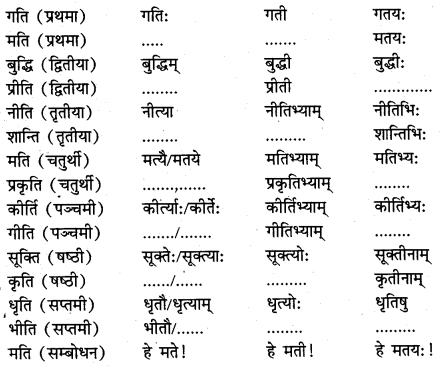
इकारान्त-स्त्रीलिङ्गशब्दरूपम् अधिकृत्य रिक्तस्थानानि पूरयत
NCERT Solutions for Class 7 Sanskrit Chapter 13 अमृतं संस्कृतम् 1
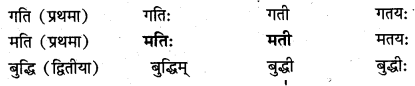
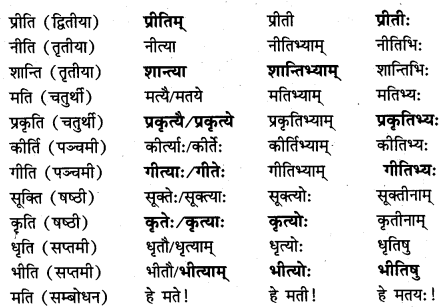
उत्तर
NCERT Solutions for Class 7 Sanskrit Chapter 13 अमृतं संस्कृतम् 2
NCERT Solutions for Class 7 Sanskrit Chapter 13 अमृतं संस्कृतम् 3

प्रश्न 5.
रेखाङ्कितानि पदानि अधिकृत्य प्रश्ननिर्माणं कुरुतः
(क) संस्कृते ज्ञानविज्ञानयोः निधिः सुरक्षितोऽस्ति।
(ख) संस्कृतमेव सङ्गणकस्य कृते सर्वोत्तमा भाषा।
(ग) शल्यक्रियायाः वर्णनं संस्कृतसाहित्ये अस्ति।
(घ) वरिष्ठान् प्रति अस्माभिः प्रियं व्यवहर्तव्यम्।
उत्तर
(प्रश्ननिर्माणम्).
(क) संस्कृते ज्ञानविज्ञानयोः कः सुरक्षितोऽस्ति?
(ख) संस्कृतमेव कस्य कृते सर्वोत्तमा भाषा ?
(ग) शल्यक्रियायाः वर्णनं कस्मिन् अस्ति ?
(घ) कान् प्रति अस्माभिः प्रियं व्यवहर्तव्यम् ?

प्रश्न 6.
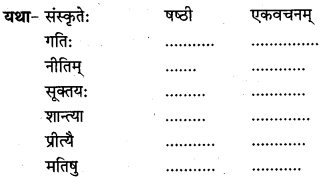
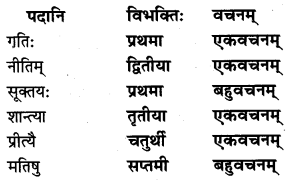
उदाहरणानुसारं पदानां विभक्तिं वचनञ्च लिखत
NCERT Solutions for Class 7 Sanskrit Chapter 13 अमृतं संस्कृतम् 4
NCERT Solutions for Class 7 Sanskrit Chapter 13 अमृतं संस्कृतम् 5
उत्तर
NCERT Solutions for Class 7 Sanskrit Chapter 13 अमृतं संस्कृतम् 6
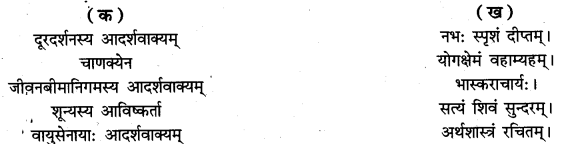
प्रश्न 7.
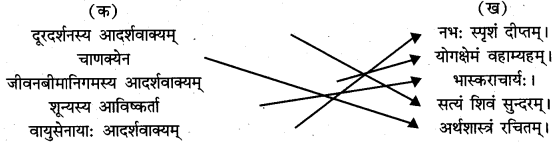
यथायोग्यं संयोज्य लिखत
NCERT Solutions for Class 7 Sanskrit Chapter 13 अमृतं संस्कृतम् 7
उत्तर
NCERT Solutions for Class 7 Sanskrit Chapter 13 अमृतं संस्कृतम् 8

ध्यातव्यम्
अस्मिन् पाठे संस्कृति-स्मृति-नीति-सूक्तिपरिस्थिति-पद्धति-दृष्टि-धृति-शान्ति-प्रीति-इत्यादयः शब्दाः प्रयुक्ताः सन्ति । एते शब्दाः गति-मति शब्दवत् स्त्रीलिङ्गे प्रयुक्ताः भवन्ति।

एतेषां शब्दानां चतुर्थी-पञ्चमी-षष्ठी-सप्तमीविभक्तिीनामेकवचने द्वे-द्वे रूपे भवतः। यथा-गत्यै। गतये, गत्याः/गतेः, गत्याम्/गतौ।
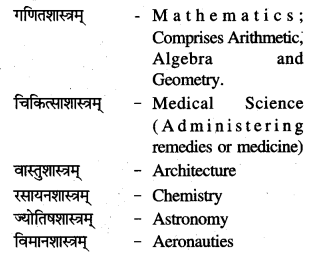
NCERT Solutions for Class 7 Sanskrit Chapter 13 अमृतं संस्कृतम् 9

बहुविकल्पी प्रश्न

(i) का भाषा प्राचीनतमा ?
(A) हिन्दीभाषा
(B) संस्कृतभाषा
(C) उडियाभाषा
(D) व्रजभाषा।
उत्तर
(B) संस्कृतभाषा

(ii) भारतीयसंस्कृतेः रक्षणं केन संभवति ?
(A) धनेन
(B) सैनिकेन
(C) वीरेण
(D) संस्कृतेन।
उत्तर
(D) संस्कृतेन।

(iii) चाणक्येन रचितं शास्त्रं किम् ?
(A) अर्थशास्त्रम्
(B) व्याकरणशास्त्रम्
(C) दर्शनशास्त्रम्
(D) चिकित्साशास्त्रम्।
उत्तर
(A) अर्थशास्त्रम्

(iv) कस्य भाषायाः काव्यसौन्दर्यम् अनुपमम् ?
(A) बाणभट्टस्य
(B) कालिदासस्य
(C) सुबन्धोः
(D) दण्डिनः।
उत्तर
(B) कालिदासस्य

(v) शून्यस्य प्रतिपादनं कः अकरोत् ?
(A) कालिदासः
(B) आर्यभट्टः
(C) बाणभट्टः
(D) भास्कराचार्यः
उत्तर
(D) भास्कराचार्यः

(vi) बह्वीनां भाषाणां जननी का मता ?
(A) संस्कृतभाषा
(B) अंग्रेजीभाषा
(C) फ्रेंचभाषा
(D) व्रजभाषा।
उत्तर
(A) संस्कृतभाषा

Class 7 Sanskrit Chapter 13 अमृतं संस्कृतम् Summary Translation in Hindi

1. विश्वस्य सर्वासु भाषासु संस्कृतभाषा प्राचीनतमा भाषास्ति। भाषेयं बह्वीनां भाषणां जननी मता। अस्यामेव भाषायां ज्ञानविज्ञानयोः निधिः सुरक्षितोऽस्ति। यथोक्तम्’भारतस्य प्रतिष्ठे द्वे संस्कृतं संस्कृतिस्तथा’।

शब्दार्था:-
प्राचीनतमा = सबसे पुरानी।
भाषेयम् (भाषा + इयम्) = यह भाषा।
बह्वीनां भाषाणाम् = बहुत-सी भाषाओं की।
जननी = जन्म देने वाली, माता।
मता = मानी गई है।
निधिः = खज़ाना।
यथोक्तम् (यथा + उक्तम् ) = जैसे कि कहा गया है।
प्रतिष्ठे द्वे = दो प्रतिष्ठाएँ, सम्मान।

सरलार्थ – संसार की सब भाषाओं में संस्कृत भाषा सबसे पुरानी भाषा है। यह भाषा बहुत-सी भाषाओं को जन्म देने वाली मानी गई है। इसी भाषा में ज्ञान-विज्ञान का खज़ाना | सुरक्षित है। जैसे कि कहा गया है-“भारत की दो प्रतिष्ठाएँ हैं-संस्कृत और संस्कृति।”

2. अस्याः भाषायाः वैज्ञानिकतां विचार्य एव सगणकविशेषज्ञाः कथयन्ति यत् संस्कृतमेव सङ्गणकस्य कृते सर्वोत्तमा भाषा विद्यते। अस्याः वाङ्मयं वेदैः पुराणैः, नीतिशास्त्रैः चिकित्साशास्त्रादिभिश्च समृद्धमस्ति। कालिदाससदृशानां विश्वकवीनां काव्यसौन्दर्यम् अनुपमम्। चाणक्यरचितम् अर्थशास्त्रं जगति प्रसिद्धमस्ति। गणितशास्त्रे शून्यस्य प्रतिपादनं सर्वप्रथमं भास्कराचार्यः सिद्धान्तशिरोमणी अकरोत्। चिकित्साशास्त्रे चरकसुश्रुतयोः योगदानं विश्वप्रसिद्धम्। संस्कृते यानि अन्यानि शास्त्राणि विद्यन्ते तेषु खगोलविज्ञानं, वास्तुशास्त्र, रसायनशास्त्र, . ज्योतिषशास्त्र, विमानशास्त्रं च उल्लेखनीयम्।

शब्दार्था:-
विचार्य = विचार करके
सगणकविशेषज्ञाः = कम्प्यूटर के विशेषज्ञ।
सगणकस्य कृते = कम्प्यूटर के लिए।
वाङ्मयम् = साहित्य।
सर्वोत्तमा = सबसे उत्तम।
कालिदाससदृशानाम् = कालिदास जैसे।
विश्वकवीनाम् = विश्व कवियों का।
अनुपमम् = अतुलनीय, अनुपम।
सिद्धान्तशिरोमणौ = “सिद्धान्त शिरोमणि’ नामक ग्रन्थ में।
खगोलविज्ञानम् = अन्तरिक्ष विज्ञान।
रसायनशास्त्रम् = कैमिस्ट्री।

सरलार्थ:-इस भाषा की वैज्ञानिकता को विचार करके ही कम्पयूटर के विशेषज्ञ कहते हैं कि संस्कृत ही कम्पयूटर के लिए सबसे उत्तम भाषा है। इसका साहित्य वेदों, पुराणों, नीतिशास्त्रों तथा चिकित्साशास्त्र आदि से समृद्ध है। कालिदास जैसे विश्व कवियों का काव्य सौन्दर्य अतुलनीय है। चाणक्य द्वारा रचित अर्थशास्त्र संसार में प्रसिद्ध है। गणितशास्त्र में शून्य का प्रतिपादन सबसे पहले भास्कराचार्य ने सिद्धान्तशिरोमणि नामक ग्रन्थ में किया है। चिकित्साशास्त्र में चरक और सुश्रुत का योगदान विश्व प्रसिद्ध है। संस्कृत में जो दूसरे शास्त्र हैं उनमें अंतरिक्ष विज्ञान वास्तुशास्त्र, केमिस्ट्री, ज्योतिषशास्त्र और विमानशास्त्र उल्लेखनीय हैं।

3. संस्कृतस्य इदं वैशिष्ट्यं वर्तते यत् अस्याः वाङ्मये विद्यमानाः सूक्तयः अभ्युदयाय प्रेरयन्ति। वरिष्ठान् कनिष्ठान् च प्रति अस्माभिः कथं व्यवहर्तव्यम् इत्यस्य व्यावहारिक ज्ञान संस्कृतमेव ददाति। भारतसर्वकारस्य विभिन्नेषु विभागेषु संस्कृतस्य सूक्तयः ध्येयवाक्यरूपेण स्वीकृताः सन्ति । भारतसर्वकारस्य राजचिह्न प्रयुक्तां सूक्तिं ‘सत्यमेव जयते’ सर्वे – जानन्ति। एवमेव राष्ट्रियशैक्षिकानुसन्धानप्रशिक्षणपरिषदः ध्येयवाक्यं ‘विद्ययाऽमृतमश्नुते’ वर्तते।

शब्दार्थाः-
वैशिष्ट्यम् = विशेषता।
अभ्युदयाय = आत्मिक उन्नति के लिए।
प्रेरयन्ति = प्रेरणा करते हैं।
वरिष्ठान् = बड़ों के।
कनिष्ठान् = छोटों के।
कथं व्यवहर्तव्यम् = कैसे व्यवहार करना चाहिए।
ध्येयवाक्येरूपेण = ध्येय/उद्देश्य वाक्य के रूप में।
स्वीकृताः = स्वीकार किए गए।
प्रयुक्ताम् = प्रयोग की गई।

सरलार्थ:-
संस्कृत की यह विशेषता है कि इसके साहित्य में विद्यमान सूक्तियाँ आत्मिक उन्नति के लिए प्रेरित करती है। बड़े और छोटे के प्रति हमें कैसा व्यवहार करना चाहिए इसका व्यावहारिक ज्ञान संस्कृत ही देती है। भारत सरकार के विभिन्न विभागों में संस्कृत की सूक्तियाँ ध्येय वाक्य के रूप में स्वीकार की गई हैं। भारत सरकार के राज चिह्न में प्रयोग की गई सूक्ति ‘सत्यमेव जयते’-‘सत्य की ही जीत होती है’ को सभी जानते हैं। इसी प्रकार राष्ट्रीय शैक्षिक अनुसन्धान प्रशिक्षण परिषद का ध्येय वाक्य है’विद्ययाऽमृतमश्नुते’-‘विद्या से अमृत प्राप्त होता है।।

4. केचन कथयन्ति यत् संस्कृतभाषायां केवलं धार्मिक | साहित्यं वर्तते-एषा धारणा समीचीना नास्ति। संस्कृतग्रन्थेषु मानवजीवनाय विविधाः विषयाः समाविष्टाः सन्ति। महापुरुषाणां मतिः, उत्तमजनानां धृतिः सामान्यजनानां जीवनपद्धतिः च वर्णिताः सन्ति । अतः अस्माभिः संस्कृतम् अश्यमेव पठनीय येन मनुष्यस्य समाजस्य च परिष्कारः भवेत्।

शब्दार्थाः-
समीचीना = उचित, ठीक।
समाविष्टाः = सम्मिलित।
सामान्यजनानाम् = साधारण लोगों का, आम जनता का।
परिष्कारः = सुधार।
जीवनपद्धतिः = जीवन

सरलार्थ:-
कुछ लोग कहते हैं कि संस्कृत भाषा में | केवल धार्मिक साहित्य ही है। यह विचार ठीक नहीं है। संस्कृत ग्रन्थों में मानव जीवन के लिए अनेक प्रकार के विषय सम्मिलित हैं। महापुरुषों की बुद्धि, श्रेष्ठ लोगों का धैर्य और सामान्य लोगों की जीवन-शैली वर्णन की गई है। इसीलिए हमें संस्कृत अवश्य पढ़नी चाहिए, जिससे मनुष्य और समाज का सुधार हो जाए।

5. उक्तञ्च
अमृतं संस्कृतं मित्र !
सरसं सरलं वचः।
एकतामूलकं राष्ट्रे .
ज्ञानविज्ञानपोषकम्॥

शब्दार्था:-
सरसम् = सरस, रसपूर्ण, रसभरी।
एकतामूलकम् = एकता की स्थापना करने वाली।
ज्ञानविज्ञानपोषकम् = ज्ञान विज्ञान को बढ़ाने वाली।

सरलार्थ:-
और कहा भी गया है हे मित्र ! संस्कृत भाषा तो अमृत स्वरूप है। यह रसभरी है। इसके वचन सरल है। संस्कृत भाषा राष्ट्र में एकता की स्थापना करने वाली तथा ज्ञान विज्ञान को बढ़ाने वाली है।

Footprints without Feet Class 10 MCQ Questions with Answers English Chapter 5

Check the below NCERT MCQ Questions for Class 10 English Footprints Without Feet Chapter 1 Footprints without Feet with Answers Pdf free download. MCQ Questions for Class 10 English with Answers were prepared based on the latest exam pattern. We have provided Footprints without Feet Class 10 English MCQs Questions with Answers to help students understand the concept very well.

MCQ Questions for Class 10 English Footprints Without Feet Chapter 5 Footprints without Feet with Answers

Question 1.
Who is the author of the story ‘Footprints Without Feet’?
a) H.G. Wells
b) James Herriot
c) John Keats
d) W.B. Yea

Answer

Answer: (a) H.G. Wells


Question 2.
“The two boys started in surprise at the fresh muddy imprints of a pair of ………… ”
a) barefeet
b) shoes
c) tyres
d) None of these

Answer

Answer: (a) barefeet


Question 3.
He was Leaving his imprints in
a) Paris
b) London
c) Iping
d) Canada

Answer

Answer: (b) London


Question 4.
What is the meaning of‘bewildered’?
a) Perplexed
b) Confused
c) Puzzled
d) All of these

Answer

Answer: (d) All of these


Question 5.
Who were the boys following?
a) A scientist
b) A dog
c) A rat
d) None of these

Answer

Answer: (a) A scientist


Question 6.
What was he working on?
a) Making fake footprints
b) Making’human bodies invisible
c) Making a fool of children
d) All of the above

Answer

Answer: (b) Making human bodies invisible


Question 7.
“Brilliant scientist though he was, Griffin was rather a …………… person.”
a) lawless
b) lawful
c) good
d) rude

Answer

Answer: (a) lawless


Question 8.
What did Griffin do for revenge?
a) Burned himself
b) Burned the landlord
c) Burned the house
d) He didn’t do anything for revenge

Answer

Answer: (c) Burned the house


Question 9.
Griffin’s body became as transparent as ………………
a) glass
b) ice
c) air
d) None of the above

Answer

Answer: (a) glass


Question 10.
What suggests that he was a homeless wanderer?
a) No clothes
b) No money
c) Invisible
d) All of these

Answer

Answer: (d) All of these


Question 11.
Why was it a bad time to wander in London?
a) It was mid-winter
b) He was without clothes
c) Both a. and B.
d) None of the above

Answer

Answer: (c) Both a. and B.


Question 12.
Where was the theatrical company shop situated?
a) Dury lane
b) Drury lane
c) Druy lane
d) Druri Lane

Answer

Answer: (c) Druy lane


Question 13.
Instead of walking about the streets the scientist decided to slip into:
a) the nearby house
b) a big ship
c) the tent
d) a big London store

Answer

Answer: (d) a big London store


Question 14.
Where did he find comfort in London?
a) At the inn
b) A big store
c) Theatre store
d) None of these

Answer

Answer: (b) A big store


Question 15.
Where did Griffin go next?
a) At the inn
b) A big store
c) Theatre store
d) None of these

Answer

Answer: (c) Theatre store


Question 16.
What did Griffin take from there?
a) Food
b) Wine
c) Bandages
d) All of these

Answer

Answer: (c) Bandages


Question 17.
What did Griffin see when he panicked and began to run?
a) A bull
b) Some thieves
c) Two assistants
d) The houselady

Answer

Answer: (c) Two assistants


Question 18.
How did Griffin finally escape?
a) By hitting them
b) By taking off all his clothes
c) By running away as fast as he could
d) By hiding

Answer

Answer: (b) By taking off all his clothes


Question 19.
Where did Griffin go from theatre store?
a) Piping
b) Iping
c) Snowland
d) None of these

Answer

Answer: (b) Iping


Question 20.
What was an unusual event at an inn in winter?
a) A guest at the inn during winters
b) A guest at the inn during summers
c) A guest at the inn during spring
d) Nothing was unusual there

Answer

Answer: (b) A guest at the inn during summers


Question 21.
How did Griffin justify his disinterest in having a conversation with Mrs Hall?
a) Desired solitude
b) Didn’t want to be disturbed during work
c) Both a. and b.
d) None of the above

Answer

Answer: (c) Both a. and b.


Question 22.
What do you mean by the word eccentric’?
a) Uncommon
b) Extra
c) Catchy
d) None of the above

Answer

Answer: (a) Uncommon


Question 23.
Why does Mrs Hall find the scientist eccentric?
a) He visited during off season
b) His intention was only to work
c) He looked weird
d) All of the above

Answer

Answer: (d) All of the above


Question 24.
Why was Mrs Hall prepared and ready to tolerate strange habits and irritable temper?
a) He had paid in advance
b) He was a scientist
c) Both a. and b.
d) None of the above

Answer

Answer: (a) He had paid in advance


Question 25.
What does the first encounter tell us about Mrs Hall?
a) She is not friendly
b) She is money-minded
c) She is disinterested in her guests
d) All of the above

Answer

Answer: (b) She is money-minded


Question 26.
What is being referred to as the “strange incident” that happened in the study?
a) Griffin stealing money while being invisible
b) Griffin arriving at the inn during off season
c) Griffin pretending to be waiting for a cheque
d) None of the above

Answer

Answer: (a) Griffin stealing money while being invisible


Question 27.
Who called the incident “an extraordinary affair”?
a) Clergyman
b) Clergyman’s wife
c) Mrs Hall
d) All of these

Answer

Answer: (a) Clergyman


Question 28.
What did she think had happened to her furniture?
a) Nothing
b) The scientist had put spirits in them
c) The scientist was playing with them
d) The furniture had gone mad

Answer

Answer: (b) The scientist had put spirits in them


Question 29.
What do you mean by the word “hysterics”?
a) An exaggerated reaction
b) A normal reaction
c) No reaction
d) None of the above

Answer

Answer: (a) An exaggerated reaction


Question 30.
What caused the villagers to suspect the scientist? .
a) The robbery
b) The furniture incident
c) Unexpected availability of cash on him
d) All of the above

Answer

Answer: (a) The robbery


Question 31.
“The scientist was always ; now he became furious.”
a) patient
b) quick-tempered
c) calm
d) None of these

Answer

Answer: (d) None of the these


Question 32.
What was easier said than done?
a) To see him
b) To talk to him
c) To hold him
d) None of these

Answer

Answer: (b) To talk to him


1. The two boys started in surprise at the fresh muddy imprints of a pair of bare feet. What was a barefooted man doing on the steps of a house in the middle of London? And where was the man? As they gazed, a remarkable sight met their eyes. A fresh footmark appeared from nowhere!
Further footprints followed, one after another, descending the steps and progressing down the street. The boys followed, fascinated, until the muddy impressions became fainter and fainter, and at last disappeared altogether.

(a) Why were the boys surprised to see a barefooted man in London? The boys were surprised as:
(i) it was an unusual sight to see someone this way.
(ii) everybody in London moved around in shoes.
(iii) it was pretty cold to move around barefeet.
(iv) only a person who is homeless and wandering does so.

Answer

Answer: (iii) it was pretty cold to move around barefeet.


(b) Pick out the option that is not related to ‘started’ as used in the extract:
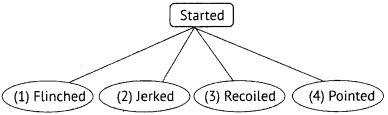
Footprints without Feet Class 10 MCQ Questions with Answers English Chapter 5 1
(i) Option (1)
(ii) Option (2)
(iii) Option (3)
(iv) Option (4)

Answer

Answer: (iv) Option (4)


(c) Pick the option that best describes how the boys are feeling / based on the extract.
(i) Enchanted, curious, puzzled
(ii) Captivated, curious, puzzled
(iii) Repulsed, curious, captivated
(iv) Enchanted, repulsed, curious

Answer

Answer: (ii) Captivated, curious, puzzled


(d) The boys felt that the footprints were:
(i) seen due to some magic trick.
(ii) a figment of imagination.
(iii) of a man who was invisible.
(iv) those of a mysterious man.

Answer

Answer: (iv) those of a mysterious man.


(e) Pick the option that best matches synonyms of the word gazed’.
(i) (1) gaped (2) gawked
(ii) (1) admired (2) disbelieved
(iii) (1) overlooked (2) stared
(iv) (1) surveyed (2) overlooked

Answer

Answer: (i) (1) gaped (2) gawked


(f) Pick the option that lists the correct direction of the footprints on the stairs, as noticed by the boys.
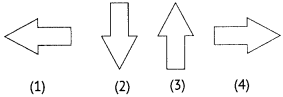
Footprints without Feet Class 10 MCQ Questions with Answers English Chapter 5 2
(i) Option (1)
(ii) Option (2)
(iii) Option (3)
(iv) Option (4)

Answer

Answer: (ii) Option (2)


2. As they gazed, a remarkable sight met their eyes. A fresh footmark appeared from nowhere!
Further footprints followed, one after another, descending the steps and progressing down the street.

(a) Who are ‘they’?
(i) Several people
(ii) Scientists
(iii) Two boys
(iv) None of these

Answer

Answer: (iii) Two boys


(b) The extract has been taken from:
(i) A Question of Trust
(ii) The Making of a Scientist
(iii) The Hack Driver
(iv) None of the above

Answer

Answer: (iv) None of the above


(c) Who is the author?
(i) Victor Canning
(ii) Robert Peterson
(iii) Sinclair Lewis
(iv) None of these

Answer

Answer: (iv) None of these


(d) The word ‘progressing’ means:
(i) continuing
(ii) hindering
(iii) retreating
(iv) obstructing

Answer

Answer: (i) continuing


(e) The antonym of‘remarkable’ is:
(i) outstanding
(ii) usual
(iii) wonderful
(iv) phenomenal

Answer

Answer: (ii) usual


3. The air was bitterly cold and he could not do without clothes. Instead of walking about the streets he decided to slip into a big London store for warmth.
(a) ‘He’is:
(i) a thief
(ii) a scientist
(iii) the author
(iv) the landlord

Answer

Answer: (ii) a scientist


(b) It was:
(i) mid-winter
(ii) early-winter
(iii) late-winter
(iv) raining

Answer

Answer: (i) mid-winter


(c) The name of the lesson is:
(i) The Making of a Scientist
(ii) A Triumph of Surgery
(iii) Footprints without Feet
(iv) The Necklace

Answer

Answer: (iii) Footprints without Feet


(d) The word ‘slip’ here means:
(i) fall down
(ii) enter quietly
(iii) hit (iv) lie down

Answer

Answer: (ii) enter quietly


(e) The antonym of‘bitterly’ is:
(i) mildly
(ii) extremely
(iii) severely
(iv) cuttingly

Answer

Answer: (i) mildly


4. As she and her husband turned away in terror, the extraordinary chair pushed them both out of the room and then appeared to slam and Lock the door after them.

Mrs Hall almost fell down the stairs in hysterics. She was convinced that the room was haunted by spirits, and that the stranger had somehow caused these to enter into her furniture. “My poor mother used to sit in that chair,” she moaned! To think it should rise up against me now!

The feeling among the neighbours was that the trouble was caused by witchcraft.”

(a) Mrs Hall felt that the room was haunted by spirits because:
(i) she could see evil spirits.
(ii) she heard strange noise.
(iii) uncanny things happened there.
(iv) the door slammed shut.

Answer

Answer: (iii) uncanny things happened there.


(b) Pick the option that best describes how Mrs Hall must be feeling at the moment described in the extract.
(i) Stunned and furious
(ii) Shocked and outraged
(iii) Outraged and nervous
(iv) Stunned and agitated

Answer

Answer: (iv) Stunned and agitated


(c) Pick the sentence that brings out the meaning of ‘hysterics’ as used in the extract.
(i) My friend and I were in splits when we saw the clown’s antics.
(ii) I don’t know why I suddenly felt worried about flying home.
(iii) The sight of blood put the old man in a frenzy,
(iv) The people who had witnessed the accident were spellbound.
Ans. (iii) The sight of blood put the old man in a frenzy.

Answer

Answer: (i) routinely


(d) Pick the option that displays a cause -> effect relationship.
(i) Pushed and locked out-> hysterical
(ii) Rising of the chair.-> moaning
(iii) Troubled neighbours -> witchcraft
(iv) Stranger -> haunted spirits
Ans.

Answer

Answer: (i) Pushed and locked out-> hysterical


(e) The neighbours thought it was ‘witchcraft’. This tells us that ‘ neighbours were:
(i) suspicious
(ii) superstitious
(iii) nervous wrecks
(iv) gossip-mongers

Answer

Answer: (ii) superstitious


(f) Pick the option that includes the correct matches of Column I with Column II.

Column I Column II
A. The stranger was (P) eccentric, lonely and callous
B. He had escaped (q) eccentric, callous and short-tempered
C. He had an uncommon appearance (r) from Iping to London
(S) as he wore bandages round his forehead

(i) (A)-q, (B)-s, (C)-r
(ii) (A)-p, (B)-r, (C)-s
(iii) (A)-r, (B)-q, (C)-p
(iv) (A)-q, (B)-r, (C)-s

Answer

Answer: (iv) (A)-q, (B)-r, (C)-s


(g) Look at the different meanings of ‘haunt’. Pick the option that does not correspond to its meaning.
(i) To be conscious of a strange phenomenon.
(ii) Be persistently and disturbingly present in (the mind).
(iii) (of something unpleasant) continue to affect or cause problems for.
(iv) A place frequented by a specified person.

Answer

Answer: (i) To be conscious of a strange phenomenon.


5. Suspicion grew even stronger when he suddenly produced some ready cash, though he had admitted not long before that he had no money.

(a) Who is ‘he’?
(i) Mr Hall
(ii) Griffin
(iii) Clergyman
(iv) The Constable

Answer

Answer: (ii) Griffin


(b) ‘He’was suspected of:
(i) the burglary
(ii) a killing
(iii) Both (i) and (ii)
(iv) None of these

Answer

Answer: (i) the burglary


(c) Who is the author?
(i) Victor Canning
(ii) Robert Arthur
(iii) Ruskin Bond
(iv) H.G. Wells

Answer

Answer: (iv) H.G. Wells


(d) He had admitted that:
(i) he had money
(ii) he was a burglar
(iii) he had no money
(iv) he was a scientist

Answer

Answer: (iii) he had no money


(e) The synonym of suddenly’is:
(i) instantly
(ii) gradually
(iii) expectedly
(iv) anticipatedly

Answer

Answer: (i) instantly


Revision Notes

This story is an extract from a novel written by H.G.Wells, titled ‘The Invisible Man’. In this story the adventures of an invisible man at the village Iping are narrated.

Footprints without Feet Class 10 Summary

Griffin was a brilliant scientist. He had discovered a rare drug. It could make a man invisible. He swallowed that drug and his body became as transparent as a sheet of glass. However, Griffin was a lawless person. He was disliked by his landlord who wanted to eject him out of his house. Angrily, Griffin set the house of his landlord on fire. Then, he removed his clothes. This made him look invisible and thus he was able to escape without being seen by anyone. He became a homeless wanderer, without clothes, without money and quite invisible. However, he had chosen a bad time of the year to wander about London without clothes. It was mid-winter and the air was bitterly cold. So, Griffin decided to slip into a big London store. After the store closed, Griffin fitted himself with warm clothes and after becoming fully dressed he became a visible person. He ate to his fullest, drank wine and settled down to sleep on the pile of quilts.

Next morning, the assistants opened the store and found Griffin. He panicked and began to run. He managed to escape only by taking off his clothes. So, once more he was invisible and naked in the chilly January air.

He then decided to go to Drury Lane, to try to find clothing from theatrical companies found there. He found a suitable shop and made his way upstairs and came out a little later wearing bandages round his forehead, dark glasses, false nose, big bushy side whiskers and a large hat. To escape without being seen, he hit the shopkeeper from behind and stole his money.

Griffin then decided to leave London. He took a train to the village Iping. He hired two rooms in the inn of the village. He told the landlady, Mrs. Hall, that he loved solitude and therefore he should not be disturbed. When his stolen money was spent, he stole the money from a clergyman’s desk. The clergyman and his wife heard the chink of money being taken away. But they found no one in the room. The money was missing all the same.

Mrs Hall saw the door of Griffin’s room wide open next morning. She and her husband decided to investigate. They found that Griffin’s clothes and bandages were lying about the room. Mrs Hall then heard a sniff near her ear. Soon, the hat on the bedpost leapt up and struck her face. The chair rose up and pushed them out of the room.

The door was slammed and locked after pushing them outside. Mrs Hall was hysterical. She was convinced that the room was haunted by spirits and that Griffin was somehow responsible for all this.

People also began to suspect that Griffin had a hand in the theft at the clergyman’s house. Suspicion grew even stronger when he suddenly produced cash, though he had previously admitted that he had no money. A constable was secretly sent for. Meanwhile, Mrs Hall confronted Griffin. She asked him how he had managed to come out of an empty room and how he had managed to enter a locked room. Griffin became furious on being questioned in such a manner. He threw off bandages, whiskers, spectacles and even his nose. He was now a headless person. The constable arrived. He tried to arrest him but Griffin was becoming more and more invisible as he took off one cloth after the other. The constable found himself struggling with someone he could not see. People tried to help him but they found themselves being hit by blows that seemed to come from nowhere. In the end Jaffers was knocked unconscious and Griffin managed to escape.

Message

This story conveys the message that in genuity and a sharp mind are appreciated and honoured only when they work for the betterment of society.