NCERT Solutions for Class 6 English Honeysuckle Poem Chapter 1 A House, A Home

NCERT Solutions for Class 6 English Honeysuckle Poem Chapter 1 A House, A Home

NCERT Solutions for Class 6 English Honeysuckle Poem Chapter 1 A House, A Home are part of NCERT Solutions for Class 6 English. Here we have given NCERT Solutions for Class 6 English Honeysuckle Poem Chapter 1 A House, A Home.

NCERT Solutions for Class 6 English Honeysuckle Poem Chapter 1 A House, A Home

Stanzas For Comprehension

Read the following extracts and answer the questions that follow choosing the best option from among the given ones. 
1.
What is a house ?
It’s brick and stone
and wood that’s hard.
Some window glass
and perhaps a yard.
It’s eaves and chimneys
and tile floors
and stucco and roof
and lots of doors.

word-Notes:
Yard open space, आँगन। Eaves-the overhanging lower edges of a roof, ओलती। Tile floors-पक्के फर्श। Stucco-outer covering, प्लास्टर।

हिन्दी अनुवाद :

घर क्या है ? यह ईंट, पत्थर और मजबूत लकड़ी से बनी एक इमारत है। इसमें कुछ शीशे की खिड़कियाँ और शायद एक आँगन भी है। इसमें ओलती, चिमनी और पक्के फर्श होते हैं। इसमें कई दरवाजे, प्लास्टर की हुई दीवारें और छत होती हैं।

Paraphrase :
What is a house ? It is a building made of brick, stone and hard wood. There are some glass windows and perhaps a yard also. There are eaves and chimneys and tiled floors. There are many doors with plastered walls and roof.

Multiple Choice Questions

1. According to the poet a house is

(a) different from a home
(b) same as home
(c) only brick and stone
(d) only furniture

2. A house is made of

(a) people
(b) emotions
(c) love
(d) material

3. Brick, stone, wood etc. are required to make a

(a) home
(b) house
(c) family
(d) neighbours

4. A house becomes a home with

(a) roof
(b) doors
(c) windows
(d) the people

5. The word ‘stucco’ means the same as

(a) walls
(b) furniture
(c) plaster
(d) floor

Answers

  1. (a) different from a home
  2. (d) material
  3. (b) house
  4. (d) the people
  5. (c) plaster

2.
What is a home ?
It’s loving and family
and doing for others.
It’s brothers and sisters
and fathers and mothers.
It’s unselfish acts
and kindly sharing
and showing your loved ones
you’re always caring.

Word-Notes :
Unselfish-selfless, निस्वार्थ। Acts-deeds, कार्य। Caring-concerned, चिंतित।

हिन्दी अनुवाद :
घर क्या है ? यह एक स्नेही परिवार होता है जिसमें लोग दूसरों के लिए काम करते हैं। इसमें भाई, बहन, मातायें और पिता होते हैं। इसमें होने वाले निस्वार्थ कार्य और दयापूर्वक हर काम में हाथ बटाना, और अपने प्रियजनों को यह अहसास दिलाना कि तुम उनकी चिंता करते हो, इसे घर बनाता है।

Paraphrase :
What is a home ? It is the place where a loving family lives. They work for one another. A family may have brothers, sisters, fathers and mothers. The unselfish acts and kindly sharing, showing your concern each other make it a family.

Multiple Choice Questions

1. According to the passage the home is a

(a) house
(b) loving family
(c) furniture
(d) building

2. The members of a family act

(a) in self interest
(b) against each other
(c) for some common interest
(d) for the good of each other

3. A family is made of the people who

(a) are brothers and sisters
(b) are parents
(c) care for each other
(d) live together

4. The members of a family

(a) live together
(b) talk to each other
(c) share every thing
(d) work together

5. The word ‘caring’ in the passage means

(a) kind
(b) careful
(c) bold
(d) truthful

Answers

  1. (b) a loving family
  2. (d) for the good of each other
  3. (c) care for each other
  4. (c) share every thing
  5. (a) kind

Textual Questions

Working with the Poem
(A)
Do you agree with what the poet says ? Talk to your partner and complete these sentences

  1. A house is made of ______________________________________________
  2. It has ______________________________________________
  3. A home is made by ______________________________________________
  4.  It has ______________________________________________

(B)
Now complete these sentences about your house and home.

  1. My house is ______________________________________________
  2. The best thing about my home is ______________________________________________

Answers
(A)

  1. A house is made of brick, stone and hard wood.
  2. It has glass windows, a yard, eaves, chimneys, tiled floors, roof and doors.
  3. A home is made by a loving family.
  4. It has brothers and sisters and fathers and mothers.

(B)

  1. My house is made of brick, stone, wood and iron. It has a yard, doors and windows.
  2. The best thing about my home is that it consists of a loving family. Here people care for one another and work unselfishly for each other.

We hope the NCERT Solutions for Class 6 English Honeysuckle Poem Chapter 1 A House, A Home help you. If you have any query regarding NCERT Solutions for Class 6 English Honeysuckle Poem Chapter 1 A House, A Home, drop a comment below and we will get back to you at the earliest.

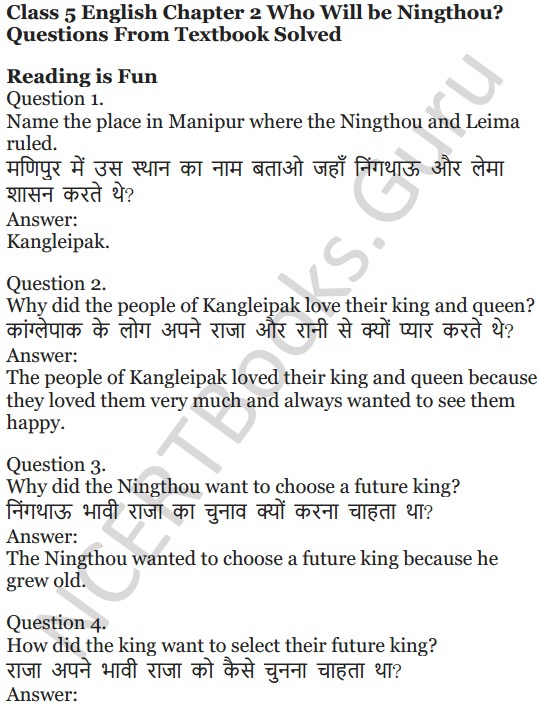
NCERT Solutions for Class 5 English Unit 10 Chapter 2 Who Will be Ningthou?

NCERT Solutions for Class 5 English Unit 10 Chapter 2 Who Will be Ningthou? are part of NCERT Solutions for Class 5 English. Here we have given NCERT Solutions for Class 5 English Unit 10 Chapter 2 Who Will be Ningthou?.

NCERT Solutions for Class 5 English Unit 10 Chapter 2 Who Will be Ningthou?

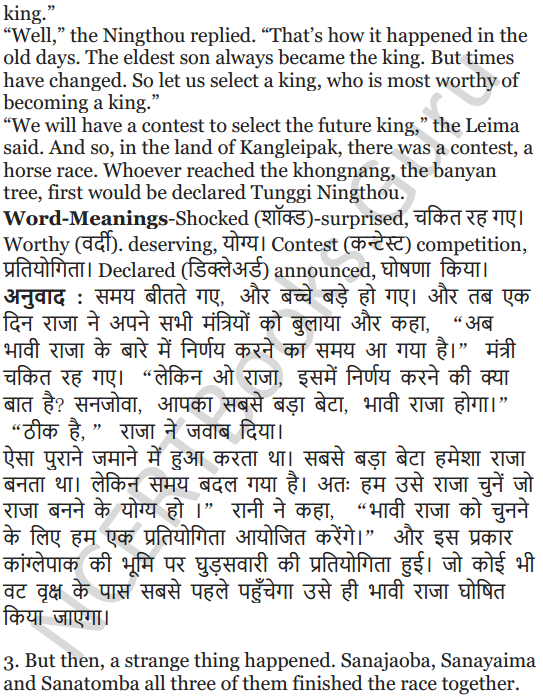
NCERT Solutions for Class 5 English Unit 10 Chapter 2 Who Will be Ningthou 1
NCERT Solutions for Class 5 English Unit 10 Chapter 2 Who Will be Ningthou 2
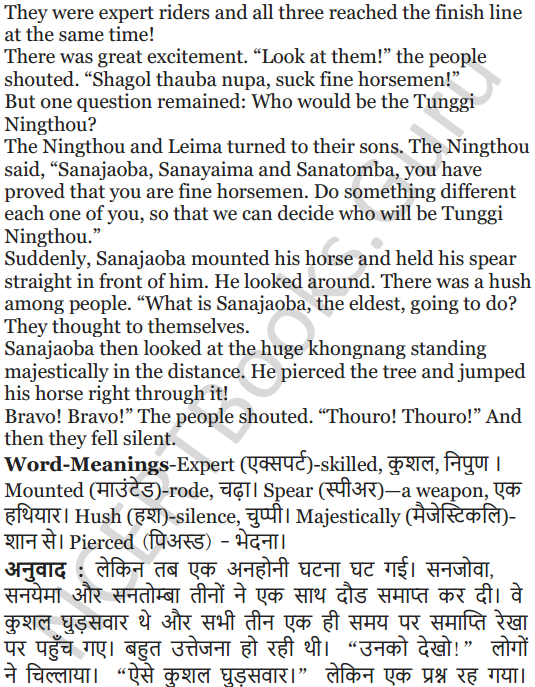
NCERT Solutions for Class 5 English Unit 10 Chapter 2 Who Will be Ningthou 3
NCERT Solutions for Class 5 English Unit 10 Chapter 2 Who Will be Ningthou 4
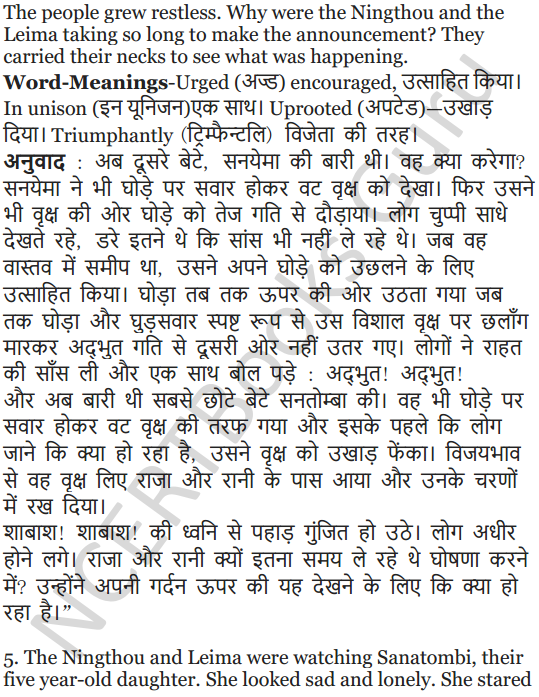
NCERT Solutions for Class 5 English Unit 10 Chapter 2 Who Will be Ningthou 5
NCERT Solutions for Class 5 English Unit 10 Chapter 2 Who Will be Ningthou 6
NCERT Solutions for Class 5 English Unit 10 Chapter 2 Who Will be Ningthou 7
NCERT Solutions for Class 5 English Unit 10 Chapter 2 Who Will be Ningthou 8
NCERT Solutions for Class 5 English Unit 10 Chapter 2 Who Will be Ningthou 9
NCERT Solutions for Class 5 English Unit 10 Chapter 2 Who Will be Ningthou 10
NCERT Solutions for Class 5 English Unit 10 Chapter 2 Who Will be Ningthou 11
NCERT Solutions for Class 5 English Unit 10 Chapter 2 Who Will be Ningthou 12
NCERT Solutions for Class 5 English Unit 10 Chapter 2 Who Will be Ningthou 13
NCERT Solutions for Class 5 English Unit 10 Chapter 2 Who Will be Ningthou 14
NCERT Solutions for Class 5 English Unit 10 Chapter 2 Who Will be Ningthou 15
We hope the NCERT Solutions for Class 5 English Unit 10 Chapter 2 Who Will be Ningthou?, help you. If you have any query regarding NCERT Solutions for Class 5 English Unit 10 Chapter 2 Who Will be Ningthou?, drop a comment below and we will get back to you at the earliest.

NCERT Solutions for Class 5 English Unit 10 Chapter 1 Mallu Bhalu

NCERT Solutions for Class 5 English Unit 10 Chapter 1 Mallu Bhalu are part of NCERT Solutions for Class 5 English. Here we have given NCERT Solutions for Class 5 English Unit 10 Chapter 1 Mallu Bhalu.

NCERT Solutions for Class 5 English Unit 10 Chapter 1 Mallu Bhalu

NCERT Solutions for Class 5 English Unit 10 Chapter 1 Mallu Bhalu 1
NCERT Solutions for Class 5 English Unit 10 Chapter 1 Mallu Bhalu 2
NCERT Solutions for Class 5 English Unit 10 Chapter 1 Mallu Bhalu 3
NCERT Solutions for Class 5 English Unit 10 Chapter 1 Mallu Bhalu 4
NCERT Solutions for Class 5 English Unit 10 Chapter 1 Mallu Bhalu 5
NCERT Solutions for Class 5 English Unit 10 Chapter 1 Mallu Bhalu 6
NCERT Solutions for Class 5 English Unit 10 Chapter 1 Mallu Bhalu 7
NCERT Solutions for Class 5 English Unit 10 Chapter 1 Mallu Bhalu 8
NCERT Solutions for Class 5 English Unit 10 Chapter 1 Mallu Bhalu 9
We hope the NCERT Solutions for Class 5 English Unit 10 Chapter 1 Mallu Bhalu, help you. If you have any query regarding NCERT Solutions for Class 5 English Unit 10 Chapter 1 Mallu Bhalu, drop a comment below and we will get back to you at the earliest.

NCERT Solutions for Class 6 English Honeysuckle Chapter 3 Taro’s Reward

NCERT Solutions for Class 6 English Honeysuckle Chapter 3 Taro’s Reward

NCERT Solutions for Class 6 English Honeysuckle Chapter 3 Taro’s Reward are part of NCERT Solutions for Class 6 English. Here we have given NCERT Solutions for Class 6 English Honeysuckle Chapter 3 Taro’s Reward.

NCERT Solutions for Class 6 English Honeysuckle Chapter 3 Taro’s Reward

TEXTUAL QUESTIONS
(Page 34)
Working with the Text

A. Answer the following questions.

Question 1.
Why did Taro run in the direction of the stream ? (5)
Solution:
Taro ran in the direction of the stream because he had heard the sound of falling water. Earlier, he had neither heard nor seen any stream nearby ; so he ran to see what it was.

Question 2.
How did Taro’s father show his happiness after drinking sake ? (7)
Solution:
Taro’s father stopped shivering and did a little dance in the middle of the floor. Thus he showed his happiness.

Question 3.
Why did the waterfall give Taro sake and others water ? (12)
Solution:
The waterfall gave sake to Taro because he was a thoughtful son. It was his reward for his care of his old parents. Since no one else had that quality, they got only cold water.

Question 4.
Why did the villagers want to drown Taro ? (10, 11)
Solution:
The villagers wanted to drown ‘Taro because they thought that they had been tricked by him. Taro had told them that the waterfall gave sake. They were getting cold water.

Question 5.
Why did the Emperor reward Taro ? (13)
Solution:
The emperor rewarded Taro for being very good and kind towards his parents. This was the emperor’s way to encourage all children to honour and obey their parents.

B. Mark the right item.
Question 1.
Taro earned very little money because

  1. he didn’t work hard enough.
  2. the villagers didn’t need wood.
  3. the price of wood was very low.

Solution:
3. the price of wood was very low. 

Question 2.
Taro decided to earn extra money

  1. to live a more comfortable life.
  2. to buy his old father some sake.
  3. to repair the cracks in the hut.

Solution:
2. to buy his old father some sake. 

Question 3.
The neighbour left Taro’s hut in a hurry because

  1. she was delighted with the drink.
  2. she was astonished to hear Taro’s story.
  3. she wanted to tell the whole village about the waterfall.

Solution:
3. she wanted to tell the whole village about the waterfall. 

Working with Language
Question A.
Strike off the words in the box below that are not suitable. Taro wanted to give his old parents everything they needed. This shows that he was………..
NCERT Solutions for Class 6 English Honeysuckle Chapter Chapter 3 Taro’s Reward 1
Solution:
NCERT Solutions for Class 6 English Honeysuckle Chapter Chapter 3 Taro’s Reward 2

B.
Question 1.
“This made Taro sadder than ever.” This’ refers to

  1. a strong wind that began to blow.
  2. Taro’s father’s old age.
  3. Taro’s inability to buy expensive sake for his father. (Mark the right item.)

Solution:
3. Taro’s inability to buy expensive sake for his father. 

Question 2.
“This, said the emperor, was to encourage all children to honour and obey their parents.” “This’ refers to

  1. the most beautiful fountain in the city.
  2. rewarding Taro with gold and giving the fountain his name.
  3. sending for Taro to hear his story. (Mark the right item.)

Solution:
2. rewarding Taro with gold and giving the fountain his name.”

C. Arrange the words below in pairs that rhyme.
Example :

young – lung
money – sunny
NCERT Solutions for Class 6 English Honeysuckle Chapter Chapter 3 Taro’s Reward 3

Solution:
NCERT Solutions for Class 6 English Honeysuckle Chapter Chapter 3 Taro’s Reward 4

D.
Question 1.
Fill in the blanks with words from the box.
NCERT Solutions for Class 6 English Honeysuckle Chapter Chapter 3 Taro’s Reward 5
A ___________ (i) ___________ woodcutter lived on a ___________ (ii) ___________ hillside. He was a ___________ (iii) ___________ son who worked ___________ (iv) ___________ but earned ___________ (v) ___________ money. One day he saw a ___________ (vi) ___________ waterfall hidden behind a rock. He tasted the water and found it ___________ (vii) ___________ .
Solution:

(i) young
(ii) lonely
(iii) thoughtful
(iv) very hard
(v) little
(vi) beautiful
(vii) sake.

Question 2.
Find these sentences in the story and fill in the blanks.

1. This made Taro (i) ___________ than ever. (3)
2. He decided to work (ii) ___________ than before. (3)
3. Next morning. Taro jumped out of bed (iii) ___________ than usual. (4)
4. He began to chop even (iv) ___________ . (4)
5. Next morning, Taro started for work even (v) ___________ than the morning before. (10)

Solution:

(i) sadder
(ii) harder
(iii) earlier
(iv) faster
(v) earlier

Speaking and Writing

Question A.
Speak the following sentences clearly but as quickly as you can. Learn them by heart.

  1. How much wood would a woodchuck chuck if a woodchuck would chuck wood.
  2. Betty bought a bit of butter, but the bit of butter was a little bitter so she bought some better butter to make the bitter butter better.

Solution:
No answer required.

B.
Question 1.
The story Taro’s Reward’ shows that Taro is thoughtful, hardworking and also wise. Read aloud the parts of story that show these qualities in Taro.
Solution:
No answer required. Please try yourself.

Question 2.

  1. Like Patrick in the story ‘Who Did Patrick’s Homework’, Taro is helped by magic. Do you believe in magic. What are the magical things that happen in these stories ?
  2. Which story do you like better, and why ? Do you know such stories in other languages ? Discuss these questions in class.

Solution:

  1. I do not believe in magic. In the first story, it is an elf who helps Patrick do his homework. In the second story, it is the magic waterfall that helps Taro satisfy his father’s wish.
  2. I like Taro’s story better because it teaches us to help our parents. There are such stories in every language. For example, in Sanskrit, there are Ramayana and Mahabharata which are full of such stories. In Ramayana Lord Hanuman not only crosses the ocean but enters Lanka in the shape of a mosquito.

Question 3.
Now write a paragraph or two about these two stories, comparing them.
Solution:
Both the stories have an element of magic. In the first story the elf does Patrick’s homework. In the second story the magic waterfall gives Taro sake. The first story is, however, more convincing because there, the elf is only a symbol. It helps Patrick do his homework. In fact it is Patrick’s hard work which makes him a model kid. In the second story the element of magic is more obvious. The waterfall gives everyone water and to Taro sake.

C.

Question 1.
Listen to these children. What are they talking about ?
NCERT Solutions for Class 6 English Honeysuckle Chapter Chapter 3 Taro’s Reward 6
Solution:
The children are talking about their difficulties.

Question 2.
Work in groups. Come to some agreement on each of the activities given below. Decide which is the most interesting, dullest, most dangerous, safest, most rewarding, most exciting.
NCERT Solutions for Class 6 English Honeysuckle Chapter Chapter 3 Taro’s Reward 7
Solution:
Most interesting : reading, watching TV, stamp collecting, listening to music, dance
Dullest : knitting, cooking, learning languages
Most dangerous : swimming, mountain climbing
Safest : walking
Most rewarding : fishing, sewing, painting
Most exciting : playing football
(Various answers are possible for this question depending on individual taste.)

Dictation

Question 1.
Your teacher will speak the words given below. Write against each two new words that rhyme with it.

  1. bed ___________ ___________
  2. wax ___________ ___________
  3. fast ___________ ___________
  4. chop ___________ ___________
  5. young ___________ ___________

Solution:

  1. bed red wed
  2. wax axe fax
  3. fast last caste
  4. chop drop shop
  5. young tongue rung

We hope the NCERT Solutions for Class 6 English Honeysuckle Chapter 3 Taro’s Reward help you. If you have any query regarding NCERT Solutions for Class 6 English Honeysuckle Chapter 3 Taro’s Reward, drop a comment below and we will get back to you at the earliest.

The Brave Little Bowman Question and Answers

NCERT Solutions for Class 6 English Honeysuckle Chapter 10 The Banyan Tree

NCERT Solutions for Class 6 English Honeysuckle Chapter 10 The Banyan Tree

NCERT Solutions for Class 6 English Honeysuckle Chapter 10 The Banyan Tree are part of NCERT Solutions for Class 6 English. Here we have given NCERT Solutions for Class 6 English Honeysuckle Chapter 10 The Banyan Tree.

NCERT Solutions for Class 6 English Honeysuckle Chapter 10 The Banyan Tree

TEXTUAL QUESTIONS
(Page 131)
Working with the Text

A. Complete the following sentences.
Question 1.
The old banyan tree “did not belong” to grandfather, but only to the boy, because ___________
Solution:
the grandfather was too old to climb it.

Question 2.
The small gray squirrel became friendly when ___________
Solution:
it found that the boy had no catapult or air gun.

Question 3.
When the boy started to bring him pieces of cake and biscuit, the squirrel ___________
Solution:
became quite bold and began to take morsels from his hand.

Question 4.
In the spring, the banyan tree ___________ and ___________ would come there.
Solution:
In the spring, the banyan tree was full of small red figs and birds of all kinds would come there.

Question 5.
The banyan tree served the boy as a ___________
Solution:
reading room where he had made his little library on a crude platform.

Question 6.
The young boy spent his afternoons in the tree ___________
Solution:
propping himself up against the tree with a cushion and reading story-books and spying on the world below.

B. Answer the following questions.
Question 1.
“It was to be a battle of champions.” (8)
(i) What qualities did the two champions have ? Pick out words and phrases from the paragraph above this line in the text and write them down. Mongoose Cobra
(a) __________ (a) __________
(b) __________ (b) __________
(c) __________ (c) __________

Solution:

Mongoose Cobra
(a) a superb fighter (a) skilful
(b) clever (b) experienced
(C) aggressive (c) the speed of light

(ii) What did the cobra and the mongoose do, to show their readiness for the fight ?

Solution:
The cobra hissed defiance. His forked tongue darted in and out. He raised half of his body off the ground and spread his broad hood. The mongoose bushed his tail. The long hair on his spine stood up.

Question 2.
Who were the other two spectators ? What did they do ? (Did they watch, or did they join in the fight ?) (10)
Solution:
The other two spectators were a myna and a jungle crow. They joined in the fight off and on.

Question 3.
Read the descriptions below of what the snake did and what the mongoose did. Arrange their actions in the proper order.
(11, 16)

(i) ceased to struggle

  • grabbed the snake by the snout
(ii) tried to mesmerize the mongoose
  • dragged the snake into the bushes

(iii) coiled itself around the mongoose

  • darted away and bit the cobra on the back
(iv) struck the crow
  • pretended to attack the cobra on one side

(v) struck again and missed

  • refused to look into the snake’s eyes

(vi) struck on the side that the mongoose pretended to attack

  • sprang aside. Jumped in and bit

Solution:

(ii) tried to mesmerize the mongoose

  • refused to look into the snake’s eyes
(vi) struck on the side that the mongoose pretended to attack
  • pretended to attack the cobra on one side
(v) struck again and missed
  • darted away and bit the cobra on the back

(iv) struck the crow

  • sprang aside. Jumped in and bit

(iii) coiled itself around the mongoose

  • grabbed the snake by the snout

(i) ceased to struggle

  • dragged the snake into the bushes

 Question 4.

  1. What happened to the crow in the end ? (16)
  2. What did the myna do finally ? (17)

Solution:

  1. In the end the crow became a victim of the snake bite and died.
  2. Finally, the myna decided not to interfere. When the snake was killed, it hopped about and then flew away.

Working with Language

A.
Question 1.
The word ’round usually means a kind of shape. What is its meaning in the story?
Solution:
Here, it means a stage in the fight between the mongoose and the snake.

Question 2.
Find five words in the following paragraph, which are generally associated with trees. But here, they have been used differently. Underline the words.

Hari leaves for work at nine every morning. He works in the local branch of the firm of which his uncle is the owner. Hari’s success is really the fruit of his own labour. He is happy, but he has a small problem. The root cause of his problem is a stray dog near his office. The dog welcomes Hari with a loud bark every day.

Solution:
Hari leaves for work at nine every morning. He works in the local branch of the firm of which his uncle is the owner. Hari’s success is really the fruit of his own labour. He is happy, but he has a small problem. The root cause of his problem is a stray dog near his office. The dog welcomes Hari with a loud bark every day.

B. The words in the box are all words that describe movement. Use them to fill in the blanks in the sentences below.
NCERT Solutions for Class 6 English Honeysuckle Chapter 10 The Banyan Tree 1

1. When he began to trust me, the squirrel began _________ into my pockets for morsels of cake.
2. I saw a cobra _________ out of a clump of cactus.
3. The snake hissed, his forked tongue _________ in and out.
4. When the cobra tried to bite it, the mongoose _________ aside.
5. The snake _________ head to strike at the crow.
6. The birds _________ the snake.

Solution:

1. When he began to trust me, the squirrel began delving into my pockets for morsels of cake.
2. I saw a cobra gliding out of a clump of cactus.
3. The snake hissed, his forked tongue darting in and out.
4. When the cobra tried to bite it, the mongoose sprang aside.
5. The snake whipped his head back to strike at the crow.
6. The birds dived at the snake.

C. Find words in the story, which show things striking violently against each other.

1. The cobra struck the crow, his snout th ____________ ing against its body. (15)
2. The crow and the myna c ____________ II ____________ in mid-air. (13)
3. The birds dived at the snake, but b ____________ d into each other instead. (14)

Solution:

1. thudding
2. collided
3. bumped

D. Look at these sentences.

  • in the spring, birds of all kinds would flock into the banyan tree’s branches
  • Grandfather, at sixty-five, could no longer climb the banyan tree.
  • I would spend the afternoons there.
  • I could hide myself in its branches.
  • I could look down through the leaves at the world below.
  • I could read there.

‘Would’ tells us what the author used to do. Or what used to happen.

‘Could’ tells us what the author was usually able to do. Or grandfather is now not able to do.


Choose would and could to replace the italicised words in the following sentences. Grandfather says, in the old days,

  1. elephants were able to fly in the sky, like clouds. They were also able to change their shapes. They used to fly behind clouds and frighten them. People used to look up at the sky in wonder.
  2. because there was no electricity, he used to get up with the sun, and he used to go to bed with the sun, like the birds.
  3. like the owl, he was able to see quite well in the dark. He was able to tell who was coming by listening to their footsteps.

Solution:

  1. elephants could fly in the sky, like clouds. They could also change their shapes. They would fly behind clouds and frighten them. People would look up at the sky in wonder.
  2. because there was no electricity, he would get up with the sun and he would go to bed with the sun, like the birds.
  3. like the owl, he could see quite well in the dark. He could tell who was coming by listening to their footsteps.

Speaking

Look at these sentences.

  • The tree was older than Grandfather.
  • Grandfather was sixty-five years old.

How old was the tree ? Can you guess ?

  • The tree was as old as Dehra Dun itself.

Suppose Dehra Dun is 300 years old. How old is the tree ?

When two things are the same in some way, we use as … as. Here is another set of examples.

  • Mr Sinha is 160 centimetres tall.
  • Mr Gupta is 180 centimetres tall.
  • Mrs Gupta is 160 centimetres tall.

Mrs. Gupta is as tall as Mr Sinha.

Use the words in the box to speak about the people and the things below, using as … as or er than
NCERT Solutions for Class 6 English Honeysuckle Chapter 10 The Banyan Tree 2
[Notice that in the word ‘hot, the letter “l’ is doubled when -er is added.]
Question 1.
Heights
NCERT Solutions for Class 6 English Honeysuckle Chapter 10 The Banyan Tree 3Solution:

(a) Zeba is as tall as Rani
(b) Zeba is taller than Ruby
(c) Rani is taller than Ruby
(d) Ruby is shorter than either Zeba or Rani
(e) Zeba is as short as Rani

Question 2.
Weight Lifters
NCERT Solutions for Class 6 English Honeysuckle Chapter 10 The Banyan Tree 4Solution:

(a) Vijay is as strong as Akshay.
(b) Anwar is stronger than Vijay.
(c) Anwar is stronger than Akshay.
(d) Anwar is stronger than either Akshay or Vijay.

Question 3.
City Temperatures
NCERT Solutions for Class 6 English Honeysuckle Chapter 10 The Banyan Tree 5Solution:

(a) Shimla is as cold as Gangtok.
(b) Srinagar is colder than Shimla.
(c) Srinagar is colder than Gangtok.
(d) Srinagar is colder than either Shimla or Gangtok.

Question 4.
Lengths
NCERT Solutions for Class 6 English Honeysuckle Chapter 10 The Banyan Tree 6Solution:

(a) Romi’s pencil is as short as Raja’s.
(b) Romi’s pencil is shorter than Mona’s.
(c) Raja’s pencil is shorter than Mona’s.
(d) Mona’s pencil is not as short as either Romi’s or Raja’s.

Question 5.
City Temperatures
NCERT Solutions for Class 6 English Honeysuckle Chapter 10 The Banyan Tree 7
Solution:

(a) Delhi is as hot as Nagpur.
(b) Delhi is hotter than Chennai.
(c) Nagpur is hotter than Chennai.
(d) Chennai is not as hot as either Delhi or Nagpur.

Writing

‘My Favorite Place
Read again the paragraphs of the story in which the author describes the banyan tree, and what he used to do there. Is there a place in your house, or in your grandparents’ or uncles’ or aunts’ houses, that you specially like ? Write a short paragraph about it, saying

  • where it is
  • what you do there
  • why you like it

You may instead write about a place you dislike, or are afraid of.
Solution:

My Favorite Place

I have an uncle in Delhi. I go there during the summer vacation. My uncle’s house has a small but beautiful library. It has many books. Among them are the books specially meant for children. There are interesting story books. Whenever I go to my uncle’s, my afternoons are invariably spent in this library. I have already read quite a few books such as Gulliver’s Tales and Farm House. I like this place most because I love reading books.

We hope the NCERT Solutions for Class 6 English Honeysuckle Chapter 10 The Banyan Tree help you. If you have any query regarding NCERT Solutions for Class 6 English Honeysuckle Chapter 10 The Banyan Tree, drop a comment below and we will get back to you at the earliest.
NCERT Solutions for Class 6 English Honeysuckle Chapter 9 Desert Animals

NCERT Solutions for Class 6 English Honeysuckle Chapter 9 Desert Animals

NCERT Solutions for Class 6 English Honeysuckle Chapter 9 Desert Animals are part of NCERT Solutions for Class 6 English. Here we have given NCERT Solutions for Class 6 English Honeysuckle Chapter 9 Desert Animals.

NCERT Solutions for Class 6 English Honeysuckle Chapter 9 Desert Animals

TEXTUAL QUESTIONS
(Page 117)
Working with the Text

A.
Question 1.
Talk to your partner and say whether the following statements are true or false.

  1. No animal can survive without water.
  2. Deserts are endless sand dunes.
  3. Most snakes are harmless.
  4. Snakes cannot hear, but they can feel vibrations through the ground.
  5. Camels store water in their humps.

Solution:

  1. True
  2. False
  3. True
  4. True
  5. False

Question 2.
Answer the following questions.

  1. How do desert animals survive without water ? (1)
  2. How do mongooses kill snakes ? (6)
  3. How does the hump of the camels help them to survive when there is no water ? (9)

Solution:

  1. The desert animals have to find different ways to survive without water. Some animals like gerbils spend the hottest part of the day in cool underground burrows. Some like darkling beetles catch drops of moisture on their legs. Some like camels get the necessary water from the desert plants they eat.
  2. The reactions of mongooses are so fast that they can dodge each time the snake strikes. They continually make a nuisance of themselves until after a while when the snake gets tired, they quickly dive in for a kill.
  3. The humps help the camels to survive by acting as storage containers. These humps are full of fat. The fat nourishes the camels in the absence of food and water.

Question :
B. Read the words/phrases in the box. With your partner find their meaning in the dictionary. Fill in the blanks in the following passage with the above words/ phrases.
NCERT Solutions for Class 6 English Honeysuckle Chapter 9 Desert Animals 1

All animals in forests and deserts struggle to ____________ in ____________ Though most of the animals are ____________ , some are dangerous when . If an ____________ is noticed, they attack or bite to save themselves. They struggle ____________ for food and water. Some animals are called ____________ because they ____________ on other animals.

Solution:
Word                                 Meaning
harsh                                     hard
conditions                         situations
harmless                                safe
survive                             remain alive
intruder                          unwanted arrival
threatened                        feel unsafe
predators                             hunters
prey                                        hunt
continually                         all the time

All animals in forests and deserts struggle to survive in harsh conditions. Though most of the animals are harmless, some are dangerous when threatened. If an intruder is noticed, they attack or bite to save themselves. They struggle continually for food and water. Some animals are called predators because they prey on other animals.

Speaking

Question :
Look at these sentences.

  • Deserts are the driest places on earth.
  • Gerbils spend the hottest part of the day in cool underground burrows.

Now form pairs. Ask questions using a suitable form of the word in brackets. Try to answer the questions too.
Do you know

1. Which animal is the ____________ (tall) ?
2. Which animal runs the ____________ (fast) ?
3. Which place on earth is the _ (hot) or the ____________ (cold) ?
4. Which animal is the ____________ (large) ?
5. Which is the ____________ (tall) mountain in the world ?
6. Which is the ____________ (rainy) place on earth ?
7. Which is the ____________ (old) living animal ?
Can you add some questions of your own ?

Solution:

1. tallest
2. fastest
3. hottest … coldest
4. largest
5. tallest
6. most rainy
7. oldest

Students should try to add their own questions to this list.

Thinking about Language

Question :
A. Look at these sentences.

  • Most snakes are quite harmless, but a few are poisonous.
  • Most snakes lay eggs, but the rattlesnake gives birth to its young.

Now write five sentences like these using ‘most’ and the clues below.

  1. (90% of) people are honest (10%) are dishonest.
    __________________________________________________
  2. (Lots of) fruit have plenty of sugar, (some) citrus fruit are low in sugar.
    __________________________________________________
  3. (Every soft drink except this one) has lots of empty calories’.
    __________________________________________________
  4. (The majority of) films are romances, (a few) are on other topics.
    __________________________________________________
  5. (A majority of) people agree that he is a good leader, (just a few) disagree.
    __________________________________________________

Solution:

1. Most people are honest, but a few are dishonest.
2. Most fruit have plenty of sugar but citrus fruit are low in sugar.
3. Most soft drinks have lots of empty calories but this one is free from them.
4. Most films are romances but a few are on other topics.
5. Most of the people agree that he is a good leader but just a few disagree.

Question :
B. Look at these sentences.

  • Animals cannot survive for long without water.
  • So desert animals have to find different ways of coping.

The first sentence says what cannot happen or be done ; the second tells us what must, therefore, be done, what it is necessary to do. Complete these sentences using cannot and have to/has to.

1. You ____________ reach the island by land or air ; you go by boat.
2. We ____________ see bacteria with our eyes ; we, look at them through a microscope.
3. He ____________ have a new bicycle now ; he ____________ wait tili next year.
4. Old people often ____________ hear very well ; they ____________ use a hearing aid.
5. Road users ____________ do what they wish ; they ____________ follow the traffic rules.
6. She ____________ accept this decision ; she ____________ question it.
7. you ____________ believe everything you hear ; you ____________ use your own judgement.

Solution:

1. You cannot reach the island by land or air ; you have to go by boat.
2. We cannot see bacteria with our eyes ; we have to look at them through a microscope.
3. He cannot have a new bicycle now ; he has to wait till next year.
4. Old people often cannot hear very well ; they have to use a hearing aid.
5. Road users cannot do what they wish ; they have to follow the traffic rules.
6. She cannot accept this decision ; she has to question it.
7. You cannot believe everything you hear ; you have to use your own judgement.

Writing

Question :
Imagine you are journeying through a desert. Write a couple of paragraphs describing what you see and hear.

Solution:
Once I happened to pass through the deserts of Rajasthan. No vehicle like motor car could take me through the desert and so I had to accept the offer of a camel ride. It was my first chance to ride a camel. In the beginning, it was a little difficult but I got used to it.

We started in the evening because the camel-man told me that during the day the dust storm may become unbearable. He also asked me to fill my bottle with water because for the next six hours, I could not expect to get any water. So equipped with water and other necessary things, I rode the camel determined to cross the small part of the desert and reach the other side to a village. On the way, I saw many duns. Fortunately, the weather remained fine and the night seemed extremely beautiful. Nothing untoward happened on the way and I reached the village before it was dawn.

We hope the NCERT Solutions for Class 6 English Honeysuckle Chapter 9 Desert Animals help you. If you have any query regarding NCERT Solutions for Class 6 English Honeysuckle Chapter 9 Desert Animals, drop a comment below and we will get back to you at the earliest.