Perimeter of a Triangle Calculator

Perimeter of a Triangle Calculator: Looking for a handy and quick online calculator to find out the triangle perimeter then this is the right destination for you. You can easily calculate the Perimeter of a Triangle by giving your required inputs in our Perimeter of a Triangle Calculator. After entering the inputs it calculates the Triangle Perimeter and displays the output just like that along with step by step explanation.

Look no further for any other because our Triangle Perimeter Calculator is the best out of all. Check further for more information like what is the perimeter of a triangle and formula, how to find the perimeter of various types of a triangle when all side lengths are given, and how to use our Perimeter of a Triangle Calculator. Also, you can look at some solved examples for each type of triangle perimeter formulas from here.

What is the Perimeter of a Triangle?

The definition of the Perimeter of a Triangle is a distance around the shape ie., Triangle. In other words, the perimeter of any 2D closed figure or shape= sum of all its sides. The formula of the Perimeter of a Triangle is illustrated below with a detailed explanation.

Let’s have a look at the formulas and memorize them carefully to find the Perimeter of a Triangle in just a fraction of seconds.

Perimeter of a Triangle formula

1. The most commonly used formula for finding the perimeter of a triangle is by adding all sides. i.e., Triangle Perimeter = a + b + c.

2. Yet, you won’t give three sides always. In this scenario you can do like this, use the law of cosines to find the missing side:

c = √(a² + b² – 2ab * cos(γ))

This can be combined into the perimeter formula, i.e., Triangle Perimeter = a + b + √(a² + b² – 2ab * cos(γ)).

3. One more option is using the law of sines, in case you have one side and the two angles that are formed by that side:

b = sin(β) * a / sin(β + γ)

c = sin(γ) * a / sin(β + γ)

So the triangle perimeter may be stated as Triangle Perimeter = a + (a / sin(β + γ)) * (sin(β) + sin(γ)).

How to Find Perimeter of a Triangle?

Finding the perimeter of a triangle means finding the distance around the triangle. The simplest way to find the perimeter of a triangle is to add up the length of all of its sides, but if you don’t know all of the side lengths you will need to calculate them first by using other suitable formulas.

1. Finding the Perimeter of a Triangle with all three sides (SSS):

The formula for the perimeter of a closed shape is normally equal to the length of all sides of the shape. Therefore, in the case of a triangle, the perimeter will be the sum of all the three sides.

For a triangle to exist some conditions need to be met and they are as follows,

a+b> c

b+c> a

c+a> b

Hence, the formula for the Perimeter of a Triangle when you have all sides is, P= a+b+c.

Where, a, b, c designates the sides of the triangle.

Solved Examples

Question 1: Find the Perimeter of a Triangle whose sides are 4 centimeters, 3 centimeters, and 2 centimeters?

Solution: 

First, take the given triangle sides, they are 4 cm, 3 cm, and 2 cm.

Assume a = 4 cm, b = 3 cm and c = 2 cm then calculate triangle perimeter.

The formula for Perimeter of a triangle = Sum of all sides

P = a + b + c

⇒ Perimeter = 4 cm + 3 cm + 2 cm = 9.0 cm.

Here it met all three conditions, so Perimeter of a Triangle whose sides are 4 cm, 3 cm, and 2 cm is 9.0 cm.

Question 2: Find the perimeter of an equilateral triangle whose side is 2 cm?

Solution:

Being an equilateral triangle, all the sides are equal.

Thus, a = 2

Perimeter of an equilateral triangle= a + b + c = a + a + a = 3a
= 3 x a = 3 x 2
= 6 cm

Therefore, Perimeter of an equilateral triangle whose sides are equal i.e., a=2 cm is 6.0 cm.

Question 3: Find the perimeter of an isosceles triangle whose sides are equal sides is 4 cm and the third side is 6 cm?

Solution:

Being an isosceles triangle, two sides are equal.

Thus, a = 4, b = 4 and c = 6

Perimeter of an isosceles triangle= a +b + c = a + a + c = 2a + c
= 2 x a + 8 = 2 x 4 + 6
= 14 cm

Therefore, Perimeter of an isosceles triangle whose sides are 4 cm, 4cm, and 6 cm is 14.0 cm.

2. Finding the Perimeter of a Triangle with Two Sides and Angle between them (SAS):

  • First and foremost, take the given length of two sides and angle of one side.
  • Use the law of cosines to calculate the third side and then find the perimeter of a triangle.
  • The formula to find the third side is c= √(a² + b² – 2ab * cos(γ)).
  • Now place the length and angle values in the above formula and calculate the C length.
  • After finding the C value, easily you can find the perimeter of a triangle(SAS) using formula i.e., P = a+b+c.

3. Finding the Perimeter of a Triangle with one side and two angles (ASA):

For suppose, you have input say two angles and one length of the triangle then this method will be helpful for you to calculate the perimeter of a triangle easily:

  • Initially, write down all given inputs here and then use the law of sines to find the other two sides of the triangle.
  • The formulas you need to apply to calculate two sides are b = sin(β) * a / sin(β + γ) and c = sin(γ) * a / sin(β + γ).
  • Apply the input angles and one length value in the above formulas and calculate the two side values.
  • Finally, we have all three sides lengths so apply them in the formula of the perimeter of a triangle(ASA) i.e., P= a+b+c.

How to Use our Perimeter of a Triangle calculator?

By following the below simple steps you will completely understand how to use our Perimeter of a Triangle Calculator. Once you know how it works then you will surely love our online free calculator to find triangle perimeter.

  1. Firstly, you should give your inputs in the respective fields available on the screen.
  2. Then, select the units like cm,m, ft, yd, mi, etc. by clicking on the desired one from the drop-down list.
  3. After giving all your required inputs, simply tap on the blue colored “Perimeter” button.
  4. Later, our Perimeter of a Triangle Calculator displays the solution below the button along with a detailed explanation.

FAQs on Finding Triangle Perimeter

1. How do you find the perimeter of a triangle?

Memorize the Perimeter of a triangle formula and easily find the result for your inputs. For example, If you take a triangle with sides a, b and c, the perimeter P is defined as P = a + b + c.

2. What is the sum of the perimeter of a triangle?

The Perimeter of the Triangle = Sum of the Sides. For instance, if you enter a=2 cm, b=4 cm, c=3 cm then the triangle perimeter = 2 cm + 4 cm + 3 cm (add the length of each side of the triangle).

3. Can a triangle have the same area and perimeter?

The area is measured in square units and the perimeter is measured in length units. Any triangles with the same perimeter and area and with one side the same are congruent.

4. What is meant by the Perimeter of a Triangle?

The perimeter of a triangle is the total distance around the edges of a triangle. In a nutshell, the length of the boundary of a triangle is its perimeter.
Difference Between TCP/IP and OSI Model

In the era of initialization, humankind is constantly evolving with new inventions every day. We all understand the importance of using motherboards, routers, switches, and other hardware products. The conceptual models of network OSI and TCP models help standardize and set up a connection between computers’ varieties. The common question between students these days is the difference between the two models. In this article, we briefly discuss the network models and their differences.

You can also find differences between articles on various topics that you need to know. Just tap on the quick link available and get to know the basic differences between them.

What is the Difference Between TCP/IP and OSI Model

What is the Difference Between TCPIP and OSI Model

OSI Model: Definition

The Open System Interconnection is a conceptual and logical model developed in the 1980s that interprets the network communication used by computers to interconnect and communicate with other computers. However, the model is not implemented completely but is referred to even today.

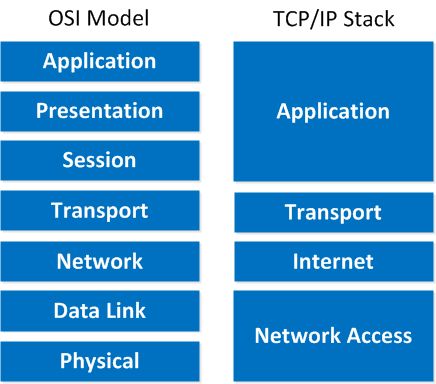
The OSI model contains seven layers, with every layer interconnected to each other. With the data moving downward in Open system interconnection, each layer stores extra data. The information then moves down until the last layer of the model is hit. Once it reaches the last year, data is transmitted over the network. The process is reversed once the data reaches the other side.

TCP/IP Model: Definition

The Transmission Control Protocol and Internet Protocol are designed as a highly durable model to end byte stream on a questionable internetwork. Although today IPv4 and IPv6 are used, the TCP/IP model is still reasonable.  The model has four layers connected. The first three layers of TCP/IP model maps are session, presentation, and application, similar to the OSI model.

The Difference Between OSI and TCP/IP model

  • The OSI model stands for Open System Interconnection, while the TCP stands for Transmission Control Protocol.
  • The International Standard Organization developed the OSI model. Simultaneously, the TCP/IP model was developed by the Advanced Research Project Agency Network.
  • The Open system interconnection is an independent standard with generic code used as a communication connection between the end-user and the network. The TCP/IP model is and the standard code that helps with the development of the internet. The communication code helps to keep connected among the hosts.
  • In the Open system interconnection model, the layers of transport give a guaranteed delivery of the packets. Even though we rely on the TCP/IP model, it does not confirm the packets’ delivery.
  • TCP/IP model is based on a horizontal approach, while the OSI model is based on a vertical approach.
  • The Open system interconnection has different layers of session and presentation. On the contrary, the TCP/IP model does not have separate layers of session and presentation. Both these players exist in the application layer.
  • The Open system interconnection is commonly known as a reference model that helps to build several other networks. Even the TCP/IP model is built considering OSI as the reference model.
  • The OSI model layers of the network contain both connection-related and connection to fewer services. On the other hand, the TCP/IP model only provides a connectionless service.
  • The OSI code is hidden, and with the change of technology, it is easily replaceable. At the same time, the TCP/IP protocols are not easy to replace.
  • The OSI model consists of seven interconnected layers, while the TCP/IP model consists of four layers.
  • The OSI model gives standardization to various gadgets like switches, motherboards, routers, and other devices. At the same time, the TCP/IP model connects various computers.
  • The header size of OSI is a minimum of five bytes. In comparison, the TCP/IP model header size is twenty bytes.

These are some of the basic differences between the OSI and TCP/IP conceptual model used for network transmission and communication.

Difference Between MS Word and MS Excel

Difference Between MS Word and MS Excel

Microsoft is a vast company with many softwares under it that are helpful for our everyday use. When we think of typing up a document on our computers, our mind automatically flutters to MS Word, and when we think of creating a spreadsheet to keep track of anything in particular, we think of MS Excel. However, for those who have never used either of the two, or have used one but not the other, it can be a bit confusing to figure out which one performs what function. Let’s take a look at what both MS Word and MS Excel do, and then we will take a look at the difference between MS Word and MS Excel.

You can also find differences between articles on various topics that you need to know. Just tap on the quick link available and get to know the basic differences between them.

What is the difference between MS Word and MS Excel?

What is the difference between MS Word and MS Excel

MS Word

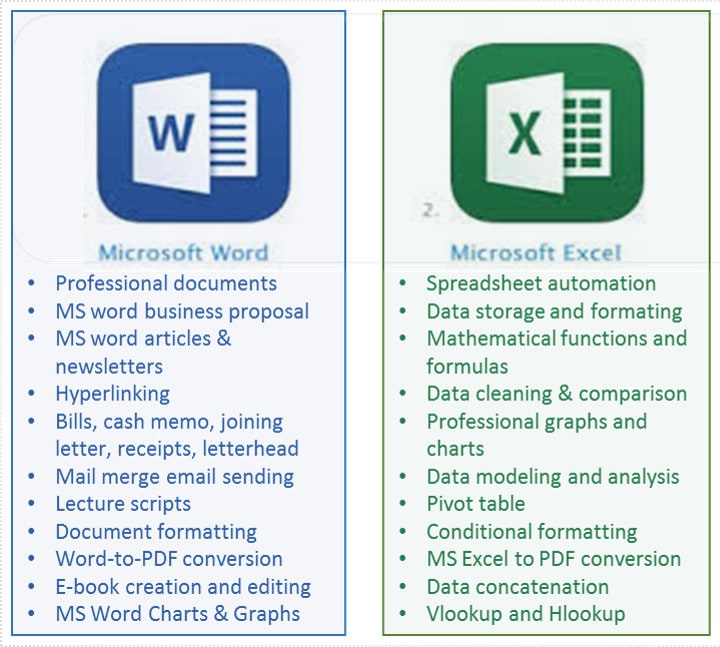
Microsoft Word or MS Word is the most helpful tool for people in every profession, be it students, teachers, working professionals in big companies, freelancers in smaller companies, etc. Most people have heard of MS Word, and have also MS Word, and that gives us a clear idea of how important an application it is for the world.

On MS Word, one can type out a document of however many words they need to, and all the colours and designs of the document can be changed and customised according to the user’s liking. The design of the document can be changed manually, or the user may even make use of one of the hundreds of templates offered by Word. From letters, cards, personal writing, charts, reports, etc. to worksheets, lesson plans and assignments, anything can be typed up on MS Word using whichever fonts and colours one likes.

MS Excel

Microsoft Excel or MS Excel is helpful for making lists for all purposes. Not just lists, most workplaces use MS Excel for purposes of allocating work to their employees, marking attendance, creating invoices and just generally keeping a track of the goings on at the office or workplace.

MS Excel consists of a tabular sheet in which you can add the colours of your preference to demarcate what is what. There are several features on MS Excel that make working and keeping track of things in a very easy manner. This includes things like colour coding, filtering and sorting the content, row count, column count, mathematical operations and formulas, character counting, VLOOKUP, etc. One can also create multiple sheets in the same document so as to create a booklet of Excel sheets.

Difference Between MS Word and MS Excel

The difference between MS Word and MS Excel is starkly clear and it lies in the usage and purposes of both the applications. Where MS Word is used almost primarily for drafting all sorts of documents, MS Excel is used for creating tables and Excel sheets to keep a proper track of lists and other similar purposes. This is not to say that MS Word doesn’t have the provision of creating tables – one can also create tables on MS Word. However, the difference between creating tables on MS Word and MS Excel lies in that Excel has a lot of other functions that can be carried out to sort out your table in the way one would need. Thus, MS Word is for creating written documents, while Excel is for creating only tables.

Convert Millimeters to Feet Calculator

Convert mm to ft Calculator: We use millimeters unit metric to measure small objects which are hard to measure at sometimes. If you take a paper it is best to measure in centimeters likewise if you take the width of the needle, it is best to measure with mm. In fact, you can convert the measurement into any other units like cm, m, ft, yd, in, etc. Don’t worry it just take a fraction of second to convert by using our millimeter conversion calculator. We have given individual calculators for all unit metrics to convert mm to other metric measurements.

Want to know how to convert millimeter to foot then just dig deep into this page. That’s it, you will get all required details about the conversion of millimeters to feet along with the definitions for mm, feet, formula to convert millimeter to foot, and many more. Apart from this, you can find how to use convert mm to ft calculator and solved examples for a better understanding of the concept.

What is meant by Millimeter?

The millimeter is defined as a unit of length or distance in the International System of Units (SI). Also, it is represented in terms of the meter, as 1/1000 of a meter, or the distance traveled by light in 1/299 792 458 000 of a second. The symbol for millimeter is ‘mm’.

What is meant by Foot?

The foot is defined as a unit of length used in the imperial and U.S. customary measurement systems. The symbol for Foot is ‘ft’. A foot was defined as exactly 0.3048 meters ≈ 305 meters in 1959 and also One foot is subdivided into 12 inches, and one yard is comprised of three feet.

How to Convert Millimeters to Feet?

We know that one millimeter is equivalent to 0.00328087559055118 foot. By using this statement we can convert a millimeter measurement to a foot measurement, by multiply the mm value by conversion ratio and change the units to foot. This is derived into a simple conversion formula which is presented below:

ft = mm * 0.0032808

Also, the distance ‘d’ in feet (ft) is equal to the distance ‘d’ in millimeters (mm) divided by 305. The conversion formula would be like this:

d(ft) = d(mm) / 305

To understand the concept and how to calculate the mm to ft conversion, we have provided an example with a detailed explanation. So, have a glance at the below mm to ft conversion solved example.

Example:

Convert 3500 mm to ft? (Steps with show work)

Solution:

One millimeter is equal to 0.0032808 feet.

To change the millimeters unit measurement to Feet unit measurement multiply the value of the mm by 0.0032808 feet or divide the value by 305.

Formula to convert mm to ft is given by

ft = mm * 0.0032808

= 3500 * 0.0032808

= 11.4828

∴ 3500 Millimeter = 11.4828 Foot. 

Steps to use Convert mm to ft Calculator

Are you wondering how to use millimeter to feet conversion calculator online? Then, you are in the correct section. Here, we have explained the stepwise process of using our handy & free online mm to ft calculator for better understanding. So, follow the below instructions without any fail and calculate your lengthy conversion math problems in less time.

  • At first, take your given input value and enter it in the provided mm input field.
  • Default our calculator is set in ft unit metric which you want to convert. If you need any other unit metric as an output then change the units as per your requirement by using the dropdown list available beside the input field.
  • Once you are done with the selection of the unit metric, click on the Convert button.
  • Finally, after a few seconds later you will get the units converted in the chosen required unit metric along with a neat explanation.

Millimeter to Foot Conversion Table

Millimeter [mm] Foot [ft]
0.01 mm 3.28084E-5 ft
0.1 mm 0.000328084 ft
1 mm 0.0032808399 ft
2 mm 0.0065616798 ft
3 mm 0.0098425197 ft
5 mm 0.0164041995 ft
10 mm 0.032808399 ft
20 mm 0.0656167979 ft
50 mm 0.1640419948 ft
100 mm 0.3280839895 ft
1000 mm 3.280839895 ft

FAQs on Millimetrer to Foot Converter Calculator

1. What size is 6mm to ft?

The formula to convert mm to ft is ft = mm / 305 (approximately).

ft = 6 /305 = 0.019673 ft.

2. How many feet mean one millimeter?

One Millimeter is equal to 0.00328084 Foot.

3. What is the formula to convert square mm to square feet?

The area in square feet is equivalent to the square millimeters multiplied by 1.0764E-5.

4. How do you convert millimeter to feet?

To convert mm to ft, you need to divide the given millimeter length by 304.8. The simple conversion formula for millimeter to foot is:

Foot = Millimeter * 0.0032808 ft

Convert Yards to Inches Calculator

Convert yd to in Calculator: Measuring a Golf fairway and need quick conversion from yards to Inches? Don’t bother we are here to reduce your struggle by listing a handy tool that converts Yards to Inches easily. All you need to do is simply enter the value of yards in the Input field provided and click on the Convert Button so that you will get the units changed.

To help you out in conversions we have come up with this free and instant tool so that you can easily convert the required unit conversions. Apart from this, we even listed the direct formula to convert yards to inches, definitions of the yard, inch, and steps to use yd to in calculator. Look out the solved examples and common conversion chart including conversions of the yard to inches for some units.

What is Yard?

A yard is a unit of length in both the imperial and US customary systems of measurement. The yard is denoted by the symbol yd. One yard is equal to 3 feet or 36 inches or 0.9144 meters.

What is Inches?

An inch is a unit of length in the imperial and US customary systems of measurement. Inch is denoted by the symbol in. One Inch is equal to 2.54 centimeters. There are 12 inches in a foot.

How to Convert Yard to Inches?

In order to convert the Yards unit to the Inches unit, you need to multiply the value of yards by the conversion ratio. Usually, One Yard is equal to 36 inches and have a look at the simple formula.

Length in Inches is equal to the yards multiplied by 36.

Formula to Convert Yards to Inches is given by

in = yd*36

You can understand the concept of Yard to Inches Conversion clearly by looking at enough examples explained in a detailed way.

Example

Convert 13 yards to Inches?

Solution:

One yard is equal to 36 inches

To change the yards unit measurement to Inches Measurement multiply the value of the yard by 36.

Formula to convert yards to inches is given by

in = yd*36

= 13*36

= 468 inches

∴ 13 Yards = 468.0 inches

How to use Yards to Inches Calculator?

Trying to figure out how to use Yards to Inches Calculator go through the simple steps listed below. Follow these guidelines without fail and you will arrive at the solution easily. They are as such

  • First and foremost enter the value of yards in the input field provided.
  • By default, our calculator will be set to inches if you want conversion with any other unit choose it from the list in the dropdown be it m, cm, mi, ft, km, etc.
  • After picking the unit you want to convert tap on the Convert button.
  • Thus, you will get the units changed in a fraction of seconds explaining the step by step procedure.

Yard to Inch Conversion Table

Yards Inches
1 yd 36″
2 yd 72″
3 yd 108″
4 yd 144″
5 yd 180″
6 yd 216″
7 yd 252″
8 yd 288″
9 yd 324″
10 yd 360″

FAQs on Yard to Inches

1. How many inches are in the yard?

A yard comprises of 36 inches.

2. How to convert yards to inches easily?

You can convert yards to inches by making use of our yd to in calculator. All you need to do is enter the input yard values and tap on the convert button to obtain the units changed to inches.

3. Where can I find solved examples on yards to Inches Conversion?

You will find solved examples on yards to inches conversion on our page.

4. What is the formula to convert Yards to Inches?

Formula to Convert Yards to Inches is in = yd*36


Convert Yards to Centimeters Calculator

Convert Yd to Cm Calculator: Are you Measuring Football Pitch Dimensions in Yards and need a conversion to Centimeter? You have come the right way and use our yards to centimeters Calculator. Enter the value in either the input field and click on the Convert button to get the required output in changed units.

For the sake of your convenience, we added a direct formula, step by step process explaining the conversion. Have a glance at the Conversion Chart, How to use our yd to cm Calculator, Procedure to Convert Yard to Centimeters, etc. Go through the solved examples including the Yard to Centimeter Conversion Calculation Work to help you understand the concept well.

What is Yard?

A yard is a unit of Length or Distance in both US Customary Units and Imperial System. The symbol for the yard is “yd”. There are 0.01093613 yards in a centimeter.

What is Centimeter?

A centimeter is a unit of Length or Distance in the Metric System. The symbol for centimeter is “cm”. There are 91.44 centimeters in a yard. The International spelling for this unit is centimetre.

Procedure to Convert Yards to Centimeter

To Change Yard to Centimeter Measurement multiply the length by the conversion ratio. Usually, One yard is equal to 91.44 centimeters. This basic thing can be employed to acquire the simple formula to Convert Yards to Centimeter. You need to multiply the Yards Value by 91.44 to obtain the outcome in the Centimeters Unit.

cm = yd * 91.44

If you have any other queries regarding the Yard to Centimeter Conversion Check out Solved Examples that explain the entire conversion process in detail.

Example 1

Convert 12 Yards to Centimeters Showing the Work?

Solution:

One yard is equal to 91.44 cm and we know the formula to convert yd to cm as cm = yd * 91.44

Substitute the given yard value in the formula of conversion

cm = 12*91.44

= 1097.28 Centimeters

∴ 12 Yards = 1097.28 Centimeters

Guidelines to use Yard to Centimeter Calculator

If you are stuck up at some point while using the yd to cm Calculator you can go through the below-listed steps to know the guidelines on how to use Yard to Centimeter Calculator. They are as follows

  • Initially, provide the input i.e. Value of Yard.
  • Usually, our calculator will be set to cm by default. If you need help with conversion to any other metric you can choose from the dropdown right after the input field.
  • After selecting the required metric click on the Convert button.
  • You will get the changed unit output i.e. in the units you have provided earlier within less time.

Yard to Centimeter Conversion Table

Yards Centimeters
1 yd 91.44 cm
2 yd 182.88 cm
3 yd 274.32 cm
4 yd 365.76 cm
5 yd 457.2 cm
6 yd 548.64 cm
7 yd 640.08 cm
8 yd 731.52 cm
9 yd 822.96 cm
10 yd 914.4 cm

FAQs on Yard to Centimeter

1.  How many cm are in a yard?

One Yard is equal to 91.44 Cms.

2. How to Convert Yards to Centimeters?

All you have to do is enter the input value of the yard in the input field provided and then click on the convert button to get the output changed to centimeters easily.

3. What is 3 Yards in Centimeters?

We know the formula to convert yards to centimeters as

cm = yd * 91.44

Substitute the value in the given formula and we get the result as such

= 3*91.44

= 274.32

∴ 3 Yards = 274.32 Centimeters

4. What is the conversion formula to change Yards to Centimeters?

Formula to convert yards to centimeters is cm = yd * 91.44