Increment Letter Samples, Template, Format Guide | How to write an Increment Letter?

Increment Letter

Increment Letter is a formal letter that states the increase in the salary of an employee. In general, Increment Letters are given whenever an employee performs well, or at the beginning of the financial year or as per the company’s policy. In fact, you can Request a Salary Increment if you haven’t received it for a long time. If you request a hike in salary the letter should include details on the efforts put by you in the organization.

If the Salary Increment Letter is given by an Employer to the Employer the letter should congratulate the employee. The Letter must be framed in a polite tone and to know on How to write an Increment Letter refer to the further modules. Check out Increment Letter Samples, When to Use a Salary Increment Letter.

Avail Letter Writing Topics for all kinds of categories in one place and be aware of different writing styles.

When to Use a Salary Increment Letter?

The first and foremost thing you need to understand about Salary Increment or Pay raise is when to use them. If at all you feel like you are putting in extra efforts and feel like you are not compensated enough writing a Salary Increment Letter is a good idea.

Remember this type of letter is not about complaining and you need to be formal and polite while addressing so that the employer can send it to the HR Department.

Increment Letter Samples

Have a look at the Salary Increment Letter Samples attached for your reference. You can use these examples to understand on what details to entail in it. They are in the following fashion

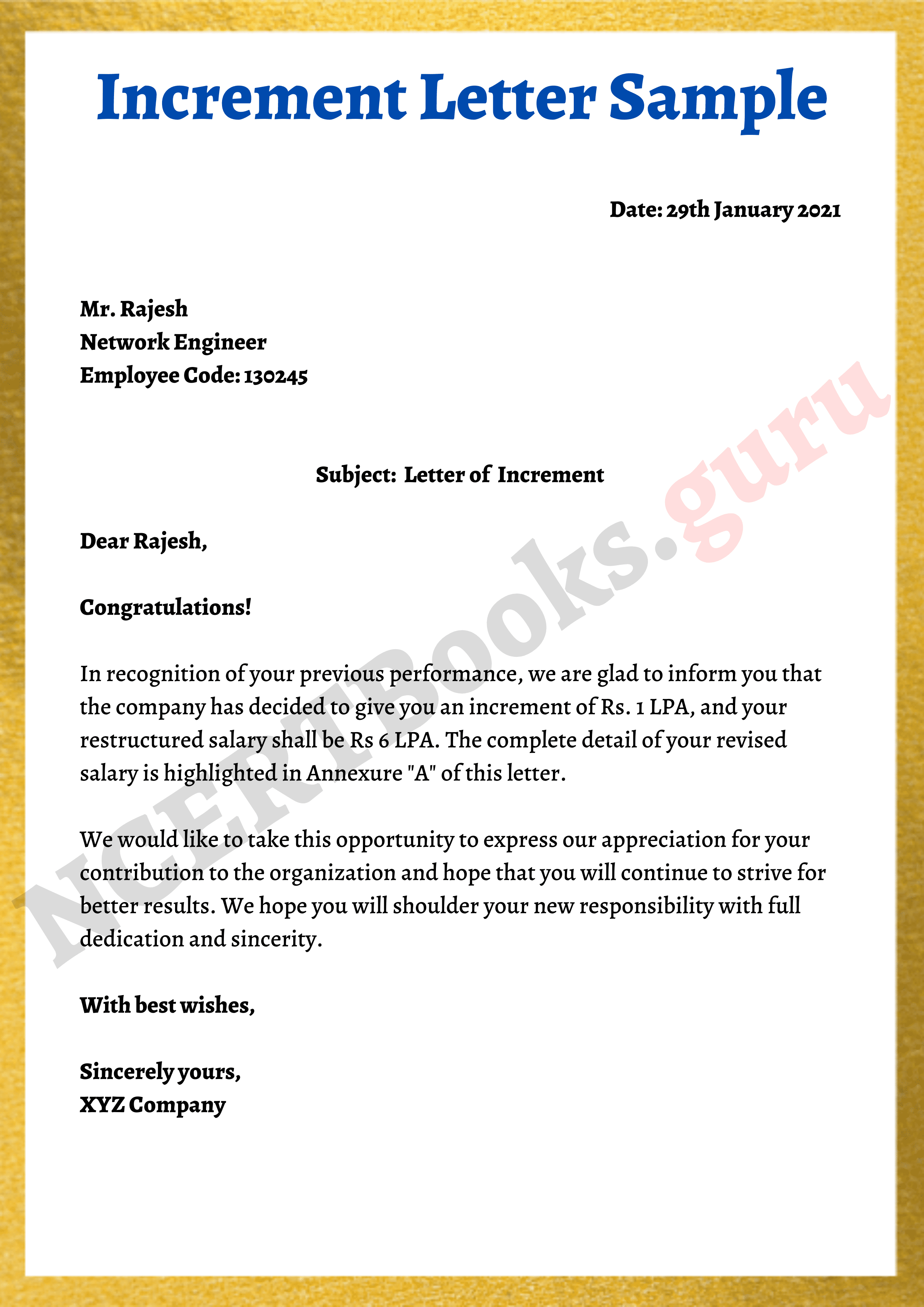
Increment Letter Sample

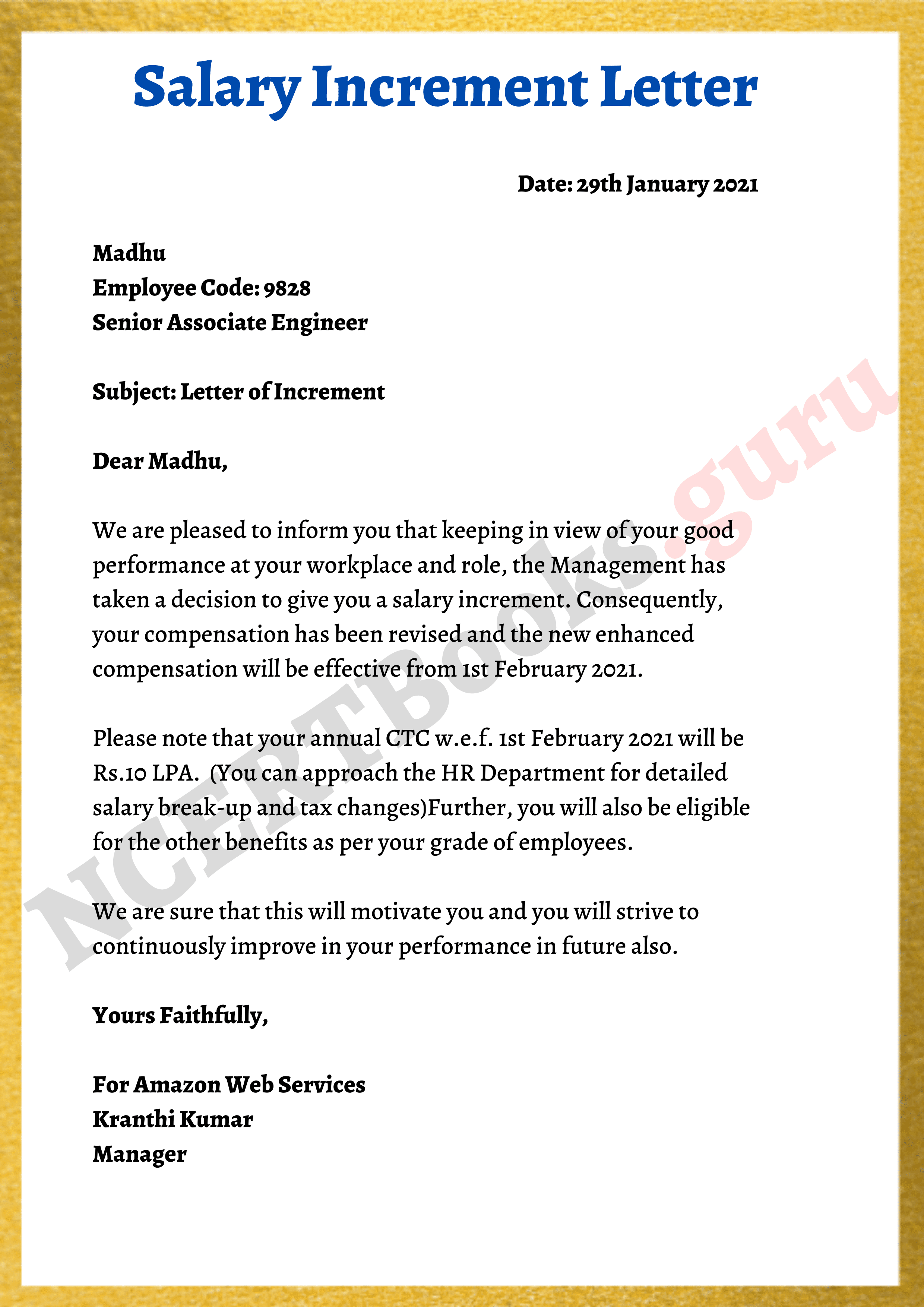
Salary Increment Letter         

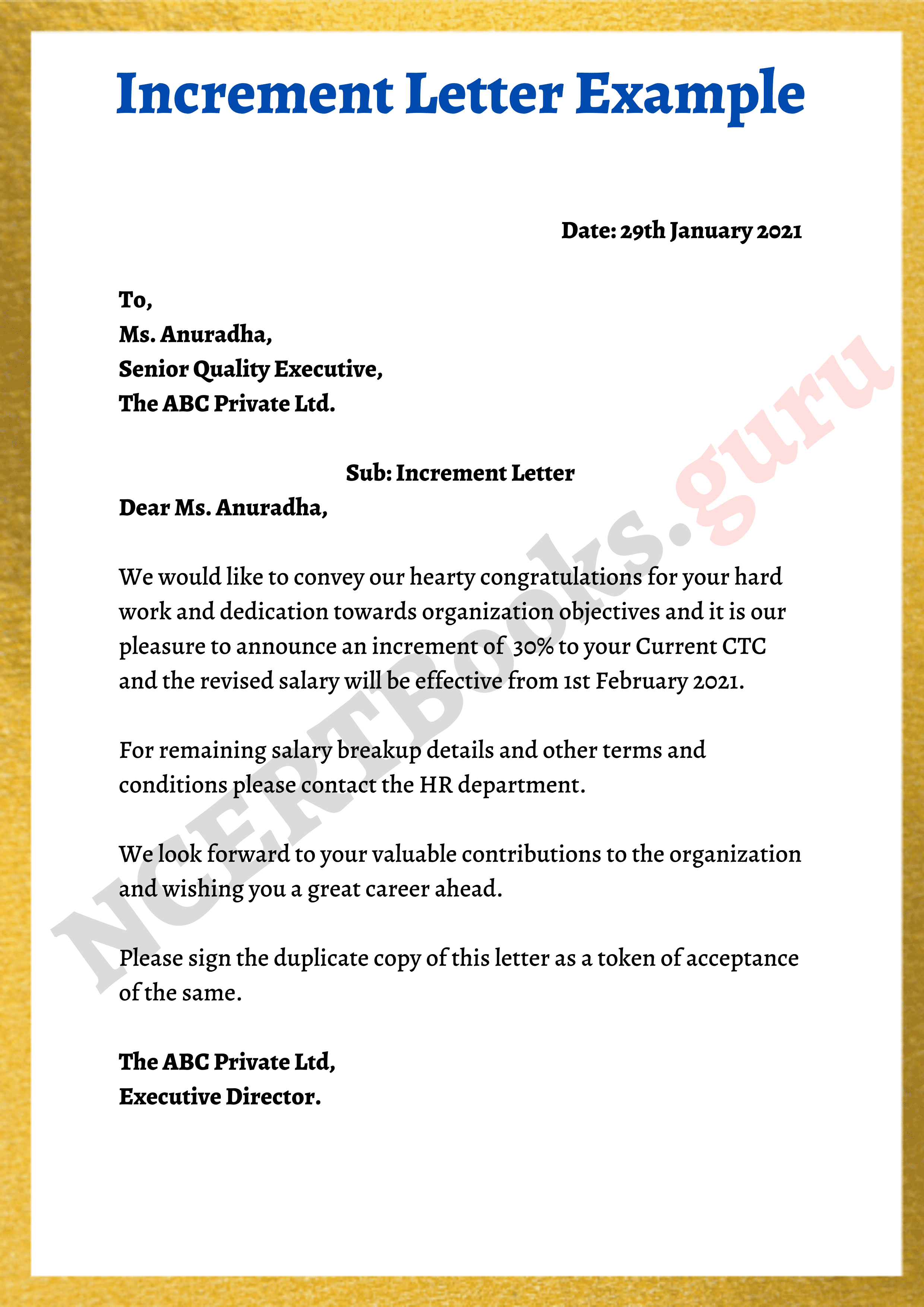
Salary Increment Letter Increment Letter Example

Increment Letter Example                                                                                                                                                   

FAQs on Increment Letter

1. What is an Increment Letter?

Increment Letter is also known as Appraisal Letter and is a document stating the salary increment given by the employer to the employee.

2. How do I write an Increment Letter?

Keep the following points in mind before drafting an Increment Letter. They are along the lines

  1. Name and Designation.
  2. Address.
  3. Date.
  4. Name and designation of the person to whom the letter is addressed.
  5. Company/Organization Name.
  6. Salutation [Dear, Mr./Ms/Mrs.]
  7. Mention the purpose of writing the letter.
  8. Your achievements or accomplishments.

3. How do I request an Increment?

Before you request for an Increment keep the points and ask for an Increment at the right time.

  1. Start on a positive note. The first 2-3 lines of your salary increment request letter should express how much you have enjoyed working on the project/department/with the team.
  2. State the reason.
  3. Present some facts.
  4. Talk about the amount.
  5. End on a positive note.

NCERT Solutions for Class 6 Sanskrit Chapter 3 शब्द परिचयः 3

NCERT Solutions for Class 6 Sanskrit Ruchira Chapter 3 शब्द परिचयः 3

अभ्यासः

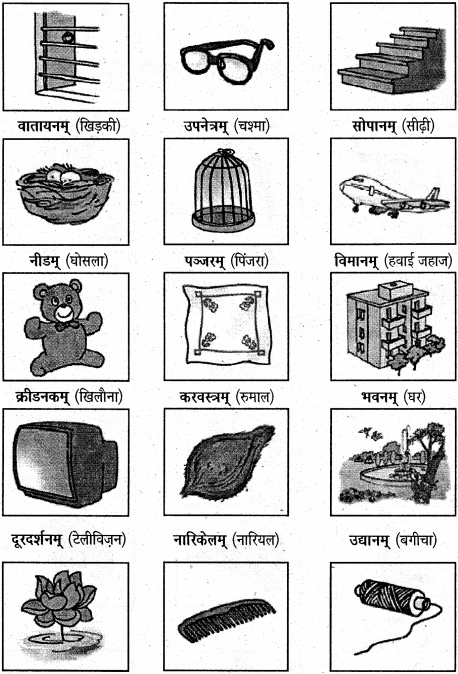
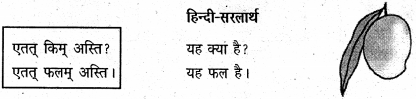
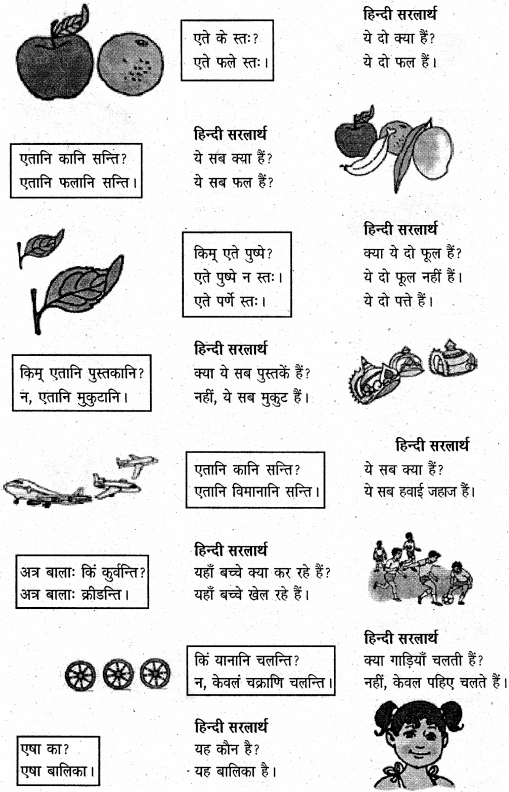
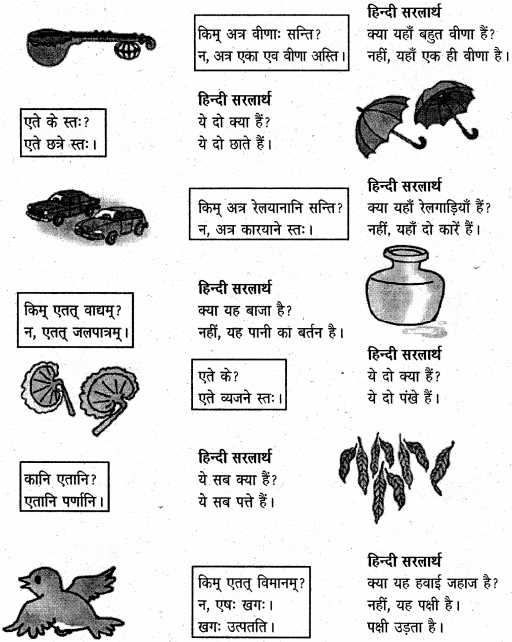
पाठ का सम्पूर्ण सरलार्थ-

शब्दपरिचयः
NCERT Solutions for Class 6 Sanskrit Chapter 3 शब्द परिचयः 3 1
NCERT Solutions for Class 6 Sanskrit Chapter 3 शब्द परिचयः 3 2
NCERT Solutions for Class 6 Sanskrit Chapter 3 शब्द परिचयः 3 3
NCERT Solutions for Class 6 Sanskrit Chapter 3 शब्द परिचयः 3 4
NCERT Solutions for Class 6 Sanskrit Chapter 3 शब्द परिचयः 3 5

पाठ्य-पुस्तक के प्रश्न-अभ्यास

प्रश्नः 1.
मौखिकम् उच्चारणं कुरुत

चित्रम् – चित्रे – चित्राणि
पुष्पम् – पुष्पे – पुष्पाणि
पात्रम् – पात्रे – पात्राणि
नेत्रम् – नेत्रे – नेत्राणि
व्यजनम् – व्यजने – व्यजनानि
उद्यानम् – उद्याने – उद्यानानि
द्वारम् – द्वारे – द्वाराणि
उत्तर:
विद्यार्थी स्वयं उच्चारण करें।

प्रश्नः 2.
(क) अधोलिखितानां शब्दानां वर्णविच्छेदं प्रदर्शयत
यथा-
व्यजनम् = व् + य् + अ + ज् + अ + न् + अ + म्
पुस्तकम् = …………………
विद्वान् = …………………
चिन्हम् = …………………
आद्वादः = …………………
आह्वानम् = …………………
उत्तर:
पुस्तकम् = प् + उ + स् + त् + अ + क् + अ + म्
विद्वान् = व् + इ + द् + व् + आ + न्
चिन्हम् = च् + इ + ह् + न् + अ + म्
आबादः = आ + ह् + ल् + आ + द् + अः
आह्वानम् = आ + ह् + व् + आ + न् + अ + म्

(ख) वर्णसंयोजनं कृत्वा कोष्ठके पदं लिखत
यथा
1. प् + र् + अ + ह् + ल् + आ + द + अः = प्रबादः
2. अ + प् + अ + र् + आ + ह् + ण् + अः = …………………
3. द् + व् + आ + द् + अ + श् + अः = …………………
4. द् + व् + आ + र् + अ + म् = …………………
5. व् + इ + श् + व् + आ + स् + अः = …………………
6. प्+र् + अ + त् + य् + अ + क् + + अ + म् = …………………
उत्तर:
2. अपराह
3. द्वादशः
4. द्वारम्
5. विश्वासः
6. प्रत्यक्षम्

प्रश्नः 3.
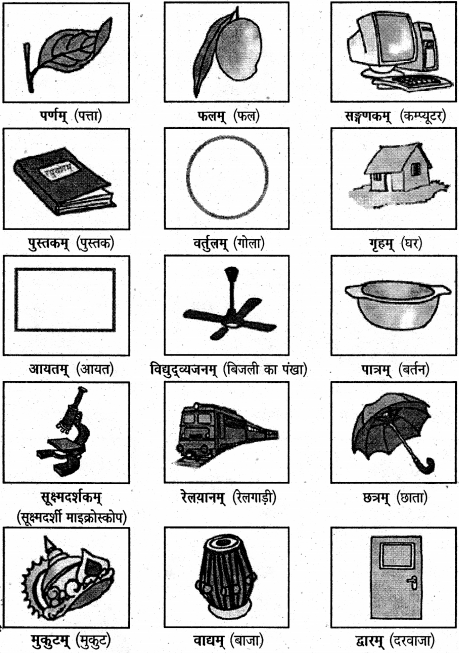
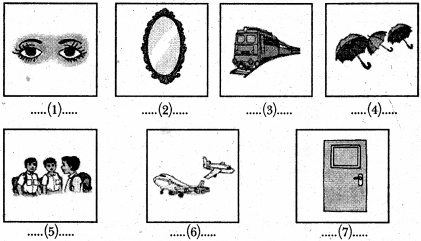
चित्राणि दृष्ट्वा तेषां संस्कृतपदानि लिखत्
NCERT Solutions for Class 6 Sanskrit Chapter 3 शब्द परिचयः 3 6
उत्तर:
1. नेत्रे
2. दर्पणम्
3. रेलयानम्
4. छत्राणि
5. छात्राः
6. विमाने
7. द्वारम्

प्रश्नः 4
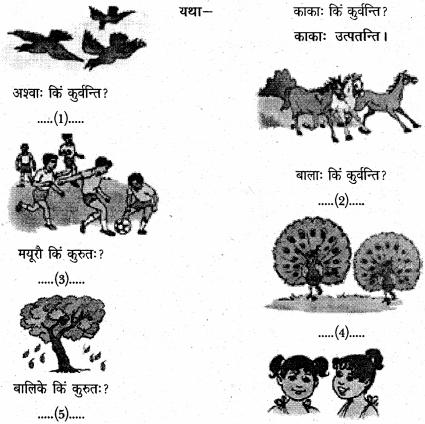
चित्रं दृष्ट्वा उत्तरं लिखत-
NCERT Solutions for Class 6 Sanskrit Chapter 3 शब्द परिचयः 3 7
उत्तर:
1. अश्वाः धावन्ति
2. बालाः क्रीडन्ति
3. मयूरौ नृत्यतः
4. पत्राणि पतंन्ति
5. बालिके नृत्यतः

प्रश्नः 5.
निर्देशानुसारं वाक्यानि रचयत
यथा- एतत् पतति। (बहुवचने) – एतानि पतन्ति।
(क) एतत् फलम्। (बहुवचने) – ……………………..
(ख) एते व्यजने। (एकवचने) – ……………………..
(ग) एतानि यानानि। (द्विवचने) – ……………………..
(घ) भ्रमरः गुञ्जति। (बहुवचने) – ……………………..
(ङ) मयूरः नृत्यति। (द्विवचने) – ……………………..
उत्तर:
(क) एतानि फलानि
(ख) एतत् व्यजनम्
(ग) एते याने
(घ) भ्रमराः गुञ्जन्ति
(ङ) मयूरौ नृत्यतः

प्रश्नः 6.
उचितपदानि संयोज्य वाक्यानि रचयत-
1. कोकिले – विकसति
2. पवनः – नृत्यन्ति
3. पुष्पम् – उत्पतति
4. खगः – वहति
5. मयूराः – गर्जन्ति
6. सिंहाः – कूजतः
उत्तर:
1. कोकिले कूजतः।
2. पवनः वहति।
3. पुष्पम् विकसति।
4. खगः उत्पतति।
5. मयूराः नृत्यन्ति।
6. सिंहाः गर्जन्ति।

NCERT Solutions for Class 6 Sanskrit

NCERT Solutions for Class 12 Physics Chapter 10 Wave Optics

NCERT Solutions for Class 12 Physics Chapter 10

Download NCERT Solutions for Class 12 Physics Chapter 10 Wave Optics Free PDF from this page and kickstart your exam preparation efficiently. Once you begin your preparation of physics ch 10 with these NCERT Solved Question and answers then you can grasp all the concepts of Wave Optics easily.

Also, it helps you in clarifying any type of complex doubts in theory concept questions or numerical problem-solving questions. Well, simply follow the NCERT 12th Physics Solutions Ch 10 and get a good grip on all the topics and subtopics of the chapter wave optics. These NCERT Solutions are available in both Hindi and English mediums for your sake of comfort while learning the Wave Optics Concepts.

Class 12 Physics NCERT Solutions Chapter 10 Wave Optics

Once you’re done with preparing Ray optics then just come on the way to start your preparation with chapter 10 ie., Wave Optics. In chapter 10, students will get in-depth knowledge about the topics and subtopics of wave optics. Start from the Introduction to Wave optics and concepts like Huygens principles, reflection & refraction in plane waves, polarisation, diffraction, refraction, interference of light waves, incoherent and coherent addition of waves are very important in Ch 10 Wave Optics Class 12 Physics.

Make the most out of the resources NCERT Exercises Solutions PDF available and score full marks in Chapter 10 Wave Optics Physics Board exams and also in the competitive exams.

Class 12
Subject Physics
Book Physics
Chapter Number 10
Chapter Name Wave Optics

NCERT Exercise Solutions for Class 12 Physics Ch 10 – Wave Optics

Kickstart your preparation and gain more subject knowledge in Chapter 10 by studying all NCERT Solutions of Class 12 Maths Ch 10 Wave Optics Solved Exercises and Miscellaneous Exercises. Well, Students of CBSE along with other state boards can follow these NCERT Solutions for Class 12 Physics Wave Optics ch 10 to score.

Question 1.
Monochromatic light of wavelength 589 nm is incident from air on a water surface. What are the wavelength, frequency and speed of
(a) reflected, and
(b) refracted light ? Refractive index of water is 1.33. (C.B.S.E. Sample Paper 1991)
Answer:
(a) For reflected light wavelength is unchanged i. e.
X = 589 x 10-9 m = 589 nm
Also, speed of light in air c = 3 x 10⁸ m s -1
NCERT Solutions for Class 12 physics Chapter 10 Wave optics
Question 2.
What is the shape of the wavefront in each of the following cases :
(a) Light diverging from a point source.
(b) Light emerging out of a convex lens when a point source is placed at its focus.
(c) The portion of the wavefront of light from a distant star intercepted by the Earth.
Answer:
(a) Spherical
(b) Plane
(c) Plane.

Question 3.
(a) The refractive index of glass is 1.5. What is the speed of light in glass ? (Speed of light in vacuum is 3.0 x 10⁸ m s-1)
(b) Is the speed of light in glass independent of the colour of light ? If not, which of the two colours red and violet travels slower in a glass prism ?
Answer:
(a)
 Here ,n=105,c=3.0 x10⁸ ms-1
NCERT Solutions for Class 12 physics Chapter 10 Wave optics.1
speed of light when passing through glass depends on colour of light. λr > λυ , therefore the speed of violet light is less than the red light.

Question 4.
In a Young’s double-slit experiment, the slits are separated by 0.28 mm and the screen is placed 1.4 m away. The distance between the central bright fringe and the fourth bright fringe is measured to be 1.2 Determine the wavelength of light used in the experiment.
Answer:
NCERT Solutions for Class 12 physics Chapter 10 .2

Question 5.
In Young’s double slit experiment using monochromatic light of wavelength λ, the intensity of light at a point on the screen where path difference is λ is K units. What is the intensity of light at a point where path difference is λ/2 ?
Answer:
vedantu class 12 physics Chapter 10 Wave optics.3

Question 6.
A beam of light consisting of two wavelengths 650 nm and 520 nm is used to obtain interference fringes in a Young’s double slit experiment.
(a) Find the distance of the third bright fringe on the screen from the central maximum for wavelength 650 nm.
(b) What is the least distance from the central maximum where the bright fringes due to both the wavelengths coincide ?
The distance between two slits is 2 mm and distance between the plane of the slits and the screen is 1.2 m.
Answer:
(a) λ = 650 nm = 650 x 10-9 m,
d = 2 mm = 2 x 10⁻³ m,
D = 1.2 m
Distance of mth bright fringe from the central maximum is given by
NCERT Solutions for Class 12 physics Chapter 10 Wave optics.4

Question 7.
In a double-slit experiment, the angular width of a fringe is found to be 0.2° on a screen placed 1 m away. The wavelength of light used is 600 nm. What will be the angular width of the fringe if the entire experiment apparatus is immersed in water ? Take
refractive index of water to be 43
Answer:
vedantu class 12 physics Chapter 10 Wave optics.5

Question 8.

What is the Brewster angle for air to glass transition? (Refractive index of glass = 1.5.)
Answer:
For air to glass transition,
n = tan ip where i = Brewster angle
.’. 1.5 = tan i or ip = tan-1 1.5 = 56.3°

Question 9.
Light of wavelength 5000 A falls on a plane reflecting surface. What are the wavelength and frequency of the reflected light ? For what angle of incidence is the reflected ray normal to the incident ray ?
Answer:
Here X = 5000 A = 5000 X 10-10 m,
c =3 x 10⁸ m s-1
Wave length of reflected light
= Wavelength of incident light = 5000 Å
NCERT Solutions for Class 12 physics Chapter 10 Wave optics .6

Question 10.

Estimate the distance for which ray optics is good approximation  for an aperture  of
4 mm and wavelength 400 nm.
Answer:
Here X = 400 nm = 400 x 10-9 m, Aperture, a = 4 mm = 4 X 10⁻³ m
.’. Distance for which  ray optics is  good approximation is Fresnel’s distance
NCERT Solutions for Class 12 physics Chapter 10 Wave optics.7

Question 11.

The 6563 Å Hα line emitted by hydrogen in a star is found to be red-shifted by 15Å. Estimate the speed with which the star is receding from the Earth.
Answer:
NCERT Solutions for Class 12 physics Chapter 10 Wave optics.8

Negative sign shows that the star is receding away from the earth.

Question 12.
Explain how Corpuscular theory predicts the speed of light in a medium, say, water, to be grater than the speed of light in vacuum. Is the prediction confirmed by experimental determination of the speed of light in water ? If not, which alternative picture of light is consistent with experiment ?
Answer:
According to Corpuscular theory, when light in the form of particles enters into denser medium from a rarer medium, a force of attraction comes into play on the particles normal to the surface. Thus, the component of velocity normal to the surface of water increases where as the component of velocity parallel to surface does not change. Therefore,
vedantu class 12 physics Chapter 10 Wave optics.9
velocity in water is greater than velocity of light in air. However, in actual case, c > υ. Huygen’s wave theory of light is consistent with the experiment.

Question 13.
You have learnt in the text how Huygens’ principle leads to the laws of reflection and refraction. Use the same principle to deduce directly that a point object placed in front of a plane mirror produces a virtual image whose distance from the mirror is equal to the object distance from the mirror.
Answer:
Let there be a point object A at a distance y from a plane mirror. Treating this point to be a point source of light, we can assume spherical wave fronts progressing from A of radius y. Let there be no mirror then after time t the wave front will reach A’ as wave front I. If a mirror is placed as shown in the figure then image will be formed at A’ represented by II.
NCERT Solutions for Class 12 physics Chapter 10 Wave optics.10
It is seen that OA’ = OA i. e. virtual image is formed at a distance equal to the distance of object from the mirror.

Question 14.
Let us list some of the factors, which could possibly influence the speed of wave propagation :
(1) nature of the source,
(2) direction of propagation.
(3) motion of the source and/or observer.
(4) wavelength
(5) intensity of the wave.
On which of these factors, if any, does
(a) the speed of light in vacuum,
(b) the speed of light in a medium (say, glass or water), depend ?
Answer:
(a) Speed of light in vacuum is an absolute constant (universal constant). It is independent of any factor. It is independent of the relative motion between source and observer even.
(b)

  1. Speed of light in a medium depends upon wavelength.
  2. It is independent of the nature of the source and motion of the source relative to the medium.
  3. It depends upon the properties of the medium of propagation and motion of the observer relative to the medium,
  4. It is independent of the direction of propagation for isotropic medium,
  5. It is independent of the intensity of the wave.

Question 15.
For sound waves, the Doppler formula for frequency shift differs slightly between the two situations :
(1) source at rest; observer moving, and
(2) source moving ; observer at rest. The exact Doppler formulae for the case of light waves in vacuum are, however, strictly identical for these situations. Explain why this should be so. Would you expect the formulae to be strictly identical for the two situations in case of light travelling in a medium ?
Answer:
Sound requires material medium for propagation. Though situations
(1) and (2) may correspond to the same relative motion, yet they are not identical physically as the motion of observer relative to medium may be different in both situations. Hence, Doppler effect for sound cannot be same in both situations. Light when passing through material medium is also governed by different Doppler formulae for
(1) source at rest ; observer moving and
(2) source moving ; observer at rest.
But when light passes through vacuum the formulae become exactly same for the two different situations because speed of light and frequency/wavelength of light remain unchanged in vacuum.

Question 16.
In double slit experiment using light of wavelength 600 nm, the angular width of a fringe formed on a distant screen is 0.1°. What is the spacing between two slits ?
Answer:
NCERT Solutions for Class 12 physics Chapter 10 Wave optics.19

Question 17.
Answer the following questions :
(a)
 In a single-slit diffraction experiment, the width of the slit is made double the original width. How does this affect the size and intensity of the central diffraction
band ?
(b) In what way is diffraction from each slit related to the interference pattern in a double-slit experiment? (C.B.S.E. 2013, 2013 )
(c)
 When a tiny circular obstacle is placed in the path of light from a distant source, a bright spot is seen at the center of the shadow of the obstacle.
Explain why ? (C. B. S. E. 2013 )
(d)
 Two students are separated by a 7 m partition wall in a room 10 m high. If both light and sound waves can bend around obstacles, how is it that the students are unable to see each other even though they can converse easily ?   (C.B.S.E. 1990 )
(e)
 Ray optics is based on the assumption that light travels in a straight line. Diffraction effects (observed when light propagates through small apertures/slits or around small obstacles) disprove this assumption. Yet the ray optics assumption is so commonly used in understanding location and several other properties of images in optical instruments. What is the justification ?   (C.B.S.E. 1990)
Answer:
(a) The width of central maxima = 2λD/d.
When the width (d) of slit is doubled, then the width of central diffraction maxima reduces to half and the intensity of the central band increases four times as amplitude of light wave is doubled.
(b) Intensity of fringes produced in double slit experiment is changed due to diffraction pattern superposing due to each slit.
(c) Light waves diffract at the edges of the circular obstacle. These diffracted waves interfere constructively and give rise to the bright spot at the center of the geometrical shadow.
(d) Diffraction is observed when the wave length of the wave is of the order of the size of the obstacle. The wavelength of sound wave (≈ 0.33 m) is larger than the light wave (≈10-7 m) and is also comparable to wall, so diffraction of sound waves takes place and hence the students can converse easily. On the other hand, the wave length of light is very small as compared to the obstacle e. 1 m high wall so the diffraction of light waves does not take place.
(e) In optical instruments, size of apertures are much larger than the wavelength of light. So diffraction of light is negligible. Hence, the assumption that light can travel in straight line is used in optical instruments.

Question 18.
Two towers on top of two hills are 40 km apart. The line joining them passes 50 m above a hill halfway between the towers. What is the longest wavelength of radio waves, which can be sent between the towers without appreciable diffraction effects ?
Answer:
If A and B are two hills and C is the hill peak mid way
NCERT Solutions for Class 12 physics Chapter 10 Wave optics.12
Question 19.
A parallel beam of light of wavelength 500 nm falls on a narrow slit and the resulting diffraction pattern is observed on a screen 1 m away. It is observed that the first minimum is at a distance of 2-5 mm from the center of the screen. Find the width of the slit.( C.B.S.E. 2013)
Answer:

vedantu class 12 physics Chapter 10 Wave optics.13

Question 20.
Answer the following questions :
(a) When a low flying aircraft passes overhead, we sometimes notice a slight shaking of the picture on our TY screen. Suggest a possible explanation.
(b) As you have learnt in the text, the principle of linear superposition of wave displacement is basic to understanding distributions in diffraction and interference patterns. What is the justification of this principle ?
Answer:
(a) When a low flying air craft passes overhead, the metallic body of the air craft reflects the TV signal. A slight shaking of the picture on the TV screen takes place due to the interference of the reflected signal from the air craft and the direct signal received by the antenna.
(b) The linear combination of wave equations is also a wave equation. This is the very basis of the superposition principle.

Question 21.
In deriving the single slit diffraction pattern, it was stated that the intensity is zero at angle of nλ/α. Justify this by suitably dividing the slit to bring out the cancellation.
Answer:
Let us suppose that we have n slits each of width
NCERT Solutions for Class 12 physics Chapter 10 Wave optics.14
Therefore, each of the n slits of width d’ each sends zero intensity in the direction 9. As a result, the net resultant of intensity due to n such slits is zero.

Download 12th Class Physics NCERT Ch 10 Wave Optics Solutions PDF through the quick links available over here. You can access them anywhere and everywhere you wish while your preparation & improve your subject knowledge. Brainstorm and Mindmap preparation related materials other than NCERT Solutions like Exemplar Problems, Notes, Study Material, etc.

Summary

We wish the aforementioned comprehensive article on CBSE NCERT Solutions for Class 12 Physics Chapter 10 Wave Optics benefits you in clearing your doubts. Still, raising any queries regarding Wave Optics NCERT Physics Ch 10 Solutions PDFs, drop your messages here in the below comment sections & we’ll solve it asap.

Meanwhile, bookmark our site NCERTBooks.guru and collect more information on Physics Subject CBSE NCERT Solutions, Books, Papers, MCQs, etc.

समास – परिभाषा, भेद और उदाहरण- Samas In Hindi

Samas In Hindi

समास(Compound) की परिभाषा, भेद और उदाहरण

दो या दो से अधिक स्वतन्त्र एवं सार्थक पदों के संक्षिप्तीकृत रूप को ‘समास’ कहते हैं। जैसे-शक्ति के अनुसार = यथाशक्ति, राजा का पुत्र = राजपुत्र, चार आनों का समूह = चवन्नी, पंक में जन्म होता है जिसका = पंकज, नीली गाय = नीलगाय आदि।

यहाँ यथाशक्ति, राजपुत्र, चवन्नी, पंकज तथा नीलगाय सामाजिक पद या समस्त पद कहलायेंगे तथा इनका समास का विग्रह किया हुआ रूप है-शक्ति के अनुसार, राजा का पुत्र, चार आनों का समूह, पंक में जन्म होता है जिसका तथा नीली गाय।

Learn Hindi Grammar online with example, all the topics are described in easy way for education. Alankar in Hindi Prepared for Class 10, 9 Students and all competitive exams.

समास के भेद

समास के मुख्य चार भेद माने गए हैं-

  1. अव्ययीभाव,
  2. तत्पुरुष,
  3. बहुव्रीहि,
  4. द्वन्द्व।

इनके अतिरिक्त कर्मधारय एवं द्विगु भी समास के भेद हैं लेकिन वास्तव में कर्मधारय एवं द्विगु को तत्पुरुष का ही भेद माना जाता है।

तत्पुरुष समास के मुख्य दो भेद होते हैं-

  1. व्यधिकरण तत्पुरुष, तथा
  2. समानाधिकरण तत्पुरुष।

इनमें व्यधिकरण तत्पुरुष ही तत्पुरुष समास है जिसमें समस्त पद समस्त पद के विग्रह करने पर प्रथम खण्ड एवं द्वितीय खण्ड में भिन्न-भिन्न विभक्तियाँ लगाई जाती हैं। जैसे

  • राजा का कुमार = राजकुमार।

यहाँ प्रथम पद में सम्बन्ध कारक है तथा षष्ठी विभक्ति है तथा दूसरे पद में कर्ता कारक की प्रथमा विभक्ति है।

समानाधिकरण तत्पुरुष समास में समस्त पद के विग्रह करने पर दोनों पदों में कर्ता कारक, प्रथमा विभक्ति ही रहती है, जैसे-रक्तकमल, पीतकमल, नीलकमल आदि। इसे कर्मधारय समास कहते हैं।

व्यधिकरण तत्पुरुष (तत्पुरुष) समास के छः भाग होते हैं-

  1. कर्म तत्पुरुष,
  2. करण तत्पुरुष,
  3. सम्प्रदान तत्पुरुष,.
  4. अपादान तत्पुरुष,
  5. सम्बन्ध तत्पुरुष,
  6. अधिकरण तत्पुरुष।

कक्षा-10 के पाठ्यक्रम में द्वन्द्व, द्विगु, कर्मधारय एवं बहुव्रीहि समास निर्धारित हैं, अतः इनका विस्तृत विवरण नीचे दिया जा रहा है।

कर्मधारय समास

समानाधिकरण तत्पुरुष समास को ही कर्मधारय समास कहा जाता है। इस समास में ‘विशेषण’ तथा ‘विशेष्य’ अथवा ‘उपमान’ एवं ‘उपमेय’ का संक्षिप्तीकृत रूप हो और विग्रह करने पर दोनों ही पदों में कर्ता कारक प्रथमा विभक्ति रहती है, उसे ‘कर्मधारय समास कहते हैं। जैसे-अन्धकूप = अन्धा कूप।

(अ) विशेषण-विशेष्य-इसमें पूर्वपद विशेषण तथा उत्तरपद विशेष्य होता है, यथा-
Samas(Compound)(समास) 1
Samas(Compound)(समास) 2
(ब)

(i) उपमेय-उपमान-इसमें पूर्वपद उपमेय होता है तथा उत्तरपद उपमान होता है। जैसे-
Samas(Compound)(समास) 3
(ii) उपमान-उपमेय-इसमें पूर्वपद उपमान तथा उत्तरपद उपमेय को बताया जाता है। जैसे-
Samas(Compound)(समास) 4
Samas(Compound)(समास) 5

द्वन्द्व समास

द्वन्द्व समास में दोनों ही पदों की प्रधानता होती है। इन दोनों पदों के बीच में ‘और’ शब्द का लोप होता है। जैसे-
Samas(Compound)(समास) 6
Samas(Compound)(समास) 7
Samas(Compound)(समास) 8
Samas(Compound)(समास) 9

द्विगु समास

जिस समास का पूर्वपद संख्यावाचक विशेषण होता है तथा वह समूह का बोध कराता है, उसे समास कहते हैं। इसे तत्पुरुष समास का ही उपभेद माना जाता है।
Samas(Compound)(समास) 10
Samas(Compound)(समास) 11
Samas(Compound)(समास) 12

बहुव्रीहि समास

जिस समास में न पूर्वपद प्रधान होता है न उत्तरपद बल्कि अन्य पद प्रधान होता है, उसे ‘बहुव्रीहि’ समास कहते हैं। जैसे-
Samas(Compound)(समास) 13
Samas(Compound)(समास) 14

ICSE Books for Class 10 | Syllabus Details, Study Materials and Reference Books, Notes

ICSE Books Class 10

ICSE Books for Class 10: ICSE is one of the well-recognised boards in India for a secondary examination. A large number of people study under this board. One of the important exams conducted by the ICSE board is the class 10 examination. Class 10 is the turning point in every student’s life. Students can choose their field of study according to the marks obtained in class 10 examination. Many students feel nervous before this examination while some get confused with a lot of books and study materials available both online and offline. In this article, you will get complete details about the right process to prepare for the ICSE class 10 examination.

ICSE Class 10 Books and Reference Materials

Class 10 is the first major examination in a student’s life. So, it is normal to get nervous or confused. However, the ICSE class 10 examination is not that scary. It is relatively easy to score good marks in ICSE class 10 examination if you follow proper guidelines throughout the year. A large number of students appear for this examination every year. So, it is a competitive exam. You need to study smartly and regularly to score well. To stand out from the crowd, you have to read reference books besides textbooks. Apart from this, solving sample papers and giving mock tests will help you to understand your strength and weakness.

  • ICSE Class 10 Syllabus
  • ICSE Study Materials and Reference Books
  • ICSE Notes
  • Conclusion

ICSE Class 10 Syllabus

The Indian Certificate of Secondary Education ( ICSE) board has revised the syllabus for class 10. You will find the revised syllabus of English, Mathematics, Chemistry, Biology, Physics, Geography, and other subjects mentioned below:

Paper 1- English Language

  1. 300-350 words paragraph
  2. Informal letter
  3. Email writing
  4. Unseen passage
  5. Short questions

Paper 2- Literature in English

  1. Shakespeare’s The Merchant of Venice
  2. POETRY: All poems to be studied.
    1. Henry Cuyler Bunner’s The Heart of the Tree
    2.  The Cold Within – James Patrick Kinney
    3. The Bangle Sellers – Sarojini Naidu
    4. After Blenheim – Robert Southey
    5. Television – Roald Dahl
    6. Daffodils – William Wordsworth
    7. The Patriot – Robert Browning
    8. Abu Ben Adhem – Leigh Hunt
    9. Nine Gold Medals – David Roth

PROSE

  1. Chief Seattle’s Speech
  2. Hemingway’s Old Man at the Bridge
  3. A Horse and Two Goats –R.K. Narayan
  4. Hearts and Hands – O. Henry
  5. Ruskin Bond’s A Face in the Dark
  6. An Angel in Disguise– T.S. Arthur
  7. Hans Christian Andersen’s The Little Match Girl
  8. My Greatest Olympic Prize – Jesse Owens
  9. Ray Douglas Bradbury’s  All Summer in a Day

Maths

Chapters Important topics
Commercial Mathematics Goods and Services Tax, Banking
Algebra Quadratic Equations in one variable, Ratio, Linear Inequations, and Proportion,
The factorisation of polynomials, Matrices, Arithmetic Progression, Co-ordinate Geometry
Geometry Similarity, Circles, Angle Properties, Cyclic Properties, Tangent and Secant Properties
Mensuration Area and volume of Cylinder, Cone and Sphere
Trigonometry Heights and distances, solve/prove simple algebraic trigonometric expressions
Statistics Mean, Median, Mode. Histograms and Ogive
Probability Random experiments, Sample space, Events, Definition of probability, Simple problems on single events

Biology

Chapters Important topics
Basic Biology Cell Division and Cell Cycle, Structure of chromosome, Genetics
Plant Physiology Imbibition, diffusion and osmosis, Transpiration, Photosynthesis
Human Anatomy and Physiology Circulatory System, Excretory System, Nervous system, Endocrine System, Reproductive System

Physics

Chapters Important topics
Force, Work, Power and Energy Gravity, Uniform circular motion, Turning forces concept, Work, energy, power and their relation
Light Total internal reflection, Refraction of light, critical angle, Lenses, Electromagnetic spectrum.
Sound vibrations and Resonance, Loudness, Reflection of Sound Waves, pitch and quality of sound
Electricity and Magnetism Electrical power and energy, Household circuits, Ohm’s Law, Magnetic effect of a current
Heat Calorimetry, Latent heat; loss and gain of heat
Modern Physics Nuclear Energy, Radioactivity and changes in the nucleus, and Radiation

Chemistry

Chapters Important topics
Periodic Properties and variations Periodic properties and their variations in groups and periods, Periodicity on the basis of atomic number
Chemical Bonding Electrovalent Bonding, Covalent Bonding, Coordinate Bonding
Study of Acids, Bases and Salts Definition of salt, types of salts, Action of dilute acids, Molecules and their characteristic properties, Ions present in mineral acids, alkalis and salts
Analytical Chemistry The action of alkalis on certain metals, The action of Ammonium Hydroxide and Sodium Hydroxide on the solution of salts
Mole Concept and Stoichiometry The density of vapour and its relation to relative molecular mass, Deduction of simple and molecular formula from
Electrolysis Electrolytes and non-electrolytes, Substances containing molecules only, ions only, electrode, anode, cathode, anion, cation, oxidation and reduction
Metallurgy Extraction of Aluminium, Alloys – composition and uses, The occurrence of metals
Study of Compounds Hydrogen Chloride, Ammonia, Nitric Acid, Sulphuric Acid
Organic Chemistry Introduction, Structure and Isomerism, Homologous series, Simple nomenclature, Hydrocarbons,

Geography

Chapters Important topics
Map Work Interpretation of Topographical Maps, Map of India,
Location, Extent and Physical features The physical features of India
Climate winds and factors affecting the climate, Monsoon, Distribution of Temperature, Rainfall,
Soil Resources Types of soil, Soil Erosion
Natural Vegetation Importance of forests, Types of vegetation, Forest conservation
Water Resources Sources, Rainwater harvesting, Irrigation
Mineral and Energy Resources Manganese, Copper, Bauxite, Non-conventional Sources, Conventional Sources, Iron ore,
Agriculture Climatic conditions, soil requirements, methods of cultivation, Indian Agriculture, Agricultural seasons,
Manufacturing Industries Agro-based Industry, Mineral based Industry
Transport Importance and Modes, Airways and Waterways
Waste Management Methods of safe disposal, Need and methods for reducing, reusing and recycling waste, Impact of waste accumulation, Need for waste management

History & Civics

Chapters Important topics
The Union Legislature Powers, Lok Sabha, Rajya Sabha, and functions of Union Parliament
The Union Executive The President, Prime Minister and Council of Ministers
The Judiciary The Supreme Court, High Courts, Subordinate Courts

History

Chapters Important topics
The Indian National Movement (1857 – 1917) Factors leading to the growth of Nationalism, The First War of Independence, First Phase of the Indian National Movement (1885-1907)
Mass Phase of the National Movement (1915-1947) Independence and Partition of India, Mahatma Gandhi, Forward Bloc
The Contemporary World United Nations, Non-Aligned Movement, The First World War, The Second World War

ICSE Class 10 Study Materials and Reference Books

You can check out the sample papers of different subjects through the below-mentioned links. Sample papers help in your preparation. You will get to know which subject you should focus on by solving sample papers. It will also help you to understand the complexity level of the questions.

  • Maths Sample Papers
  • Physics Sample Papers
  • Chemistry Sample Papers
  • Biology Sample Papers
  • English Language Sample Papers
  • English Literature Sample Papers
  • Hindi Sample Papers
  • Economics Sample Papers
  • Geography Sample Papers
  • History Civics Sample Papers

References books can help you to get a deeper understanding of different topics. It will also widen your knowledge and help you score good marks. Here are some reference books listed below:

Books Publication
Biology Class X (ICSE Based) 13th Edition (Paperback) A. Jacob
Physics for ICSE Students Class-X (English) (Paperback) Mukesh Kumar Gandhi
Concise Physics I. C. S. E. 2015 (Part 2 For Class 10) (Paperback) Selina Publishers (2013)
Chemistry Class X (English) 13th Edition (Paperback) Anshu (Suri) Gulati
Concise Chemistry I. C. S. E. 2015 (Class 10) (Paperback) Selina Publishers (2013)
Asit Das Gupta-English-Bharati Bhawan’s Mathematics For Class 10 / E5 Asit Das Gupta-English-Bharati Bhawan (English)
English Language for Class-IX-X (ICSE Based) 12th Edition (Paperback) A. K. Saxena
Merchant of Venice (English) 1st Edition (Paperback) Turner W
History & Civics Class-X (English) 11th Edition (Paperback) Nilima Dayal
Hindi for Class-IX-X 7th Edition (Paperback) Meenakshi Shrivastav Pushplata Sareen Pushparani

ICSE Class 10 Notes

Notes help in remembering the important parts of a topic. Notes help to revise the whole subject within a shorter time. It also helps in structuring answers with strong points. Some important notes for ICSE class 10 are given below:

  • Mathematics Notes
  • Physics Notes
  • Chemistry Notes
  • Biology Notes

Apart from studying well, you should follow some tips for scoring good marks in ICSE class 10 examination. You should eat healthy food and drink plenty of water to stay fit. You should frequently play to stay positive. It will help you to read correctly. Without hampering the study, you should pursue your hobby as well to stay mentally healthy.

Conclusion on ICSE Books for Class 10

Though it is the first significant examination in every student’s life, you should not take the stress and stay positive. We have tried our best to provide you with the best references. Planned study throughout the year will help you to score well in ICSE class 10 examination.

FAQ’s on ICSE Books for Class 10

Question 1.
How to score well in ICSE 10th examination?

Answer:
Planned study throughout the year will help you to score well in ICSE 10th examination. You can read reference books and study materials to stand out from the crowd.

Question 2.
Is ICSE tougher than CBSE?

Answer:
Many people review ICSE tougher than CBSE. However, ICSE focuses on practical knowledge, and it builds the analytical skills of the students.

Question 3.
What is the minimum age requirement to appear in ICSE 10th examination?

Answer:
The minimum age should be 14 years to appear in ICSE 10th examination.

Question 4.
What are the passing marks in ICSE 10th examination?

Answer:
Previously, the passing marks of ICSE were 35 percent, but it had been reduced to 33 percent in 2019.

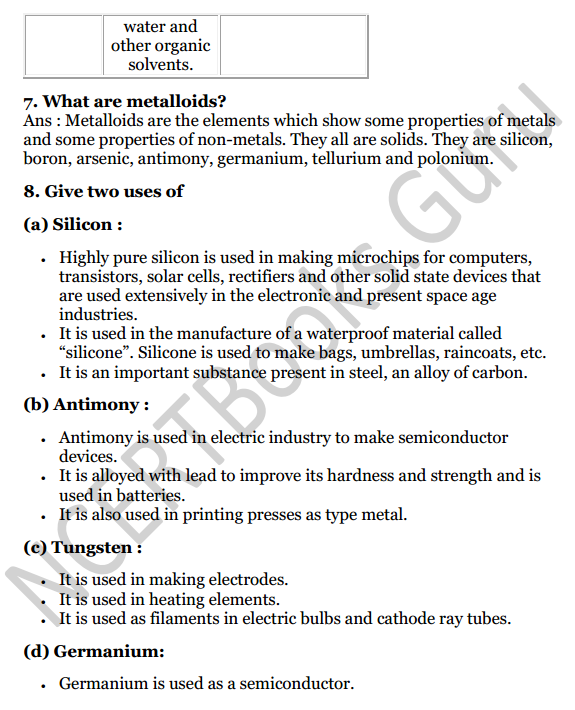
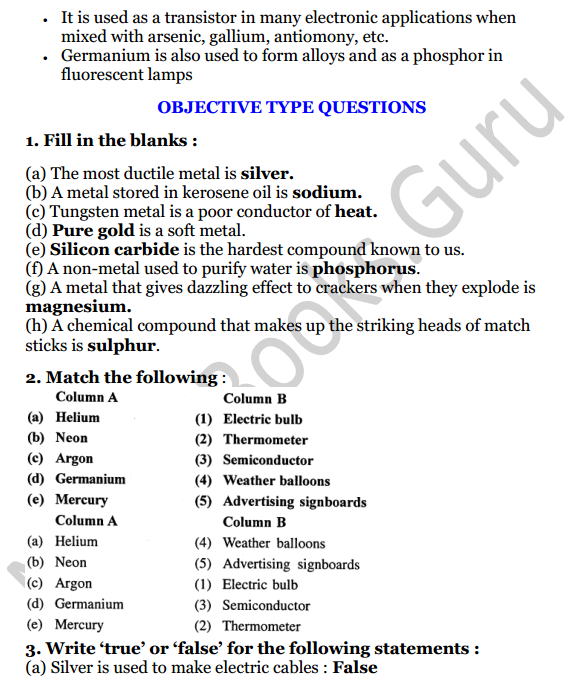
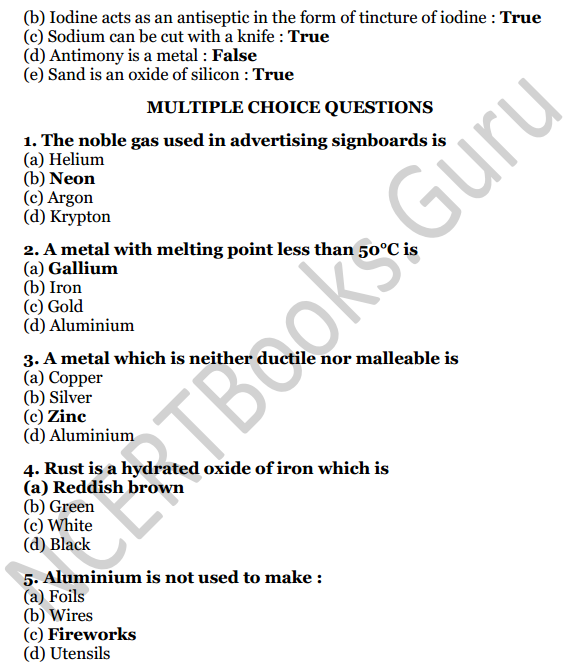
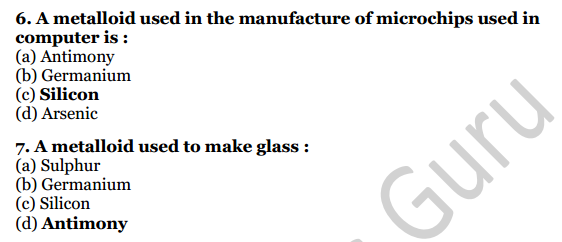
Selina Concise Chemistry Class 7 ICSE Solutions Chapter 6 Metals and Non-metals

Selina Concise Chemistry Class 7 ICSE Solutions Chapter 6 Metals and Non-metals: In this article, we bring you the detailed Selina Publishers Concise Chemistry Class 7 ICSE Solutions Chapter 6 Metals and Non-metals. This detailed Selina Middle School Class 7 Chemistry ICSE Textbook Solutions Chapter 6 are prepared by our experts at NCERTBooks.Guru which will help you score better by solving and practising from the solutions provided below. The Selina Concise ICSE Solutions for Class 7 Chemistry Chapter 6 will help you to solve Chapter End Questions, In Text Questions, Important Questions and Extra Questions. Read on to find out Selina Concise Chemistry Class 7 Book ICSE Solutions Chapter 6 Metals and Non-metals.

Selina Publishers Concise Chemistry Class 7 ICSE Solutions Chapter 6 Metals and Non-metals

Here on NCERTBooks.Guru, you can access to Selina Concise Chemistry Class 7 ICSE Solutions Chapter 6 Metals and Non-metals PDF so that you can refer them as and when required. The ICSE Class 7 Chemistry Questions and Answers helps students while solving difficult questions. For a better understanding of this chapter, you should also see summary of Chapter 6 Metals and Non-metals , Chemistry, Class 7.
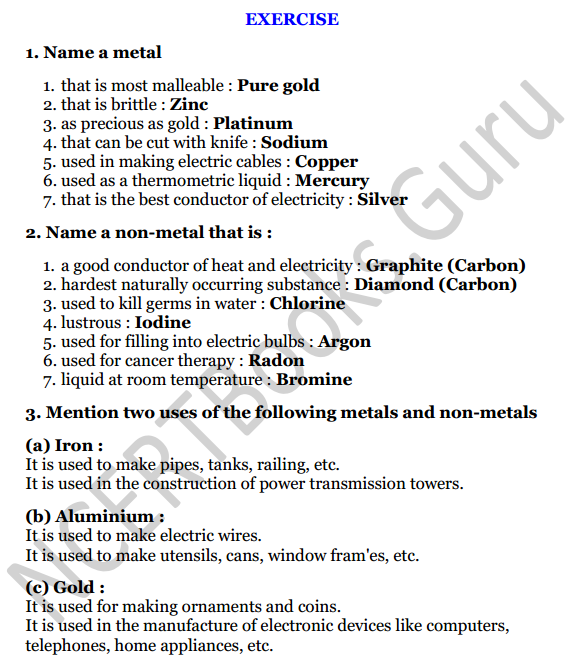
Selina Concise Chemistry Class 7 ICSE Solutions Chapter 6 Metals and Non-metals 1

Selina Concise Chemistry Class 7 ICSE Solutions Chapter 6 Metals and Non-metals 2
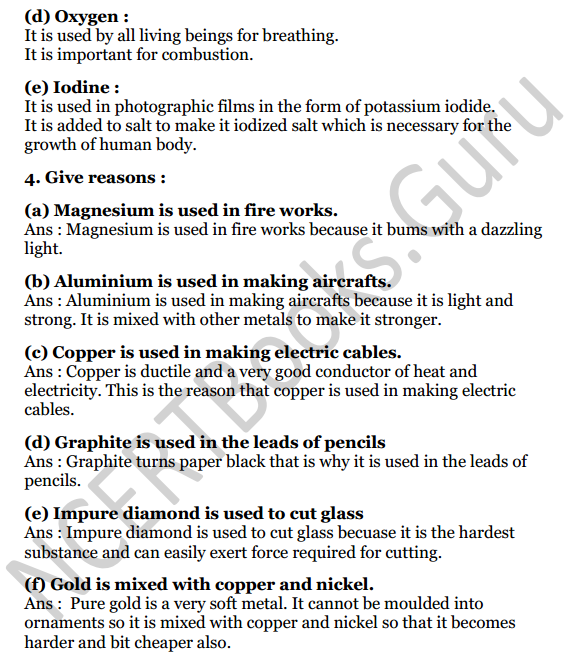
Selina Concise Chemistry Class 7 ICSE Solutions Chapter 6 Metals and Non-metals 3

Selina Concise Chemistry Class 7 ICSE Solutions Chapter 6 Metals and Non-metals 4
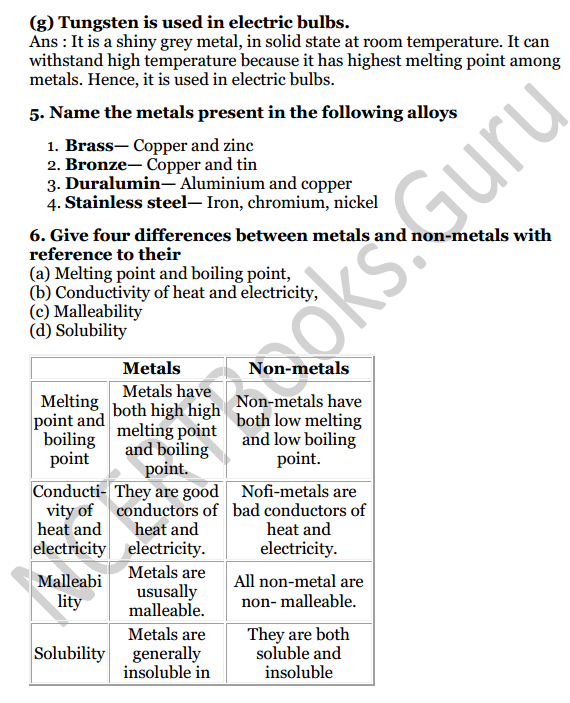
Selina Concise Chemistry Class 7 ICSE Solutions Chapter 6 Metals and Non-metals 5

Selina Concise Chemistry Class 7 ICSE Solutions Chapter 6 Metals and Non-metals 6
Selina Concise Chemistry Class 7 ICSE Solutions Chapter 6 Metals and Non-metals 7

Now that you are provided all the necessary information regarding Selina Concise Chemistry Class 7 ICSE Solutions Chapter 6 Metals and Non-metals and we hope this detailed Selina Solutions are helpful. Students can also check out Class 7 Chemistry Important Questions and Extra Questions, ICSE Class 7 Books, RS Aggarwal ICSE Class 7 Solutions, ML Aggarwal ICSE Class 7 Solutions at NCERTBooks.Guru for free.

Selina Concise Chemistry Class 7 ICSE Solutions